Showing posts with label ERA Title. Show all posts

Thursday, July 30, 2026

Ten Best Starting Pitchers Not In Cooperstown

Honorable mentions: Dolf Luque, Tommy John, Roy Oswalt 

10. Tim Hudson (1999-2015) 


Hudson was about as steady as they came, winning 222 games and losing only 133 for a remarkable .625 winning percentage, yet never won a Cy Young Award. The owner of a 3.49 career ERA, Hudson became the oldest man to start Game 7 of the World Series in 2014 at age 39. 

9. Luis Tiant (1964-1982) 


The son of a former negro league hurler, Tiant was a top pitcher in his day, winning 229 games and leading the AL in shutouts three times. A two-time ERA champ, Tiant is perhaps best known for his performance in the 1975 postseason, going 3-0 with a 2.50 ERA in four starts, including a 163-pitch victory in Game 4 of the World Series. 

8. Bret Saberhagen (1984-2001) 


Saberhagen was one of the most exciting young players in the game during the 1980's, winning two Cy Young Awards before he turned 26. The MVP of the 1985 World Series with a 0.50 ERA, Saberhagen won 167 games and lost 117 for a .588 winning percentage across sixteen seasons. 

7. Mickey Lolich (1963-1979) 


One of the most colorful characters in the game, Lolich won 217 games over 16 seasons and tallied 2,832 strikeouts, at the time a record for southpaws. He won three games in the 1968 World Series (homering in Game 2) and tossed an incredible 376 innings in 1971, the most since 1917, allowing him to win 25 games and rack up 308 K's. 

6. Jack Quinn (1909-1933) 

Jack Quinn had a late start in baseball (debuting at 25), but more than made up for it with his longevity, pitching his last game at 50. He won 247 games in his career, including 26 in 1914 and 18 in 1928 as a 44-year-old. Quinn earned MVP votes in 1931 at age 47 and led the NL in saves in both 1931 and 1932. 

5. Orel Hershiser (1983-2000) 


Nicknamed the Bulldog, Hershiser captured the nation's attention in 1988 when he threw a record 59 consecutive scoreless innings, leading to 23 wins and a Cy Young Award. He had a 2.26 ERA that season and had other seasonal marks of 2.03 (1985) and 2.31 (1989). Hershiser won 204 games in his career and additionally went 8-3 with a 2.59 ERA in the playoffs. 

4. Ron Guidry (1975-1988) 


Guidry enjoyed one of the greatest seasons any pitcher ever had in 1978, going 25-3 with a 1.74 ERA and 248 strikeouts as the runaway Cy Young Award winner. He followed up in 1979 with a second ERA Title and led the AL in wins again in 1985. Guidry won 170 games in his career and lost only 91, giving him an astronomical winning percentage of .651, one of the highest marks of all time. 

3. Billy Pierce (1945-1964) 

Pierce was one of the finest pitchers of his day, winning 211 games and making seven all-star teams. He led the Majors with a 1.97 ERA in 1955, a stunning 66 points lower than runner-up Whitey Ford (against whom Pierce had an 8-6 lifetime record). Pierce won 20 games in two different seasons and led the AL in complete games in 1956, 1957, and 1958. 

2. Johan Santana (2000-2012) 


Perhaps baseball's best pitcher in the 2000's, Santana won two Cy Young Awards and three ERA Titles during the decade, leading the AL in a litany of pitching categories. Injuries cost him his entire 2011 season and eventually ended his career, but he returned for a final season in 2012, tossing a no-hitter on June 1. He finished with 139 wins and a .641 winning percentage. 

1. Curt Schilling (1988-2007) 


I haven't written a unique article about Schilling, so I'll spend more time on him here. 

PED users aside, Curt Schilling is undoubtedly the best starting pitcher outside the Hall of Fame. Despite pitching in an artificially offense-heavy period, he had a 3.46 career ERA (127 ERA+), 216 wins, and 3,116 strikeouts, 17th on the all-time list. Although he never won a Cy Young Award, he finished second three times, twice losing to teammate Randy Johnson. A rare power pitcher who seldom issued walks, his 4.38 career K/BB rate ranked second in baseball history when he retired, trailing only Tommy Bond, who pitched before the standard four-ball walk. In addition, Schilling was one of the greatest playoff pitchers of all time, going 11-2 with a 2.23 ERA in postseason play, winning three World Series rings and two series MVP Awards (1993 NLCS, 2001 World Series). His 56 strikeouts in the 2001 postseason set a record which still stands. 

Say what you want about his conduct - during his career he won no fewer than four character-based awards (Lou Gehrig, Roberto Clemente, Branch Rickey, Hutch). By all reasonable measures, Schilling is a Hall of Famer. The only reason for his exclusion is political, and politics should have no place in the Hall of Fame debate. 

Monday, July 27, 2026

Top Ten Hall of Famers Inducted by the Veterans Committee

The Veterans Committee was founded in 1953 to honor Hall of Fame candidates overlooked by the Old Timers Committee and the BBWAA. The idea was that players of the past would be more likely to remember, and better able to assess, their contemporaries who played decades before. However, players sometimes have their biases, being more likely to remember players with whom they had closer encounters, and made a series of bad selections in the 1970's, which led to revisions to the Committee and eventually its termination in 2013 in favor of Eras Committees. 
    Despite their mistakes, the Veterans Committee did a positive service to baseball by recognizing dozens of all-time greats who would otherwise be forgotten. Here is a list of the ten best Hall of Famers inducted by the VC. 

Honorable mentions: Billy Hamilton, Chief Bender, Frank "Home Run" Baker, Sam Rice, Joe Sewell, Joe Gordon, Pee Wee Reese 

10. Goose Goslin (1968) 


Leon Allen "Goose" Goslin played leftfield from 1921 through 1938 for the Senators, Browns, and Tigers. He batted .316 in his career, winning the AL Batting Title in 1924, and had eleven seasons with 100 RBI's. Goslin's candidacy gained a boost after he was interviewed for Lawrence Ritter's 1966 bestseller The Glory of Their Times, and he was inducted by the Veterans Committee two years later. 

9. John Clarkson (1963) 


John Clarkson was a dominant pitcher in the 1880's, leading the league three times in wins, three times in strikeouts, and four times in innings, topping out at 623 in 1884. He finished playing in 1894 with 328 career wins, third on the all-time list at the time. 

8. Richie Ashurn (1995) 


Although he was overshadowed by Willie, Mickey, and the Duke in centerfield, Richie Ashburn was a top player in the 1950's, capturing two Batting Titles during the decade. In addition to his hitting, Ashburn was a marvelous defensive outfielder, leading in putouts a stunning eight times. 

7. Arky Vaughan (1985) 


Floyd Ellis "Arky" Vaughan was an all-star for nine consecutive seasons between 1934 and 1942, establishing himself as a premier shortstop in the NL. A .318 career hitter, he led the league three times each in runs scored, walks, OBP, and triples, and captured a Batting Title in 1935 with a .385 mark. 

6. Ron Santo (2012) 


The last player ever elected by the traditional Veterans Committee, Santo was a nine-time all-star, five-time Gold Glove winner at third, and four-time leader in walks. Santo hit 342 home runs from 1960 through 1974, including four straight seasons with 30 or more. 

5. Tim Keefe (1964) 


Tim Keefe was probably the best pitcher of the 19th century, winning 342 games and three ERA Titles between 1880 and 1893. He also achieved fame as an umpire. 

4. Johnny Mize (1981) 


Johnny Mize led the NL once in batting, four times in homers, and three times in RBI's, yet never won a Triple Crown. The owner of a .312 / .397 / .562 career slash line, Mize hit 51 homers in 1947 at age 34, making him one of the oldest men ever to hit 50 home runs. He had 359 longballs in his career and could have had 100 more if not for three seasons lost to military service. 

3. Jake Beckley (1971) 


First baseman Jake Beckley was one of the top sluggers of the 19th century, banging out 244 triples and 87 home runs between 1888 and 1907. A .308 career hitter, Beckley compiled nearly 3,000 hits in his twenty seasons (2,938), but was largely forgotten until the Veterans Committee rediscovered him in the early 1970's. 

2. Roger Connor (1976) 


Roger Connor was best known as baseball's all-time home run king prior to Babe Ruth, slugging 138 longballs between 1880 and 1897. As of this writing, he currently ranks in a tie for 681st in career homers. Connor batted .316 and collected 2,467 hits in his career. 

1. Sam Crawford (1957) 


"Wahoo Sam" Crawford was one of the greatest hitters of the deadball era. The first man ever to lead both the AL and NL in home runs, Crawford also led his league in triples six times, contributing to his record total of 309 career three-baggers. Crawford batted .309 over 19 seasons and finished his career just 39 hits shy of 3,000. 

Monday, June 8, 2026

Guy Hecker


Guy Hecker is one of my favorite players of all time. While he only played parts of nine seasons, he achieved so many odd and incredible feats that an entire book could be written about him. As it is, Hecker is the first player to be featured twice on this blog, as I previously advocated his Hall of Fame case in 2020. While I must attribute that post largely to excitement over his bizarre career and not to merit, I nonetheless enjoyed writing it and am happy to go through his career again, as he should not be forgotten. 
    Guy Jackson Hecker (that was his real name) began his MLB career in 1882 as one of the founding members of the Louisville Eclipse, an American Association club that has connections to today's Pirates. He pitched 13 games that season, compiling a 1.30 ERA and topping the AA in several pitching categories. Hecker had his greatest season in 1884, when he captured a pitching Triple Crown and set American Association records for wins (52), innings pitched (670 2/3), starts (73), and complete games (72). Hecker had his enormous workload trimmed a bit in 1885, resulting in "only" 30 wins, and won 26 games in 1886. Incidentally, he led the AA in batting with a .341 average that year, becoming the only pitcher in history to win a Batting Title. 
    Hecker played his last game in 1890, but not before accomplishing a remarkable number of eyebrow-raising feats. In his very first Big League at bat, he smacked an inside-the-park home run. Still a rookie, Hecker tossed a 3-1 no-hitter against Allegheny City on September 19, 1882, which was the first no-hitter in history not to result in a shutout. Later, on August 15, 1886, he became the only player in AA history to hit three home runs in a game, scoring a Major League record seven runs against Baltimore. With that performance, he became the first of only three pitchers to hit three home runs in one game, the others being Jim Tobin and (surprise) Shohei Ohtani. As if all this weren't enough, he accomplished perhaps his wildest feat on October 9, 1887. In a game against Cincinnati, Hecker became the only man to play an entire game at first base without handling a single chance. 
    While Hecker's career was brief, he made an impressive impact on the history books. Out of all the players who ever reached the Majors, he is perhaps my favorite to research. While he is not a Hall of Famer, he was an exciting player whose career should not be forgotten. 

Tuesday, May 26, 2026

Lucky Hall of Famer Number 59 - Hal Newhouser

Hal Newhouser pitched for the Detroit Tigers and Cleveland Indians from 1939 through 1955. A six-time all-star, two-time MVP, and four-time 20-game winner, Newhouser finished with 207 wins and a 3.06 career ERA. He was inducted into the Hall of Fame by the Veterans Committee in 1992. 
    Despite the accolades he earned, I believe Newhouser's career was a little short of the Hall's standards. Both of his MVP Awards (including his 1945 Triple Crown) came in the midst of World War II, when many of baseball's best players were serving overseas and inferior players were brought up to replace them. While these seasons are still valid, they need to be properly contextualized, which makes them appear more impressive at face value than they really were. Newhouser did have a spectacular season in 1946 (league-leading 26 wins and 1.94 ERA), but afterward lost effectiveness due to arm trouble. 
    Overall, while he was a fine pitcher, I think Newhouser's career lacks the volume required for the Hall of Fame. Due to his injuries, he was mostly finished by age 30, and he retired at 33 with fewer than 3,000 career innings. He struggled to gain traction with the BBWAA, but found luck with the VC. 

My opinion: Hal Newhouser is probably not a Hall of Famer. 

Tuesday, January 16, 2024

WHY I THINK ROY OSWALT SHOULD BE IN COOPERSTOWN

WHY I THINK ROY OSWALT SHOULD BE IN COOPERSTOWN 

By- Damien 
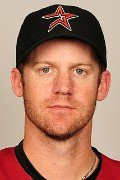


Roy Oswalt was one of the most underrated pitchers of his era. While he didn’t throw 100 miles per hour and only twice struck out 200 batters in a season, Oswalt was consistently getting hitters out and winning ballgames, keeping opposing teams off balance with strong command of five pitches. Oswalt was one of the most steady pitchers in the game for the first decade of his career, a decade marked by heavy offense. 

Roy Edward Oswalt was born on August 29, 1977, in Weir, Mississippi. One of three children, young Roy grew up an Atlanta Braves fan. In high school, he played both baseball and football for Weir High. Oswalt was perhaps a bigger football star as a youngster, helping the football team to a state title in his senior year. On the mound, his 5’10”, 150 pound frame turned away many scouts. “I always heard that I was too small,” lamented Oswalt. He was finally spotted by scout James Farrar of the Houston Astros, who tentatively drafted him in the 23rd round of the 1996 draft. It took him four minor league seasons (and a stint in the 2000 Olympics) to make it to the Big Leagues, but once he made it, he was there to stay. 

Oswalt went 14-3 with a 2.73 ERA as a rookie in 2001, leading the NL in winning percentage and finishing second in the Rookie of the Year Award voting. In 2002, Oswalt went 19-9, establishing himself as one of the premier pitchers in the league. He helped the Astros to back to back postseasons in 2004 and 2005, going 2-0 in the 2005 NLCS to win MVP honors and lead the club to its first pennant in franchise history. He continued his winning ways even when the Astros didn’t, and finished his first decade in the Majors with 150 victories, more than anyone else in baseball. 

In 2010, the Astros fell to fourth place in the NL Central, and when the trade deadline came around, Oswalt was shipped to the contending Phillies. The Phillies already sported two of the best pitchers in the game in Cole Hamels and Hall of Famer Roy Halladay, and when Oswalt joined the club, the terrific trio was nicknamed “H₂O”. Oswalt pitched brilliantly down the stretch, going 7-1 with a 1.74 ERA to help the Phillies win the Division Title. The Phils made it all the way to the NLCS, where they fell to the San Francisco Giants in six games, but the defeat cannot be attributed to Oswalt, who had a 1.84 ERA in three appearances and won Game 2. 

In 2011, former Cy Young Award winner Cliff Lee joined the H₂O group, leading many experts to consider the Philadelphia rotation one of the finest in history. Despite numerous back problems, Oswalt still turned in a quality season, posting a 3.69 ERA in 23 starts as the Phillies made the postseason again, this time falling to the Cardinals in the NLDS. 

On October 30, 2011, Oswalt was granted free agency. Due to age and back problems, he didn’t sign until May, working out a minor league deal with the Texas Rangers. He made it to the big club on June 22, pitching 6 ⅔ innings and allowing one earned run. Despite the strong performance, the 2012 season was a poor one for Oswalt, who stumbled to a 5.80 ERA in 17 appearances (nine starts). Things were no better for Oswalt in 2013, who posted an 8.63 ERA in nine games for the Rockies. Oswalt signed a one day contract with Houston to officially retire as an Astro on April 4, 2014. 

Due to a forgettable end to a relatively short career, Oswalt was one and done in his only BBWAA ballot, gaining 0.9% of the vote in 2019. At first glance, he doesn’t look like much of a candidate - 163 wins, a 3.36 ERA, 1,852 strikeouts, and zero Cy Youngs immediately turned off many voters. However, this is not a fair evaluation of Oswalt’s career, and a case can be made that he should be in the Hall of Fame. For the first decade of his career, he was the winningest pitcher in the game. Although he never won a Cy Young Award, he finished among the NL’s top six in six different seasons and, in my humble opinion, should have won in 2006 when he won the ERA title. In total, he had a won-loss record of 163-102, good for a .615 winning percentage. Despite his strong winning percentage, an argument can be made that Oswalt was a hard luck pitcher: in 85 career winless quality starts, Oswalt went 0-36 with a 2.66 ERA. In nearly one-fourth of his career starts, Oswalt pitched just well enough to lose. Although bad luck and back problems leave him well short of 200 wins, that might not be as much of a problem as it used to be. As starting pitchers are going fewer innings and earning fewer wins, they’ll start getting into Cooperstown with fewer victories, too. In this context, Oswalt’s superior winning percentage would be more important than his win total, and it will continue to look better as time goes on. 

In addition to Oswalt’s regular season feats, he was also quite successful in the postseason. Although he never won a World Series, he was an integral part of the Astros’ playoff runs in the mid-2000’s and the Phillies’ run in 2010. The MVP of the 2005 NLCS, Oswalt led the Astros to their first pennant in franchise history. Overall, Oswalt had a postseason record of 5-2 with a 3.73 ERA, proving that he was clutch when the stakes were highest. 

Roy Oswalt was a tough competitor. No matter the day or the opponent, you could always count on him to throw a good game. He would be a good addition to the Hall of Fame. 


LIFETIME STATISTICS 

Games Pitched career: 365 season high: 36 in 2004 

Starts career: 341 season high: 35 in 2004 and 2005 led NL: 35 in 2004 and 2005 

Wins career: 163 season high: 20 in 2004 and 2005 led NL: 20 in 2004 

Losses career: 102 season high: 13 in 2010 

Winning Percentage career: .615 season high: .824 in 2001 led NL: .824 in 2001 

Complete Games career: 20 season high: 4 in 2005 

Shutouts career: 8 season high: 2 in 2004, 2008, and 2010 

Earned Run Average career: 3.36 season low: 2.76 in 2010 led NL: 2.98 in 2006 

WHIP career: 1.211 season low: 1.025 in 2010 led NL: 1.025 in 2010 

Innings Pitched career: 2,245 ⅓ season high: 241 ⅔ in 2005 

Strikeouts career: 1,852 season high: 208 in 2002 

Strikeouts Per Nine Innings career: 7.4 season high: 8.2 in 2010 

Walks career: 520 (34 intentional) season high: 62 in 2002 and 2004 

Strikeouts Per Walk career: 3.56 season high: 4.37 in 2006 led NL: 4.37 in 2006 

Fielding Percentage career: .982 season high: 1.000 in 2005, 2007, 2008, and 2009 led NL P: 1.000 in 2005, 2007, 2008, and 2009 

Double Plays career: 31 season high: 5 in 2011 

Putouts career: 169 season high: 24 in 2008 led NL P: 24 in 2008 

Assists career: 310 season high: 38 in 2002 


DID YOU KNOW? 

-finished 22nd in the NL MVP Award voting in 2001 and 23rd in 2002, 2004, and 2005 

-was a three time all-star (2005-07) 

-led the Majors with 20 sacrifice bunts in 2006

Saturday, December 2, 2023

WHY I THINK MEL HARDER SHOULD BE IN COOPERSTOWN

WHY I THINK MEL HARDER SHOULD BE IN COOPERSTOWN 

By- Damien 


Mel Harder was born to toe the mound. Already a Big League pitcher at age 18, Harder pitched for twenty seasons in the Majors, all for the Cleveland Indians, winning 223 games and making four all-star teams. After his career, he became one of the most respected pitching coaches in the game, helping many stars come into prominence. All told, he gave 42 years to pitching, 36 with the Indians. 

Melvin Le Roy Harder was born on October 15, 1909 near Beemer, Nebraska. Nearsighted as a youngster, he wore glasses and didn’t play a lot of sports. As he matured he found his way to the mound, where he discovered he had natural sink on his fastball. Never a hard thrower, Harder eventually developed a nasty curve which propelled him to the Big Leagues in 1927. He worked as a reliever in his first two seasons but found his footing as a starter in 1930, going 11-10. Harder established himself as one of the better pitchers in the game in 1932, going 15-13 with a 3.75 ERA, and won the ERA Title the next year with a 2.95 mark. Harder followed up with back to back 20 win seasons in 1934 and 1935, and made four consecutive all-star teams. Harder continued to find success until arm surgery limited him to 15 appearances in 1941. He had a strong return in 1942, posting a 3.44 ERA, and lowered it to 3.06 in 1943. Harder pitched his last full season in 1944, and stayed with the team through 1947 as a part time starter and mentor to Cleveland’s young pitchers. 

Nicknamed “Chief” for his leadership on the staff, Harder was more reliable than flashy. Never a strikeout pitcher, Harder made his living with control and inducing soft contact. He was also extremely hard to run on, with a caught stealing percentage of .592 for his career. Harder achieved fame in his best seasons, but was overshadowed by Bob Feller when he came into prominence in the late 1930’s. His lifetime record was 223-186, which is better appreciated by the fact that he never pitched for a pennant winner. While Harder’s career falls a bit short of the Hall of Fame as a player, his case is strengthened by a remarkably successful career as a pitching coach. 

Back in Harder’s day, there were no modern pitching coaches. Usually a team’s “pitching coach” would be whatever coach volunteered for the job. Harder, one of the smartest pitchers in the game and one who enjoyed his craft, started coaching midway into his playing career. In 1941, a 20 year old third baseman named Bob Lemon made his Major League debut for the Indians. Struggling with the bat, he spent almost all of 1942 in the minors. Noticing Lemon’s strong arm and natural sink, Harder converted him to the mound in 1946. Two years later, Lemon threw ten shutouts, and went on to a Hall of Fame career. Harder also helped the rest of Cleveland’s “Big Four” - Feller, Mike Garcia, and Early Wynn - as well as Sal Maglie, who all praised the help and experience Harder had to offer. In fact, Harder is credited with teaching Early Wynn the curveball and the slider, which allowed him to pitch well into his forties and eventually win 300 games. Later in his career, Harder helped future stars Sam McDowell, Tommy John, and Luis Tiant find their footing. He was fired after the 1963 season, and later went on to coach the Mets, the Cubs, the Reds, and the Royals. 

Mel Harder is my pet candidate for coaches in general. Earlier this week, I explained my desire for fair induction among men who affect the game in all facets. Good coaches, particularly pitching coaches, are extremely important to the success of a good team, perhaps more than most people realize. Mel Harder revolutionized the role of a pitching coach, helping build many Hall of Fame careers. That achievement, not to mention a very good pitching career of his own, warrants at least discussion.  


LIFETIME STATISTICS 

Games Pitched career: 582 season high: 44 in 1934 

Starts career: 433 season high: 35 in 1935 

Complete Games career: 181 season high: 17 in 1932, 1934, and 1935 

Shutouts career: 25 season high: 6 in 1934 led AL: 6 in 1934 

Games Finished career: 94 season high: 12 in 1928 and 1934 

Wins career: 223 season high: 22 in 1935 

Losses career: 186 season high: 17 in 1933 

Winning Percentage career: .545 season high: .667 in 1935 

Earned Run Average career: 3.80 season low: 2.61 in 1934 led AL: 2.95 in 1933 

WHIP career: 1.408 season low: 1.269 in 1933 

Innings Pitched career: 3,426 ⅓ season high: 287 ⅓ in 1935 

Strikeouts career: 1,161 season high: 102 in 1938 

Strikeouts Per Nine Innings career: 3.0 season high: 3.8 in 1938 

Walks career: 1,118 season high: 86 in 1937 

Strikeouts Per Walk career: 1.04 season high: 1.79 in 1935 

Saves career: 24 season high: 5 in 1934 

Fielding Percentage career: .958 season high: .986 in 1938 

Double Plays career: 38 season high: 5 in 1942 

Putouts career: 209 season high: 22 in 1933 led AL P: 18 in 1932 and 1935, 22 in 1933, 21 in 1938 

Assists career: 734 season high: 87 in 1933 led AL P: 65 in 1932, 87 in 1933, 81 in 1935 

Caught Stealing Percentage career: .592 season high: .944 in 1933 

Pickoffs career: 19 season high: 4 in 1932 


DID YOU KNOW? 

-allowed the fewest home runs (0.2) and walks (1.7) per nine innings in the AL in 1935 

-finished 16th in the AL MVP voting in 1934 and 1938 and 22nd in 1935 

-went 1-0 with two saves in all-star play, pitching an AL record 13 career innings without allowing an earned run 

-holds the Cleveland Indians franchise record for career mound appearances

-went 3-0 as the Indians’ interim manager in 1961 and 1962

Friday, March 11, 2022

WHY I THINK SAM LEEVER SHOULD BE IN COOPERSTOWN

WHY I THINK SAM LEEVER SHOULD BE IN COOPERSTOWN

By- Damien 


Every time a pitcher takes the mound, he’s thinking only one thing: I’m going to win today. You can’t ask more out of a pitcher than to keep you in the game long enough to win. Sam Leever was one of the most consistent winners in history, with a lifetime record of 194-100 (.660). Despite working primarily with a fastball, Leever hardly ever surrendered a home run, and he scarcely walked anyone. That being said, Leever compiled a career ERA of 2.47, including an ERA Title in 1903. His resume is all the more impressive when it is realized that he didn’t make his MLB debut until he was 26 ½ years old. Career long Pirate Sam Leever started his career in 1898, going 1-0 in three starts. He was a rookie sensation in 1899, winning 21 games and leading the league in four pitching categories. Leever had a career year in 1903, winning 25 games with a 2.06 ERA. He started two games in the inaugural World Series that season, but lost both of them. Leever came back strong in 1904, posting an 18-11 mark. He topped the 20 win pinnacle in each of the following two seasons and posted a 1.66 ERA in 1906. Leever pitched his last full season in 1908, picking up 15 wins, and started to suffer the effects of shoulder problems. He went 8-1 in 1909 and 6-5 in 1910 before calling it quits. Sam Leever was a fine pitcher, a consistent winner, and a key member of four Pirate pennant winners. He really should be in the Hall of Fame today. 


LIFETIME STATISTICS

Games Pitched career: 388 season high: 51 in 1899 led NL: 51 in 1899 

Starts career: 299 season high: 39 in 1899 

Complete Games career: 241 season high: 35 in 1899 

Shutouts career: 39 season high: 7 in 1903 led NL: 7 in 1903 

Games Finished career: 75 season high: 14 in 1908 and 1910 led NL: 11 in 1899 

Wins career: 194 season high: 25 in 1903 

Losses career: 100 season high: 23 in 1899 

Winning Percentage career: .660 season high: .800 in 1905 led NL: .737 in 1901, .781 in 1903, .800 in 1905 

ERA career: 2.47 season low: 1.66 in 1907 led NL: 2.06 in 1903 

WHIP career: 1.141 season low: 1.052 in 1907 (he also had a 1.054 mark in 1902) 

Innings Pitched career: 2,660 ⅔ season high: 379 in 1899 led NL: 379 in 1899 

Strikeouts career: 847 season high: 121 in 1899 

Strikeouts Per Nine Innings career: 2.9 season high: 4.2 in 1901 

Walks career: 587 season high: 122 in 1899 

Strikeouts Per Walk career: 1.44 season high: 2.77 in 1902 

Saves career: 13 season high: 3 in 1899 led NL: 3 in 1899 

Fielding Percentage career: .956 season high: .987 in 1904 

Double Plays career: 11 season high: 3 in 1910 

Putouts career: 84 season high: 12 in 1903 

Assists career: 659 season high: 100 in 1899 


DID YOU KNOW?

-nicknamed “Deacon” or “The Goshen Schoolmaster” for his earlier profession 

-allowed the fewest home runs per nine innings in the NL in 1900 (0.1) 

-pitched one inning in his final MLB game (no earned runs, one strikeout) 

-batted .263 (26-for-99) with two doubles, two triples, one home run, 12 runs scored, and 14 RBI’s in 1904 

-his two career home runs came off of Hall of Famers Kid Nichols and Vic Willis 

-had a career fielding percentage 22 points above the league average 

-played a game in leftfield in 1902 

-ranks 25th in career winning percentage and 39th in ERA

Sunday, March 6, 2022

WHY I THINK ADOLFO (DOLF) LUQUE SHOULD BE IN COOPERSTOWN

WHY I THINK ADOLFO (DOLF) LUQUE SHOULD BE IN COOPERSTOWN 

By- Damien 


Dolf Luque has a pretty unique Hall of Fame case. The first Latino pitcher in MLB history, Luque didn’t land a regular starting job until 1920, his age 29 season, but he didn’t relinquish it until 1931. He pitched his final game in 1935, still proving his value as an ageless reliever. Luque’s fastballs and curves led him to a legendary season in 1923, when he won 27 games and posted a 1.93 ERA in the midst of the hardest hitting period in baseball history. However, Luque was also known as a hard luck pitcher, as he had six seasons (count ‘em - six!) in which he had a losing record despite an above average ERA. The worst of these seasons were 1922, when he went 13-23 despite an ERA of 3.31, and 1925, when he won a second NL ERA Title and still managed to drop 18 games. Dolf Luque started his career with the Boston Braves in 1914, but only pitched four games for the club in 1914-15. He pitched in Cuba for the next few years, and got a job in 1918 with the Reds. His 10-3 mark in 1919 helped him to a spot in the rotation in 1920, and he established himself as one of the best pitchers of the decade. During the roaring 1920’s, Luque won two ERA Titles, tossed 21 shutouts, and averaged almost 250 innings per season, not counting his successes in the Cuban Winter League. In 1930, Luque was traded to the Dodgers and went 14-8. He slowly moved out of the rotation and into the bullpen, and by 1933, he was a full time stopper, going 8-2 with a 2.69 ERA in 35 games for the New York Giants. Luque also won his second World Series ring (his first was in 1919, the “Black Sox Series”), and took the win in deciding Game 5, making him the oldest pitcher ever (43 years and 64 days) to win a Fall Classic game. He had two more fine seasons out of the pen before he finally decided to hang up his spikes in 1935. Dolf Luque was an excellent pitcher, a tough competitor, and a big part of two World Series teams. If he hadn’t had such awful luck, he definitely would have won over 200 games, and quite likely 250. I’m pretty sure he belongs in the Hall of Fame. 


LIFETIME STATISTICS 

Games Pitched career: 550 season high: 41 in 1921 and 1923 

Starts career: 367 season high: 37 in 1923 

Complete Games career: 206 season high: 28 in 1923 

Shutouts career: 26 season high: 6 in 1923 led NL: 3 in 1921, 6 in 1923, 4 in 1925 

Games Finished career: 128 season high: 22 in 1932 and 1933 

Wins career: 194 season high: 27 in 1923 led NL: 27 in 1923 

Losses career: 179 season high: 23 in 1922 led NL: 23 in 1922 

Winning Percentage career: .520 season high: .771 in 1923 led NL: .771 in 1923 

ERA career: 3.24 season low: 1.93 in 1923 led NL: 1.93 in 1923, 2.63 in 1925 

WHIP career: 1.288 season low: 1.098 in 1920 led NL: 1.172 in 1925 

Innings Pitched career: 3,220 ⅓ season high: 322 in 1923 

Strikeouts career: 1,130 season high: 151 in 1923 

Strikeouts Per Nine Innings career: 3.2 season high: 4.3 in 1925 

Walks career: 918 (24 intentional) season high: 88 in 1923 

Strikeouts Per Walk career: 1.23 season high: 1.79 in 1925 

Saves career: 29 season high: 7 in 1934 

Fielding Percentage career: .958 season high: 1.000 in 1929 led NL P: 1.000 in 1929 

Double Plays career: 36 season high: 7 in 1930 

Putouts career: 188 season high: 21 in 1921 led NL P: 17 in 1923 

Assists career: 787 season high: 84 in 1925 

Caught Stealing Percentage career: .528 season high: .727 in 1929 

Pickoffs career: 59 season high: 8 in 1930 


DID YOU KNOW? 

-nicknamed “The Pride of Havana” 

-finished 13th in the NL MVP Award voting in 1925 and 25th in 1933 

-allowed the fewest hits per nine innings in the NL in 1920 (7.3), 1923 (7.8), and 1925 (8.1) 

-allowed the fewest home runs per nine innings in the NL in 1923 (0.056) 

-pitched 9 ⅓ innings in World Series play, allowing no runs and striking out 11 batters 

-batted over .300 in three different seasons and .500 (1-for-2) in World Series play 

-homered off of Hall of Famer Burleigh Grimes in 1924 

-was the oldest player in the NL in 1934 and 1935 

-also played one game at third base, one in leftfield, three as a pinch hitter, and five as a pinch runner 

-was inducted into the Cincinnati Reds Hall of Fame in 1967, the Cuban Baseball Hall of Fame in 1957, and the Mexican Baseball Hall of Fame in 1985