Showing posts with label World Series MVP. Show all posts

Friday, August 14, 2026

Ten Best Catchers Not In Cooperstown

Catchers have historically been underrated both by the common fan and the Hall of Fame. Due to the physical and mental demands of catching a nine-inning game nearly every day, catchers tend to hit less than other fielders, making it harder for people to realize their true value. As it stands, there are only 18 catchers in Cooperstown, fewer than any other position except third base. However, due to the importance of a good catcher and the numerous demands of the position, more catchers should be considered by the Hall of Fame. 

Honorable mentions: Deacon McGuire, Elston Howard, Tim McCarver, Bob Boone, Tony Pena 

10. Jack Clements (1884-1900)


The greatest lefthanded catcher of all time, Jack Clements had a career batting average of .287 in an era when many backstops hit under .200. A strong defender behind the plate, Clements was also a convincing power hitter who clubbed 77 home runs in his career (at the time eleventh on the all-time list) and topped the NL in home run percentage in 1893 and 1895. 

9. Johnny Kling (1900-1913)


Also a renowned billiards player in his day, Johnny Kling was a key player on the Cubs' pennant winners of 1906-08 and 1910. The premier defensive catcher of his time, Kling dominated NL catching leaderboards throughout his career and had a lifetime caught stealing percentage of 48.5. He also batted .272 over his career and set a record in 1902 with a hit in 12 straight plate appearances. 

8. Gene Tenace (1969-1983)


Despite a low .241 batting average and only 1,060 hits, Tenace was nonetheless a strong contributor with the bat, slapping 201 home runs and drawing 984 walks for a career OPS of .817. A four-time World Champion, he earned the World Series MVP Award in 1972 with four homers and nine RBI's. 

7. Wally Schang (1913-1931)


A long-tenured catcher whose career spanned the dead-ball and live-ball eras, Schang batted .284 across 19 seasons with a .393 OBP and 121 stolen bases. A solid defender known for his strong arm, Schang led his teams to six World Series, winning three of them. 

6. Jason Kendall (1996-2010)


A five-time .300 hitter despite playing in the steroid era, Jason Kendall ranks third among all catchers with 2,195 hits and first with 189 steals (since the modern stolen base rule was implemented in 1898). Although not a premier defender, Kendall led his league in games caught eight times, double plays six times, and assists and caught stealing five times apiece. 

5. Thurman Munson (1969-1979)


Rifle-armed Thurman Munson was one of the most exciting players of the 1970's, earning a Rookie of the Year Award, an MVP, three Gold Gloves, and seven all-star selections during the decade. A .292 career hitter, he batted over .300 five times and knocked in 100 or more runs in three consecutive seasons. Sadly, he passed away partway through the 1979 season in a private plane crash. 

4. Jorge Posada (1995-2011)


The anchor of the last true Yankee dynasty, Posada was also an outstanding hitter, belting 275 homers and winning five Silver Slugger awards. He hit a career-high 30 homers with 101 RBI's in 2003 and batted .338 in 2007 at age 36. Posada only misses out on a higher rating due to so-so defense. 

3. Sherm Lollar (1946-1963)


Despite being largely forgotten today, Sherm Lollar was an elite defender in the 1950's and early 1960's, throwing out an impressive 46.8% of stolen base attempts. A five-time fielding champion and three-time leader in double plays, he won the Gold Glove award in its first three years of existence. No slouch with the bat, Lollar hit 155 home runs and had a career OBP of .357. 

2. Bill Freehan (1961-1976)


Famously described as "the thinking man's catcher" by Sports Magazine, Freehan was an eleven-time all-star and five-time Gold Glove winner. The holder of numerous fielding records, he was also a strong hitter who smacked an even 200 home runs, including 25 in 1968. Freehan finished third in the AL MVP voting in 1967 and second in 1968 behind teammate Denny McLain, whom he helped become the last man ever to win 30 games in a season. 

1. Lance Parrish (1977-1995)


Lance Parrish did just about everything in his Big League career. He was a World Champion (1984), eight-time all-star, three-time Gold Glove winner, and six-time Silver Slugger. Parrish hit 324 career homers, fifth among catchers behind four Hall of Famers, and turned 133 double plays. His combination of offense and defense was truly remarkable, and he should be in the Hall of Fame today. 

Thursday, July 30, 2026

Ten Best Starting Pitchers Not In Cooperstown

Honorable mentions: Dolf Luque, Tommy John, Roy Oswalt 

10. Tim Hudson (1999-2015) 


Hudson was about as steady as they came, winning 222 games and losing only 133 for a remarkable .625 winning percentage, yet never won a Cy Young Award. The owner of a 3.49 career ERA, Hudson became the oldest man to start Game 7 of the World Series in 2014 at age 39. 

9. Luis Tiant (1964-1982) 


The son of a former negro league hurler, Tiant was a top pitcher in his day, winning 229 games and leading the AL in shutouts three times. A two-time ERA champ, Tiant is perhaps best known for his performance in the 1975 postseason, going 3-0 with a 2.50 ERA in four starts, including a 163-pitch victory in Game 4 of the World Series. 

8. Bret Saberhagen (1984-2001) 


Saberhagen was one of the most exciting young players in the game during the 1980's, winning two Cy Young Awards before he turned 26. The MVP of the 1985 World Series with a 0.50 ERA, Saberhagen won 167 games and lost 117 for a .588 winning percentage across sixteen seasons. 

7. Mickey Lolich (1963-1979) 


One of the most colorful characters in the game, Lolich won 217 games over 16 seasons and tallied 2,832 strikeouts, at the time a record for southpaws. He won three games in the 1968 World Series (homering in Game 2) and tossed an incredible 376 innings in 1971, the most since 1917, allowing him to win 25 games and rack up 308 K's. 

6. Jack Quinn (1909-1933) 

Jack Quinn had a late start in baseball (debuting at 25), but more than made up for it with his longevity, pitching his last game at 50. He won 247 games in his career, including 26 in 1914 and 18 in 1928 as a 44-year-old. Quinn earned MVP votes in 1931 at age 47 and led the NL in saves in both 1931 and 1932. 

5. Orel Hershiser (1983-2000) 


Nicknamed the Bulldog, Hershiser captured the nation's attention in 1988 when he threw a record 59 consecutive scoreless innings, leading to 23 wins and a Cy Young Award. He had a 2.26 ERA that season and had other seasonal marks of 2.03 (1985) and 2.31 (1989). Hershiser won 204 games in his career and additionally went 8-3 with a 2.59 ERA in the playoffs. 

4. Ron Guidry (1975-1988) 


Guidry enjoyed one of the greatest seasons any pitcher ever had in 1978, going 25-3 with a 1.74 ERA and 248 strikeouts as the runaway Cy Young Award winner. He followed up in 1979 with a second ERA Title and led the AL in wins again in 1985. Guidry won 170 games in his career and lost only 91, giving him an astronomical winning percentage of .651, one of the highest marks of all time. 

3. Billy Pierce (1945-1964) 

Pierce was one of the finest pitchers of his day, winning 211 games and making seven all-star teams. He led the Majors with a 1.97 ERA in 1955, a stunning 66 points lower than runner-up Whitey Ford (against whom Pierce had an 8-6 lifetime record). Pierce won 20 games in two different seasons and led the AL in complete games in 1956, 1957, and 1958. 

2. Johan Santana (2000-2012) 


Perhaps baseball's best pitcher in the 2000's, Santana won two Cy Young Awards and three ERA Titles during the decade, leading the AL in a litany of pitching categories. Injuries cost him his entire 2011 season and eventually ended his career, but he returned for a final season in 2012, tossing a no-hitter on June 1. He finished with 139 wins and a .641 winning percentage. 

1. Curt Schilling (1988-2007) 


I haven't written a unique article about Schilling, so I'll spend more time on him here. 

PED users aside, Curt Schilling is undoubtedly the best starting pitcher outside the Hall of Fame. Despite pitching in an artificially offense-heavy period, he had a 3.46 career ERA (127 ERA+), 216 wins, and 3,116 strikeouts, 17th on the all-time list. Although he never won a Cy Young Award, he finished second three times, twice losing to teammate Randy Johnson. A rare power pitcher who seldom issued walks, his 4.38 career K/BB rate ranked second in baseball history when he retired, trailing only Tommy Bond, who pitched before the standard four-ball walk. In addition, Schilling was one of the greatest playoff pitchers of all time, going 11-2 with a 2.23 ERA in postseason play, winning three World Series rings and two series MVP Awards (1993 NLCS, 2001 World Series). His 56 strikeouts in the 2001 postseason set a record which still stands. 

Say what you want about his conduct - during his career he won no fewer than four character-based awards (Lou Gehrig, Roberto Clemente, Branch Rickey, Hutch). By all reasonable measures, Schilling is a Hall of Famer. The only reason for his exclusion is political, and politics should have no place in the Hall of Fame debate. 

Wednesday, December 1, 2021

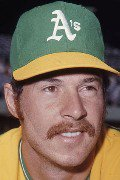
WHY I THINK GENE TENACE SHOULD BE IN COOPERSTOWN

WHY I THINK GENE TENACE SHOULD BE IN COOPERSTOWN 

By- Damien 


Even though I title each of my articles this way, I do not believe that every player who I advocate positively belongs in the Hall of Fame. For example, I wrote this article at the request of a friend. While I wouldn’t vote for him to be in, I can see that he was a very impressive player. I would classify him as a catcher, but he played 627 games at first base, compared with 893 behind the plate, and never caught more than 126 in a season. He was a solid defensive catcher with a rather peculiar slash line of .241/.388/.429, as he wasn’t a consistent hitter but he had power and walked a lot. He was a vital part of the World Champion A‘s of 1972-74 and of the Cardinals in 1982. Gene Tenace began his career with the A’s in the summer of 1969, for a 16 game trial. He played no more than 82 games in a season until 1973. That season Tenace hit 24 homers and walked 101 times and established himself as an everyday player in the Oakland lineup. In 1974, Tenace batted just .211, but his 26 homers and league leading 110 walks helped him to a healthy .778 OPS. In 1975, Tenace made his only AL all-star team as a first baseman. He was dealt to the Padres before the 1977 season and he was immediately appreciated in San Diego, as he led the Majors in walks (125) and hit by pitch (13) for an OBP of .415, a career high. Tenace had perhaps his best season in 1979, when he batted .263/.403/.445 with 20 homers and 67 RBI’s. He played two years with the Cardinals and one with the Pirates, working as a utilityman and pinch hitter for them in 1983. Gene Tenace was a good hitter, an important part of many postseason teams and World Series Champs, and an interesting baseball card (six seasons with 100+ hits and six with 100+ walks). I couldn’t vote for him on account of his low batting average and counting statistics, but he certainly was a valuable player in his prime. 


LIFETIME STATISTICS 

Games career: 1,555 season high: 160 in 1973 

At Bats career: 4,390 season high: 510 in 1973 

Hits career: 1,060 season high: 132 in 1973 

Doubles career: 179 season high: 24 in 1977 

Triples career: 20 season high: 4 in 1977, 1978, and 1979 

Home Runs career: 201 season high: 29 in 1975 

Runs career: 653 season high: 83 in 1973 and 1975 

Runs Batted In career: 674 season high: 87 in 1975 

Stolen Bases career: 36 season high: 7 in 1975 

Walks career: 984 season high: 125 in 1977 led AL: 110 in 1974 led NL: 125 in 1977 

Strikeouts career: 998 season high: 127 in 1975 

Batting Average career: .241 season high: .263 in 1979 

On Base Percentage career: .388 season high: .415 in 1977 

Slugging Percentage career: .429 season high: .464 in 1975 

Total Bases career: 1,882 season high: 231 in 1975 

Sacrifice Hits career: 21 season high: 8 in 1973 

Fielding Percentage career: .989 season high: .993 in 1979 led NL C: .998 in 1979 

Double Plays career: 489 season high: 108 in 1973 

Putouts career: 8,731 season high: 1,218 in 1973 

Assists career: 743 season high: 112 in 1977 

Caught Stealing Percentage career: .360 season high: .475 in 1979 

Pickoffs career: 13 season high: 3 in 1972 and 1981 


DID YOU KNOW? 

-nicknamed “Steamboat” 

-was the MVP of the 1972 World Series (.348 average, a record four homers, nine RBI’s), and his .913 slugging percentage set the record for a seven game Series 

-tied Babe Ruth’s record of 11 walks in the 1973 World Series 

-won the 1972 Babe Ruth Award 

-finished 18th in the AL MVP Award voting in both 1975 and 1976 

-was the AL Player of the month in September 1975 

-won two career Player of the Week awards 

-was the first player ever to homer in his first two World Series at bats 

-hit the last home run in Kansas City’s Municipal Stadium 

-caught Vida Blue’s no-hitter on September 21, 1970 

-also played five games at second base, 17 at third base, 11 in the outfield, six as a DH, and eight as a pinch runner

Tuesday, November 30, 2021

WHY I THINK OREL HERSHISER SHOULD BE IN COOPERSTOWN

WHY I THINK OREL HERSHISER SHOULD BE IN COOPERSTOWN 

By- Damien 


As soon as he came up to the Majors, many people could tell that Orel Hershiser would be one of the greatest pitchers in history. He was one of the great postseason performers of all time, a hard luck pitcher whose record doesn’t do him justice (he gave up 155 unearned runs, including as many as 20 in a season), a workhorse on the mound who led the NL in innings pitched three times in a row, and a star who made waves in 1988 as he eclipsed Don Drysdale’s record for consecutive scoreless innings (59). Hershiser was also a very good fielding pitcher, hard to steal on because he had a good pickoff move, and a good hitter (he was a Silver Slugger in 1993 when he hit .356), providing value in other, integral parts of the game. Orel Hershiser started his career with the Dodgers in 1983, pitching eight games out of the bullpen. A fastball-sinker pitcher until his late career when he added a slider, he attained rookie status in 1984 when, despite starting only 20 games, he led the NL with four shutouts. He went 11-8 with a 2.66 ERA in that first season. He had a Cy Young type season in 1985 (19-3, 2.03 ERA), but slumped to 14-14 in 1986. Hershiser went 16-16 with a 3.06 ERA in 1987 (when the ball was livened up and teams averaged over a homer a game for the first time in history) and won the Cy Young Award in 1988, when he won 23 games and posted a 2.26 ERA. In 1989, he went 15-15, but was about as good as he was the year before, striking out the exact same amount of batters (178) and putting up an almost identical ERA (2.31). In 1990, however, a torn labrum in his right (pitching) arm limited him to just over 25 innings, and he pitched only 112 in 1991. If not for the injury, he could have had a shot at 250 wins. That, and the 1994-95 strike that ended his tenure with the Dodgers, ruined his chances at the milestone. At any rate, he signed with the Indians and won 16 games for them in 1995, leading them to their first postseason since 1948. As he had been in 1988, he was brilliant in the postseason, going 4-1 with an ERA of 1.53, but the Tribe lost to the Braves in the World Series. The hard hitting 1990’s, tainted by many artificial factors, such as the widespread use of anabolic steroids, brought Hershiser’s career ERA up to almost 3.50, but his seasonal ERA’s were above average until 2000, when he pitched 24 ⅔ innings for the Dodgers at the age of 41. He went 1-5 in his return to the club before his retirement. Like Drysdale, he moved to the broadcaster’s booth, and is still active today calling Dodger games. Orel Hershiser was one of the greatest postseason hurlers of all time, a good pitcher through his age 40 season, and a phenom who lit up the nation with his consecutive inning scoreless streak. For all of his many achievements, Orel Hershiser gets my vote for the Hall of Fame. 


LIFETIME STATISTICS 

Games Pitched career: 510 season high: 45 in 1984 

Starts career: 466 season high: 35 in 1986 and 1987 

Complete Games career: 68 season high: 15 in 1988 led NL: 15 in 1988 

Shutouts career: 25 season high: 8 in 1988 led NL: 4 in 1984, 8 in 1988 

Games Finished career: 19 season high: 10 in 1984 

Wins career: 204 season high: 23 in 1988 led NL: 23 in 1988 

Losses career: 150 season high: 16 in 1987 led NL: 15 in 1989 and 1992 

Winning Percentage career: .576 season high: .864 in 1985 led NL: .864 in 1985     

ERA career: 3.48 season low: 2.03 in 1985 

WHIP career: 1.261 season low: 1.031 in 1985 

Innings Pitched career: 3,130 ⅓ season high: 267 in 1988 led NL: 264 ⅔ in 1987, 267 in 1988, 256 ⅔ in 1989 

Strikeouts career: 2,014 season high: 190 in 1987 

Strikeouts Per Nine Innings career: 5.8 season high: 7.1 in 1984 

Walks career: 1,007 (108 intentional) season high: 86 in 1986 

Strikeouts Per Walk career: 2.00 season high: 3.00 in 1984 

Saves career: 5 season high: 2 in 1984 

Fielding Percentage career: .946 season high: .983 in 1998 

Double Plays career: 44 season high: 6 in 1986, 1987, and 1988 

Putouts career: 332 season high: 37 in 1987 led NL P: 37 in 1987, 32 in 1988, 22 in 1994 

Assists career: 569 season high: 60 in 1988 led NL P: 60 in 1988, 51 in 1989 led AL P: 47 in 1996 

Caught Stealing Percentage career: .342 season high: .667 in 1997 

Pickoffs career: 18 season high: 5 in 1988 


DID YOU KNOW? 

-nicknamed “Bulldog” by manager Tommy Lasorda 

-pitched five consecutive shutouts in 1988

-had an ERA of 0.00 in three career all-star games (1987-89) 

-was the Major League Player of the Year, the Sports Illustrated Sportsman of the Year, and The Sporting News Pitcher of the Year in 1988 

-won the 1988 Babe Ruth Award (for the best performance in the postseason) 

-won six career Pitcher of the Month awards and four Player of the Week awards 

-won a Gold Glove in 1988 

-twice led the NL in batters faced 

-allowed the fewest home runs per nine innings in the Majors in 1985 

-finished sixth in the NL MVP Award voting in 1988 and 16th in 1985 

-also finished third in the NL Cy Young Award voting in 1985 and fourth in both 1987 and 1989 

-finished third in the NL Rookie of the Year Award voting in 1984 

-had a career ERA of 3.46 until his final start, which raised it to 3.48

-was the MVP of the 1988 NLCS (1-0, 1 save, 1.09 ERA in 24 ⅔ innings), the 1988 World Series (2-0, 1.00 ERA in 18 innings), and the 1995 ALCS (2-0, 1.29 ERA in 14 innings) 

-was 8-3 with a 2.59 ERA and two shutouts in postseason play, and was the first to win his first seven decisions 

-had 101 career sacrifice hits, including a NL high 19 in 1988 

-went 2-for-7 in the 1985 NLCS and 3-for-3 with two doubles in the 1988 World Series  

-among MLB pitchers, ranks eighth in career putouts 

-was used as a pinch hitter six times and as a pinch runner three times 

-coached the Rangers from 2002 through 2005

Wednesday, August 19, 2020

WHY I THINK BRET SABERHAGEN SHOULD BE IN COOPERSTOWN

WHY I THINK BRET SABERHAGEN SHOULD

BE IN COOPERSTOWN

By- Damien 


Bret Saberhagen was as dominant as a pitcher could get for a lot of his career. He won two Cy Young Awards and finished third in 1994, once pitched 177 ⅓ innings in a season while allowing only 13 walks, won 20 games in a season twice and won the 1989 AL ERA title, the 1985 World Series MVP award, and even a Gold Glove award. He used his fastball, changeup, slider and curveball to devastate opposing batters for sixteen seasons. Bret Saberhagen started his career with the Royals in 1984 by going 10-11. He was the ultimate example of a second year standout when he went 20-6 on a 2.87 ERA in 1985, leading the fine Kansas City team to the World Series, where he went 2-0 on a 0.50 ERA with ten strikeouts. Saberhagen fell to 7-12 in 1986 and ditched his slider to strengthen his curveball. The day he chose to do so, all of the batters in the AL let out a groan, for Saberhagen went 18-10 in 1987. After a 14-16 1988 season, Saberhagen went 23-6 and led the NL in wins, innings pitched, complete games and ERA on the way to his second Cy Young award. Despite Saberhagen’s 3.27 ERA, he went only 5-9 in 1990 but came back strong in 1991 to go 13-8. He was traded to the Mets in 1992 and went 3-5 and 7-7 before going 14-4 with a 2.74 ERA and 5-5 before being traded in the middle of 1995 to the Rockies, where he finished the year by going 2-1 with them. An injury kept Saberhagen out of baseball in 1996 and he was traded to the Red Sox but recorded only one decision in 1997 before going 15-8 and 10-6. He stayed out of baseball in 2000 and came back to win a game in 2001 before hanging up his spikes for good. Bret Saberhagen was one of the best pitchers of his day, a great fielding pitcher and a winning ballplayer deserving of the Hall of Fame, which is something that not very many players can say. 


LIFETIME STATISTICS

Games Pitched career: 399 season high: 38 in 1984

Starts career: 371 season high: 35 in 1988 and 1989

Complete Games career: 76 season high: 15 in 1987 led AL: 12 in 1989

Shutouts career: 16 season high: 4 in 1987 and 1989
Games Finished career: 13 season high: 9 in 1984

Wins career: 167 season high: 23 in 1989 led AL: 23 in 1989

Losses career: 117 season high: 16 in 1988

Winning Percentage career: .588 season high: .793 in 1989 led AL: .793 in 1989

ERA career: 3.34 season low: 2.16 in 1989 led AL: 2.16 in 1989

WHIP career: 1.141 season low: 0.961 in 1989 led AL: 1.058 in 1985, 0.961 in 1989

Innings Pitched  career: 2,562 ⅔ season high: 262 ⅓ in 1989 led AL: 262 ⅓ in 1989

Strikeouts career: 1,715 season high: 193 in 1989

Strikeouts Per Nine Innings career: 6.0 season high: 7.3 in 1994

Walks career: 471 (34 intentional) season high: 59 in 1988

Strikeouts Per Walk career: 3.64 season high: 11.00 in 1994 led AL: 4.16 in 1985, 4.49 in 1989, 11.00 in

1994

Saves career: 1 season high: 1 in 1984

Fielding Percentage career: .963 season high: .971 in 1998 

Double Plays career: 26 season high: 5 in 1987 

Putouts career: 203 season high: 22 in 1985

Assists career: 415 season high: 38 in 1985


DID YOU KNOW

-nicknamed “Sabes” 

-had a .431 career caught stealing percentage at pitcher

-is one of the few pitchers ever to have more wins in a season than walks (14 and 13 in 1994)

-his 3.64 career strikeout per walk ratio ranks the 24th highest of all time, and his 11.00 in 1994 is the

second highest season mark ever

-had two career three pitch innings

-was a three time all-star (in 1987, 1990,and 1994)

-hit two doubles in 1994

-finished eighth in the AL MVP voting in 1989, tenth in 1985 and 22nd in 1994

-allowed only 1.7 walks per nine innings across his career, and allowed the fewest in the AL in 1985 (1.5)

and 1994 (0.66)

-won two TSN Pitcher of the Year awards and the 1985 AL Babe Ruth Award (for the best performance

in the postseason)

-won five Pitcher of the Month awards and four Player of the Week awards

-pitched a 7-0 no-hitter over the White Sox on August 26, 1991 

-in 1994, he pitched ten scoreless innings in a team loss, and was the last to do so until 2012 

-pitched a complete game shutout in Game 7 of the 1985 World Series 

-was the winning pitcher of the 1990 MLB all-star game 

-was the 1998 NL Comeback Player of the Year

-was inducted into the Kansas City Royals Hall of Fame in 2005