Showing posts with label first baseman. Show all posts

Saturday, July 25, 2026

Bill White Receives 2026 Buck O'Neil Award


Today, Bill White, 92, received the 2026 Buck O'Neil Lifetime Achievement Award. The Award is given to honor an individual "for extraordinary efforts to enhance baseball's positive impact on society." 

White's career as a player spanned from 1956 through 1969, although he missed all of 1957 and most of 1958 in military service. A first baseman for the Giants, Cardinals, and Phillies, White had seven 20-homer seasons, won seven Gold Gloves, and played in eight all-star games. He finished his career with a .286 batting average and 202 homers. 

In 1971, White became a broadcaster for the Yankees, a position he would hold for 18 years. In 1989, he left the broadcast booth to become NL President, which he was voted for unanimously. He served as president for five years, presiding over expansion in 1993. He later became a member of the Veterans Committee. 

Bill White served baseball for over 40 years in various capacities. His impact on the game was monumental and brought genuine improvements to our National Pastime. Congratulations to White for a well-deserved award. 

Thursday, July 16, 2026

WHY I THINK ED KONETCHY SHOULD BE IN COOPERSTOWN

WHY I THINK ED KONETCHY SHOULD BE IN COOPERSTOWN 

By- Damien 


While first base is an offensive position today, that was not always the case. Up until around 1920 (the start of the live-ball era), ground balls, bunts, and trick plays like the Baltimore Chop were far more common than they are today, requiring the first baseman to work as hard as any other infielder. A first sacker who played from 1907 through 1921, Ed Konetchy was a strong hitter and an outstanding fielder at one of the most important positions on the diamond. Considering the hard work required to play first base in Konetchy’s era, it makes his batting feats even more impressive. 

Edward Joseph Konetchy was born on September 3, 1885, in La Crosse, Wisconsin. He was one of seven children to Bohemian immigrant parents. As a child he worked for a candy factory, and at age 16 he joined the factory’s baseball team. At 19 he was playing for the local professional team, the La Crosse Pinks (named after manager Pink Hawley), and after three seasons in the minors, he was ready for the Big Leagues. 

Konetchy made his MLB debut for the St. Louis Cardinals on June 29, 1907. After a strong all-around season, he locked down the Cards’ first base job. On a lackluster team with few bright spots, Konetchy was St. Louis’s hero for years. Not only was he developing into a top-notch defender, but he was also establishing himself as a top hitter, consistently finishing in the NL’s top ten in batting, home runs, and RBI’s. His power hitting feats earned him the nickname “Big Ed.” 

Konetchy led the league with 38 doubles in 1912 and batted .314 in 1913, sparking a thunderstorm of trade rumors. “I’m the most traded man in baseball without getting anywhere,” he once remarked. John McGraw made frequent attempts to get him, and Fred Clarke of the Pirates even considered trading an older Honus Wagner for him. Konetchy eventually went to Pittsburgh in an eight player deal (which did not include Wagner) on December 13, 1913. After an off year, he jumped to the Federal League’s Pittsburgh Rebels, where he batted .314 with 10 homers, 93 RBI’s, and led the league in total bases and extra-base hits. After the Federal League folded, Konetchy returned to the NL, playing all 158 of the Boston Braves’ games in 1916 and providing the best bat in their lineup. 

Konetchy played in the Majors until 1921, his age-36 season. He was still a productive player, batting .308 in 1920 and reaching his career high in homers in 1921. Despite playing his final MLB game, Konetchy’s career was far from over, as he spent six seasons in the minor leagues. The high minors in those days were comparable, if not equivalent, to the quality of the Major Leagues, and they sported many MLB stars still at the top of their game. Konetchy spent four of his final six seasons in class-A ball, including 1923, when he batted .307 with 50 doubles and 22 home runs, and 1925, when he hit .345 and led the Texas League in homers (41) and RBI’s (166) in 155 games. Konetchy had one more productive season in 1926 (.325 average, 21 homers) and hung up his spikes for good after a short stint in 1927. He had played 23 seasons in organized ball, collecting over 3,000 hits and 500 doubles. 

Ed Konetchy was one of the best players of his era and has a strong case for the Hall of Fame. WAR is relatively tough on him because he was a first baseman, but WAR makes the assumption that first base is a premium offensive position, whereas in Konetchy’s time that was simply not the case. In reality, he was a premier defender at a defense-first position, leading his league in fielding eight times, putouts five times, and assists five times. Konetchy was also a talented hitter with a career OPS+ of 123, a remarkable number for a defensive player. In addition to his power, Konetchy was known for his speed, stealing 255 bases and rapping 182 career triples, the most of any player outside of Cooperstown. He even tried his hand at pitching, earning a win in 1913 and throwing a complete game in 1918. And while his minor league statistics should not be counted with his MLB stats, they shouldn’t count for nothing, as they provide evidence that he could still clearly play at a high level. 

Ed Konetchy was a complete player with a long career in a pitcher-friendly era. He was consistently one of the league’s best players, both offensively and defensively, and never had a declining phase. He would be a worthy pick for the Hall of Fame. 


LIFETIME STATISTICS 

Games career: 2,085 season high: 158 in 1911 and 1916 led NL: 158 in 1911 and 1916 

At Bats career: 7,649 season high: 576 in 1909 and 1915 

Hits career: 2,150 season high: 181 in 1915 

Doubles career: 344 season high: 38 in 1911 led NL: 38 in 1911 

Triples career: 182 season high: 18 in 1915 

Home Runs career: 74 season high: 11 in 1921 

Runs Scored career: 972 season high: 90 in 1911 

Runs Batted In career: 992 season high: 93 in 1915 

Stolen Bases career: 255 season high: 27 in 1911, 1913, and 1915 

Walks career: 689 season high: 81 in 1911 

Strikeouts career: 719 season high: 69 in 1908 

Batting Average career: .281 season high: .314 in 1912 and 1915 

On Base Percentage career: .346 season high: .397 in 1910 

Slugging Percentage career: .403 season high: .483 in 1915 

Total Bases career: 3,080 season high: 278 in 1915 led FL: 278 in 1915 

Sacrifice Hits career: 253 season high: 25 in 1908 and 1914 

Fielding Percentage career: .990 season high: .995 in 1913 and 1914 led NL 1B: .991 in 1910 and 1911, .995 in 1913 and 1914, .994 in 1917 and 1919, .992 in 1918 led FL 1B: .994 in 1915 

Double Plays career: 1,094 season high: 96 in 1916 led NL 1B: 96 in 1916 

Putouts career: 21,378 season high: 1,652 in 1911 led NL 1B: 1,584 in 1909, 1,499 in 1910, 1,652 in 1911, 1,576 in 1914, 1,626 in 1916 

Assists career: 1,297 season high: 122 in 1908 led NL 1B: 122 in 1908, 97 in 1909, 98 in 1910, 93 in 1914, 96 in 1916 


DID YOU KNOW? 

-Stole home twice in one game on September 30, 1907 

-Had a 20-game hitting streak from August 27 through September 22, 1910 

-Hit two inside-the-park home runs in one game on August 5, 1912 

-Tied a record with 10 consecutive hits from June 28 through July 1, 1919 

-Earned MVP votes in 1911 (22nd) and 1912 (12th) 

-Ranks 15th in career triples and 39th in sacrifice hits 

-Among MLB first baseman, he ranks third in career putouts, 15th in games, and 28th in assists 

Ferris Fain


    It's a shame that hardly anyone remembers Ferris Fain anymore. He was a truly incredible first baseman with an extraordinary batting eye, but his career lasted only nine seasons due to various injuries. While his career was too short to merit Hall of Fame consideration, Fain was a truly remarkable player who ought not to be forgotten. 
    Ferris Fain started his professional career with the San Francisco Seals in 1939, playing twelve games under manager Lefty O'Doul. He played with the Seals until 1942, when he enlisted in the service during World War II. When he returned in 1946, Fain batted .301 and led the PCL with 112 RBI's, resulting in his promotion to the Majors in 1947. 
    As a 26-year-old rookie for the Philadelphia Athletics, Fain batted .291 and drew 95 walks, giving him an on-base percentage of .414. He drew 113 walks in 1948 and had 100 or more walks in five different seasons, including two with over 130. Fain also won Batting Titles in 1952 and 1953, contributing to a lifetime OBP of .424, which is the 15th highest mark of all time (minimum 3,000 plate appearances). 
    In addition to his on-base skills, Fain developed a reputation as a brilliant defensive first baseman, particularly on bunt plays. An extremely aggressive fielder, Fain would often field bunts on the third base side of the field and throw out the lead runner, leaving his opponents in disbelief. Onlookers swore he was the best first baseman they had ever seen, and the statistics back him up. In 1949, despite playing a 154-game season, Fain turned 194 double plays, the most of any first baseman in history, topping the previous record by 31. The very next year, Fain turned 192 twin-killings, to this day the second most in history and ten more than the third-place finisher. If Gold Gloves existed back then, Fain would have been a perennial winner. 
    Unfortunately, knee troubles took their toll on Fain, and he was limited to 65 games in 1954. However, he still managed to make his fifth consecutive all-star team, combining with White Sox teammates Nellie Fox, Chico Carrasquel, and George Kell to form the first starting all-star infield from one team. Fain finished the season batting .302 and played one last season in 1955, drawing 94 walks in 114 games between the Tigers and the Indians. 
    Ferris Fain was a great player whose abilities on both offense and defense were simply magnificent. If his career were longer, he would have been a legitimate Hall of Fame candidate. Nonetheless, Fain made his mark on baseball history and ought to be remembered today. 

Sunday, June 30, 2024

Requiescat In Pace, Orlando Cepeda

In Memoriam

Orlando Cepeda (1937-2024)

Hall of Famer, 1967 NL MVP, 1958 NL ROY, 11x All-Star, 1967 World Series champion, Inaugural DH of the Year award winner in 1973, 1961 NL HR champion, 2x NL RBI leader, First Puerto Rican player to start an All-Star Game. The Baby Bull. 


Orlando Cepeda passed away on Friday at the age of 86. 


Image and tribute courtesy of baseball-reference.com


Friday, January 26, 2024

Lucky Hall Of Famer Number 53 - Orlando Cepeda

When he was first coming up, Orlando Cepeda was one of the most exciting young players in baseball. A highly touted prospect, he was the NL's unanimous Rookie of the Year in 1958. He first became an all-star in 1959, and led the league in homers and RBI's in 1961. One of the most popular players in the game, he took home NL MVP honors in 1967 and was elected to the Hall of Fame in 1999 by the Veterans Committee. 
    Although his basic batting numbers look impressive (.297 / .350 / .499, 379 homers, 1,365 RBI's), Cepeda was not an ideal Hall of Famer and, in fact, a bit overrated. While most voters prefer simplistic batting stats, they rarely take into account things like defense and baserunning. Cepeda was a poor fielder, whether at first base or in the outfield, and was a lackluster baserunner. He did a lot of other little things wrong, too - for example, he didn't walk much for a power hitter, grounded into a lot of double plays, and batted .171 in three World Series. An "old 30," Cepeda had only one big year after he turned 30, when he hit .305 with 34 homers in 1970. 
    Cepeda was the unanimous choice for the MVP Award in 1967, more for popularity than merit. He had a nice season (.325 / .399 / .524, 25 homers, 111 RBI's), but hardly his best. Certainly Roberto Clemente, who hit 32 points higher and was miles ahead both defensively and on the bases, would have been a better pick. Cepeda wound up with 280 vote points and the award, while Clemente finished third with 129 vote points. 
    Although he was very popular and his basic batting numbers seem convincing, Cepeda was aged off the BBWAA ballot in 1994 and relied on the Veterans Committee for induction. The reason for this is, a few years after his retirement from baseball, he served a ten month jail sentence for drug possession. This put a huge damper on his reputation, and he struggled with the BBWAA until the VC came to his rescue. 
    Personally, I would not vote for someone who was imprisoned for breaking the law. While I admit that not everyone in Cooperstown was the embodiment of Christian virtue (nobody's perfect), there is a hard line between being an unpleasant person and actually being a convicted felon. While it is impossible for us to judge someone's mind or soul (nor should we try), it is possible to judge someone's actions, and Cepeda was found guilty of a crime and served jail time. That, and his already marginal career as a player, is enough for me to exclude Cepeda from my ballot. 
    Just a small tangent: Isn't it absurd that Joe Jackson, who was found not guilty on trial for helping throw the 1919 World Series, was banned from baseball for life, while Cepeda, who served jail time, is in the Hall of Fame? 


My opinion: Orlando Cepeda is not a Hall of Famer. 

Thursday, October 12, 2023

Fred Merkle

    Whenever anyone hears the name Fred Merkle, one thing immediately comes to mind - Merkle's Boner. Merkle's Boner was a baserunning mistake that he made in September 1908 that affected the pennant race between the New York Giants and the Chicago Cubs, a race that the Cubs ultimately won. Although it's unfair to define any player's career by one solitary rookie mistake, Merkle had a reputation as a bonehead for the rest of his career (and his life). That's quite the shame, especially considering how good a player he really was. 
    Fred Merkle made his Major League debut on September 21, 1907 at the age of 18, driving in a run against the Reds. He played 15 games that season and 38 in 1908, and did pretty well. However, the teenager made the one mistake in 1908 that tarnished his entire career. Who knows how good Merkle could have been if he had popular support? He soon became one of the best first basemen in the league, gaining a reputation as a strong hitter, an excellent baserunner, and a decent fielder, and even received MVP votes in 1911 and 1912, but the press still referred to him as Bonehead. What an insult to one of the headiest players in the game, the only player who manager John McGraw would consult for strategy. 
    In April 1917, Merkle's contract was purchased, of all teams, by the Cubs. He gave them four solid seasons before his release in 1921. He then played five seasons for Rochester in the International League, batting a combined .343 in 699 games. The Yankees purchased his contract in midseason 1925 and he played in seven games for the Bronx Bombers, going 5-for-13. He played one game for the Yanks in 1926 before returning to the International League in 1927, batting .307 in 38 games as a player-manager for the Reading Keystones. One day, a player referred to him as a bonehead, and he simply walked off the diamond, never to return. All told, he had more than 2,700 hits in his pro career. 
    Growing up a Giants fan, Fred Merkle is a name that I've been familiar with since a very young age. I never thought it was fair to remember him as a bonehead, considering his long and successful career. Let us instead remember Fred Merkle as a star first baseman throughout the 1910's and 1920's, one of the truly underappreciated players of all time. 

Tuesday, August 1, 2023

Clarence "Big Boy" Kraft


    Clarence Kraft is a name you seldom hear today. He only appeared in three MLB games, all as a member of the Miracle Boston Braves in 1914. Despite his unremarkable MLB career, Kraft was a fantastic player, one of minor league baseball's best power hitters in the 1920's, and a successful two way player. 
    Clarence Kraft got his start in professional baseball in 1910, playing first base and pitching in three different minor leagues. He played 126 games for Flint in the Southern Michigan League in 1911, batting .316 with 19 home runs, and impressed again in 1912 with 15 homers and a .277 average (I guess he did so well because he didn't drink the water). After reaching double digits in home runs again in 1913, Kraft's path to the Majors started to straighten, and he was up with Boston by May 1. He played his final game on the 14th, having gone 1-for-3 and playing four innings at first base. Kraft spent the remainder of the season with the Newark Indians, posting an .825 OPS in 96 games. He played for a handful of different teams in the following three years, and found stability in 1918 with the Fort Worth Cats in the Texas League. He hit .308 during his first season in Texas and .275 in the next. In 1921, when the live ball era started rolling, so did Kraft. He batted .352 with 31 home runs in 154 games, earning his nickname "Big Boy." From 1922 through 1924 (his age 35-37 seasons), Kraft batted .339, .324, and .349 while belting 32, 32, and 55 home runs, respectively. In 1924, Kraft set Texas League records for RBI's, runs scored, total bases, and extra-base hits. After his historic season, Kraft retired from baseball to open an auto dealership. He later served as a judge in Tarrant County until his death in 1958, at the age of 70. 
    All told, Kraft batted .316 with 170 homers in seven seasons in the Texas League. He had over 2,000 career hits in the minor leagues. As a pitcher, he had 29 wins in 71 milb games, including a 13-2 mark in 1910. Clarence Kraft's career was very successful, and one that should be remembered. 

Wednesday, March 8, 2023

WHY I THINK MICKEY VERNON SHOULD BE IN COOPERSTOWN

WHY I THINK MICKEY VERNON SHOULD BE IN COOPERSTOWN 

By- Damien 
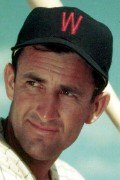


Mickey Vernon was the AL’s top first baseman during his prime. A seven time all-star and two time batting champion, Vernon starred on both offense and defense. At the plate, he collected 2,495 hits, including 490 doubles and 120 triples, and had four seasons over .300. In the field, four time fielding champion Vernon was, in the words of Baltimore Orioles executive Jack Dunn, “the only man in baseball who could play first base in a tuxedo, appear perfectly comfortable, and never wrinkle his suit.” He was especially adept at turning double plays, turning two 2,044 times in his career, more than anyone else in MLB history, at any position. 

James Barton Vernon was born on April 22, 1918, in Marcus Hook, Pennsylvania. He acquired the nickname Mickey as a small child. There was no baseball team at his high school, so he played several years in Legion ball. Being a lefty, he knew he couldn’t play infield, so he decided to focus on first base. Vernon received a baseball scholarship from Villanova University, but only played one year at the college. He was signed by the St. Louis Browns in 1937 and played a season in their farm system. The Senators picked him up in 1938 and he was with their big club by 1939. He had his breakout season in 1941, batting .299 with 93 RBI’s. He followed up with another strong season in 1942 (.271, 86 RBI’s, 25 stolen bases) and hit .268 in 1944 before being called into military service with the U.S. Navy. When he returned in 1946, Vernon was better than ever. He batted .353 with 51 doubles, leading the AL in both categories, and finished fifth in the MVP Award voting. Vernon struggled in 1948, which resulted in his trade to the Indians. He had an all-star season in 1949 (.291 - 18 - 83), and like the Prodigal Son returning home, the Senators got him back and enjoyed the AL’s finest first baseman for the next several years. Vernon had the best season of his career in 1953, slashing .337/.403/.518 with 15 homers and 115 RBI’s, winning his second batting crown and finishing third in the MVP voting. He followed up with another stellar season in 1954, hitting a career high 20 homers and driving in 97 runs, and hit over .300 in each of the next two seasons. Vernon returned to Cleveland in 1958 and made his final all-star team at the age of 40, but started to wind down his career after that. He played his last MLB season in 1960, appearing in nine games as a pinch hitter, making him baseball’s 13th four decade player. Having come up one of the youngest players in the game in 1939, he retired in 1960 as the oldest. Vernon later managed the Senators for a few years, posting a .373 winning percentage in parts of three seasons. He also coached for 14 years with four different Big League clubs. He finished up his career in 1988 as a scout for the Yankees. 

Mickey Vernon was considered one of the biggest stars in the game during his time, but is largely underrated nowadays. A lot of people glance over Vernon’s name in Hall of Fame debates, taking one look at his hitting stats without taking them into account. On the surface, his .286 average and 172 homers look modest for a first baseman, but his numbers need a closer look to be truly understood. He played 14 of his 20 Big League seasons in Washington’s cavernous Griffith Stadium, which dramatically affected his power numbers. Out of his 172 career home runs, he hit 115 of them on the road, and might have had 250 homers in a more hitter friendly park. While Vernon’s bat had some significant pop, he wasn’t known as a power hitter, instead capturing two batting titles and three times leading the American League in doubles. He collected 2,495 hits and could have surpassed 2,750 if he hadn’t lost two years during the war. A consistent run producer, he had eleven seasons with 80 or more RBI’s, driving in over 1,300 runs in his career. Vernon was such a feared clutch hitter that the great Satchel Paige himself thought highly enough of him to announce that “If I was pitching and it was the ninth inning and we had a two run lead with the bases loaded and Mickey Vernon was up, I’d walk him and pitch to the next man.” Despite his batting prowess, Vernon stood out most on defense, leading the league in fielding four times and turning 2,044 double plays, making him the first of only three first basemen with over 2,000. His 168 double plays in 1949 are the eighth most of all time, and his 158 in 1953 rank 17th. 

All in all, Mickey Vernon is a very good Hall of Fame candidate. He was a dangerous hitter and one of the best fielding first basemen of all time. I am not sure that he necessarily belongs in Cooperstown, but his career certainly deserves a closer look. 


LIFETIME STATISTICS 

Games career: 2,409 season high: 154 in 1947 and 1952 

At Bats career: 8,731 season high: 621 in 1942 

Hits career: 2,495 season high: 207 in 1946 

Doubles career: 490 season high: 51 in 1946 led AL: 51 in 1946, 43 in 1953, 33 in 1954 

Triples career: 120 season high: 14 in 1954 

Home Runs career: 172 season high: 20 in 1954 

Runs Scored career: 1,196 season high: 101 in 1953 

Runs Batted In career: 1,311 season high: 115 in 1953 

Stolen Bases career: 137 season high: 25 in 1942 

Walks career: 955 season high: 89 in 1952 

Strikeouts career: 869 season high: 66 in 1952 

Batting Average career: .286 season high: .353 in 1946 led AL: .353 in 1946, .337 in 1953 

On Base Percentage career: .359 season high: .403 in 1946, 1953, and 1956 

Slugging Percentage career: .428 season high: .518 in 1953 

Total Bases career: 3,741 season high: 315 in 1953 

Sacrifice Hits career: 80 season high: 15 in 1949 

Fielding Percentage career: .990 season high: .994 in 1951 and 1955 led AL 1B: .991 in 1950, .994 in 1951, .993 in 1952, .992 in 1954 

Double Plays career: 2,044 season high: 168 in 1949 led AL 1B: 122 in 1941, 158 in 1953, 144 in 1954 

Putouts career: 19,819 season high: 1,438 in 1949 led AL 1B: 1,438 in 1949, 1,376 in 1953, 1,365 in 1954 

Assists career: 1,448 season high: 155 in 1949 led AL 1B: 155 in 1949 


DID YOU KNOW? 

-also finished ninth in the AL MVP Award voting in 1954, 21st in 1956, and 23rd in 1955 

-made both the AP all-star team and The Sporting News all-star team in 1953 

-beat Al Rosen in the 1953 batting race by less than a thousandth of a point, with Rosen thrown out by half a step in his last at bat of the season, depriving him of a Triple Crown 

-hit for the cycle on May 19, 1946 

-led the MLB in hit by pitch in 1943 (10) 

-led the AL in extra-base hits in 1954 (67) 

-led the AL in putouts at any position in 1949, 1953, and 1954 

-led AL first basemen in games in 1947 (154), 1949 (153), 1954 (148), and 1955 (144) 

-holds AL career records for total chances, putouts, games at first base, and assists from first base 

-turned two triples plays in his career (on September 14, 1941 and May 22, 1953) 

-his 155 assists from first base in 1949 are the 14th most of all time 

-ranks seventh in career putouts at any position 

-among MLB first basemen, ranks fourth in career games, seventh in putouts, and 11th in assists

Tuesday, April 12, 2022

WHY I THINK FRANK McCORMICK SHOULD BE IN COOPERSTOWN

WHY I THINK FRANK McCORMICK SHOULD BE IN COOPERSTOWN

By- Damien 


Frank McCormick has a rather interesting Hall of Fame case. He was the NL’s best defensive first baseman in the 1940’s and late 1930’s, a three time league leader in hits, and the NL MVP in 1940. He played in 12 games for the Reds in 1934, ten as a pinch hitter, and went 5-for-16. At 23 years old, the future looked bright for young McCormick. Unfortunately, he was demoted to the minors, and although he excelled (including a .381 mark with 49 doubles in 1936), it took him almost three full years to get back to the big club. He played sparingly in 1937, but he batted .325 in 24 games, so the Reds, not wanting to make the same mistake twice, immediately added McCormick to their starting lineup for 1938. This proved to be a good move, as he led the NL in hits and drove in more than 100 runs in each of his first three full seasons. He led the Reds to consecutive pennants in 1939 and 1940, losing out to the Yankees in ‘39 but topping Detroit in ‘40. McCormick slumped to .269 and 97 RBI’s in 1941, but struck out only 13 times, making him the hardest batter in the league to whiff. He soon regained his old batting stroke, topping .300 in both 1943 and 1944. McCormick had a particularly good year in 1944, when he hit .302 with 20 home runs and 102 RBI’s, helping him to his eight consecutive all-star selection and his best season since 1940. McCormick seemed to be finished in 1945, as he cut his home run total in half, so the Reds dealt him over to Philadelphia and the Phillies. He responded with his ninth all-star season in 1946, when he set the MLB record for fielding percentage by a first baseman (.999). McCormick batted .333 in 1947, mostly with the Boston Braves, and finished out his career with the club in 1948. He drove in 34 runs in 180 at bats in the regular season, and helped the team to its first World Series title since 1914. Frank McCormick was a tough out, a good RBI man, and a fine defensive first baseman. If his career was not put on hold for three seasons, I’d imagine that he would be in the Hall of Fame today, and he would not be out of place if he were inducted sometime in the future. 


LIFETIME STATISTICS 

Games career: 1,534 season high: 156 in 1939 

At Bats career: 5,723 season high: 640 in 1938 led NL: 640 in 1938, 618 in 1940 

Hits career: 1,711 season high: 209 in 1938 and 1939 led NL: 209 in 1938 and 1939, 191 in 1940 

Doubles career: 334 season high: 44 in 1940 led NL: 44 in 1940 

Triples career: 26 season high: 5 in 1941 

Home Runs career: 128 season high: 20 in 1944 

Runs career: 722 season high: 99 in 1939 

Runs Batted In career: 954 season high: 128 in 1939 led NL: 128 in 1939 

Stolen Bases career: 27 season high: 7 in 1944 

Walks career: 399 season high: 57 in 1944 

Strikeouts career: 189 season high: 26 in 1940 

Batting Average career: .299 season high: .332 in 1939 

On Base Percentage career: .348 season high: .374 in 1939 

Slugging Percentage career: .434 season high: .495 in 1939 

Total Bases career: 2,481 season high: 312 in 1939 

Sacrifice Hits career: 58 season high: 16 in 1939 

Fielding Percentage career: .995 season high: .999 in 1946 led NL 1B: .996 in 1939, .995 in 1940 and 1941, .999 in 1946 

Double Plays career: 1,221 season high: 153 in 1939 led NL 1B: 153 in 1939, 146 in 1940, 130 in 1941, 132 in 1942 

Putouts career: 13,803 season high: 1,587 in 1940 led NL 1B: 1,518 in 1939, 1,587 in 1940, 1,464 in 1941, 1,403 in 1942, 1,508 in 1944, 1,469 in 1945 

Assists career: 1,003 season high: 135 in 1944 led NL 1B: 135 in 1944, 118 in 1945 


DID YOU KNOW? 

-nicknamed “Buck” and “Wildcat” 

-also finished fourth in the NL MVP Award voting in 1939, fifth in 1938, ninth in 1943, 13th in 1944, 24th in 1945, 27th in 1942, and 34th in 1946 

-led the NL in singles (160) in 1938 and in intentional walks (21) in 1945 

-led NL first basemen in games four times 

-had seven hits in a doubleheader on his first day back in the Majors after his three year wait 

-hit five home runs off of Lon Warneke, three off of Mort Cooper, and one off of Dizzy Dean 

-batted .400 in the 1939 World Series 

-had a career fielding percentage five points above the league average (a significant number for a first baseman) 

-his 153 double plays in 1939 are the 40th most in history among first basemen 

-ranks 23rd in career at bats per strikeout 

-among MLB first basemen, ranks 32nd in career fielding percentage 

-also played four games at second base and one in rightfield

Saturday, April 9, 2022

WHY I THINK BILL WHITE SHOULD BE IN COOPERSTOWN

WHY I THINK BILL WHITE SHOULD BE IN COOPERSTOWN 

By- Damien 


Bill White was a very good player during his career, but I am advocating his Hall of Fame case based mostly on his post-playing career. As a player, he was active from 1956 through 1969, a total of thirteen seasons, and provided good power and wonderful defense for three NL teams. White also called Yankee games with Phil Rizzuto from 1971 through 1988, and the pair became baseball’s most famous broadcasting team. Then, in 1989, White took over as the NL president, a post that he would hold for five years. Bill White started his career with the New York Giants in 1956, clubbing 22 home runs in 138 games, including one in his first at bat. White missed all of 1957 and part of 1958 to military service, and when he returned, future Hall of Famer Orlando Cepeda was breaking in at first base. He was traded to the Cardinals in 1959 and established himself as one of the NL’s elite first sackers. White batted over .300 four times with the Cardinals and averaged about 20 home runs per season. When White was traded to the Phillies after the 1965 season, he responded with a Gold Glove (his seventh in a row) in 1966 and his fourth season with over 100 RBI’s. White had a comparatively poor season in 1967 (.250, eight homers in 308 at bats) and was through as a player following the 1969 season. In 1971, White joined Phil Rizzuto in the Yankees’ broadcasting booth, and they stayed together for 18 years. White left the Yankees in 1989 after he was unanimously voted to replace Bart Giamatti, who had become commissioner of baseball, as the NL president. He stayed in office for five years, presided over expansion in 1993, and retired after giving baseball nearly 40 years of service. 

Bill White was a solid player, a fine broadcaster, and the 15th president of the National League. For all of his contributions to baseball, both on and off the field, Bill White gets my vote for the Hall of Fame. 


LIFETIME STATISTICS 

Games career: 1,673 season high: 162 in 1963 led NL: 162 in 1963 

At Bats career: 5,972 season high: 658 in 1963 

Hits career: 1,706 season high: 200 in 1963 

Doubles career: 278 season high: 37 in 1964 

Triples career: 65 season high: 11 in 1961 

Home Runs career: 202 season high: 27 in 1963 

Runs career: 843 season high: 106 in 1963 

Runs Batted In career: 870 season high: 109 in 1963 

Stolen Bases career: 103 season high: 16 in 1966 

Walks career: 596 season high: 68 in 1966 

Strikeouts career: 927 season high: 109 in 1966 

Batting Average career: .286 season high: .324 in 1962 

On Base Percentage career: .351 season high: .386 in 1962 

Slugging Percentage career: .455 season high: .491 in 1963 

Total Bases career: 2,720 season high: 323 in 1963 

Sacrifice Hits career: 39 season high: 7 in 1963 

Fielding Percentage career: .992 season high: .996 in 1964 led NL 1B: .996 in 1964, .994 in 1966 

Double Plays career: 1,160 season high: 126 in 1963 led NL 1B: 109 in 1960, 125 in 1964 

Putouts career: 13,015 season high: 1,513 in 1964 led NL 1B: 1,256 in 1956 

Assists career: 966 season high: 111 in 1956 led NL 1B: 111 in 1956, 109 in 1966 


DID YOU KNOW? 

-finished third in the NL MVP Award voting in 1964, seventh in 1963, 13th in 1962, and 23rd in 1966 

-batted .286 in eight all-star games 

-led the NL in plate appearances (726) in 1963 

-went 3-for-4 with a home run on his MLB debut 

-had the first base hit ever in Candlestick Park 

-had a record 14 hits in a four game series against the Cubs on July 12-15, 1961 (since broken) 

-led the NL in putouts (1,256) at any position in 1956 

-led NL first basemen in games five times 

-turned over 125 double plays in a season three times 

-also played 100 games in leftfield, 35 in centerfield, 21 in rightfield, 123 as a pinch hitter, and three as a pinch runner 

-was inducted into the Trumbull County Sports Hall of Fame in 2005 and into the St. Louis Cardinals Hall of Fame in 2020