Showing posts with label shortstop. Show all posts

Sunday, May 24, 2026

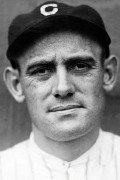
Lucky Hall of Famer Number 58 - Dave Bancroft

A National League shortstop whose career spanned from 1915 through 1930, Dave Bancroft was a successful player in his day, winning two World Series with the New York Giants in 1921 and 1922. He was best known for his defense, leading NL shortstops in fielding twice, putouts four times, assists three times, and double plays three times. A career .279 hitter, Bancroft tallied 2,004 hits over his career. 
    Overall, Bancroft has a rather weak case for the Hall of Fame. His bat was mediocre (98 OPS+), and while he was a strong fielder at an important defensive position, he was inferior to the other defense-first shortstops in the Hall, such as Ozzie Smith, Luis Aparicio, and contemporary Rabbit Maranville (who I also consider a lucky Hall of Famer). In addition, he was often caught stealing, batted .172 in four World Series, and played fewer than 2,000 career games, leaving him with rather weak counting stats (including 591 RBI's). In my opinion, his career seems to be lacking the necessary credentials set forth by the Hall. 
    While he was a very good player, most people did not consider Bancroft a Hall of Famer until decades after his career ended. While he never surpassed 16.2% of the vote on any of his first 15 Hall of Fame ballots, he was inducted by the Veterans Committee in 1971, spearheaded by former teammates Bill Terry and Frankie Frisch, who gained infamy in the 1970's by inducting many former teammates whose careers were clearly undeserving. As part of that trend, Bancroft is very lucky to be in the Hall of Fame. 

My opinion: Dave Bancroft is not a Hall of Famer. 

Tuesday, March 28, 2023

David Eckstein


In today's power game, David Eckstein's type goes widely unnoticed. He was a slap hitter, occasionally hitting .300, good on the bases, and quick in the field. A small man with very little power (35 career homers in ten seasons), Eck nonetheless provided much value for his teams and deserves to be remembered. 

David Mark Eckstein was born on January 20, 1975, in Sanford, Florida. As a youth, he played four seasons for Seminole High in Sanford and additionally played legion ball on the side. In 1994, he walked onto the Florida Gators, where he achieved much success both at bat and at shortstop. He led the team to a third-place finish in the 1996 College World Series and was drafted by the Red Sox the following year. After four years in the minor leagues, he made his MLB debut for the Anaheim Angels on April 3, 2001. 

As the shortest player in baseball (5'6"), nobody expected Eckstein to be a star when he first came up. However, he defied expectations and grabbed the Halos' starting shortstop job, batting .285 with 29 stolen bases in 153 games while leading the American League in both hit by pitch (21) and sacrifice bunts (16). His performance earned him a fourth-place finish in the Rookie of the Year voting. To prove that he was the real deal, he batted .293 and scored 107 runs in 2002 (again leading in hit by pitch and sacrifices), helping the Angels to their first World Series title. He continued to shine after he left the Angels in 2004, making his first all-star team as a St. Louis Cardinal in 2005 and his second in 2006. He struggled with injuries for much of that season but put things together down the stretch, helping the Cardinals win the pennant. He batted .364 with four RBI's as the Cards dispatched of the Tigers in five games, and was named World Series MVP. 

Eckstein had one last big season in 2007, batting .309, but from there his career began to decline. Having made his debut at 26, he was already well into his 30's and bounced from team to team. Still a productive player, he played his last game on October 3, 2010. 

While David Eckstein was not the biggest man on the field, he certainly made his mark. He was a good hitter, a fine fielder, and a joy to watch. While he may not be a Hall of Famer, he should be remembered by today's fans. 

Sunday, December 18, 2022

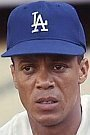
Maury Wills


Before the era of heavy weight training ushered in and everyone tried to become a muscle bound slugger, there was the speedier, more strategic game. One of the last players to specialize in this kind of play without hardly any power was “Mousey” Maury Wills. Despite only weighing 170 pounds, Wills was a genuine star, capturing the NL MVP Award in 1962 and appearing on 15 Hall of Fame ballots. 

One of eleven children, Maurice Morning Wills was born on October 2, 1932 in Washington, D.C. He was named after an insurance man named Morning, a friend of the family. He started playing baseball in a semipro league at age 14, and starred in three sports (baseball, football, and basketball) in high school. He signed with the Dodgers in 1950 but didn’t make the big club until 1958, spending eight years in the minors. It was a long, hard road to the Majors, and Wills tried many different things, including switch hitting, to move up in the system. In 1959, the year after Pee Wee Reese retired, Wills came up and hoped to become the Bums’ starting shortstop. He batted .260 in 83 games and was the regular by 1960, hitting .295 and topping the NL with 50 stolen bases. Wills promptly defended his stolen base title for six consecutive years. His best overall season was 1962, when he played a record 165 games, set a new MLB stolen base record (104; topping Ty Cobb’s 1915 mark of 96), and scored 130 runs en route to the NL MVP Award (barely beating out Willie Mays, who in all honesty probably should have won the Award, but that’s another matter). Although he was best known as a base thief, Wills also specialized at bunting and other small ball strategies, including the Baltimore Chop. The Dodgers won a lot of 1-0 games riding the arms of Koufax, Drysdale, and company, and Wills often provided that lone run. 

After the 1966 season Wills was traded to the Pirates, and he gave them two strong seasons. However, after a great 1968 season (.278 average, 52 swipes), the Pirates left him unprotected in the 1969 expansion draft, and Wills became a member of the Montreal Expos. The “honor” was short lived, however, as the Dodgers got him back after 47 games and he hit .297 the rest of the way. 

Wills had a couple more productive seasons, even finishing sixth in the MVP voting in 1971 at age 38. However, as players get older, their legs start to fail them, and Wills didn’t have much else to offer at that point. After hitting .129 in a short stint in 1972, Wills was released by the Dodgers, never again to play in the Majors. It was a nice career; he had an MVP Award, 2,134 hits, 586 stolen bases, and three World Series rings. In 1977, Wills’s son Bump made it to the Texas Rangers and hung around for six seasons in the Big Leagues. He too was a base thief, with 52 in 1978 and 196 in his career. 

After his career Maury Wills appeared on 15 Hall of Fame ballots, but never did make it in. He was a very good player, but he lacked power and didn’t walk much for a little guy (career OPS of .661). Though he wasn’t the biggest player on the field, he always made a big impact. He passed away on September 19 of this year at the age of 89.

Tuesday, December 13, 2022

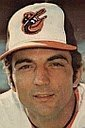
Mark Belanger


Mark Belanger’s type is largely underappreciated in the annals of baseball because he starred on defense, not offense. He was perhaps the best shortstop in AL history (only Omar Vizquel can argue that). While he didn’t have a cannon for an arm, he could cover acres of ground at short, as evidenced by the fact that he led AL shortstops in assists three times. Never diving for the ball, Belanger simply outran ground balls in order to make a quicker throw. Belanger often frustrated opposing batters who thought they got a hit until it was turned into an out. With Brooks Robinson at third base and Belanger at shortstop, it was almost impossible to hit a ball through the left side of the Orioles infield for nearly two decades. 

Mark Henry Belanger was born on June 8, 1944, in Pittsfield, Massachusetts. He learned how to field so well chasing after balls in the cow pasture with his three siblings. A skinny man, standing 6’1” but only 170 pounds, Belanger starred in baseball and basketball in high school. He made his MLB debut for the Orioles on August 7, 1965, and played ten more games that season. Playing behind Hall of Famer Luis Aparicio, himself a terrific shortstop and a better hitter than Belanger, he saw very few starts at shortstop. He got into 69 games in 1967, Aparicio’s last season in Baltimore, including 26 games at second base. Although he hit just .174 that year, he took over as the Orioles’ main shortstop in 1968. 

The reason why Mark Belanger isn’t in the Hall of Fame is because he was a pretty miserable hitter (.228 career batting average), but he did have some decent seasons, batting .287 in 1969, .266 in 1971, and .270 in 1976. He was a very good fastball hitter and dominated several Hall of Fame pitchers, including Nolan Ryan. While Belanger had very little power, he was great on the basepaths, swiping as many as 27 bases in a season. He was also a fantastic bunter, twice topping the AL in sacrifices. 

Belanger stayed with the Orioles through the end of the 1981 season. At 37 he was beginning to lose a step in the field, which meant that the end was near. He played a partial season with the Dodgers in 1982 before he retired. A smoker during his entire career, he quit in 1991, but that didn’t prevent him from getting lung cancer, which killed him in 1998. He was only 54. 

Although Belanger doesn’t have much of a Hall of Fame case, he was indeed a very good player. He won eight Gold Gloves and three fielding titles, and helped the Orioles to victory in the World Series in 1970. He deserves to be remembered. 


DID YOU KNOW? 

-homered in the first ever ALCS game in 1969 

-hit his first career homer on May 14, 1967 against the Yankees, the same game that Mickey Mantle hit his 500th homer 

-pinch hit 22 times in his career (and holds the AL record for being pinch hit for 333 times)

Saturday, August 20, 2022

Johnny Logan


Johnny Logan is the first in a new series that I will publish on this blog. Since my blog’s main purpose is to honor baseball’s forgotten greats and educate average baseball fans in baseball’s history, I have decided to write a few articles on certain players who don’t really have a case for Cooperstown, but nonetheless deserve to be remembered. 

Johnny Logan was a shortstop in the Major Leagues from 1951 through 1963. On March 23, 1926, Logan was born to a Croatian mother and an influential Russian father in New York. As a child he acquired his famous nickname: “Yatcha”, a moniker that he’d keep throughout his Big League career. He was drafted into the military almost immediately after his high school graduation early in 1945, stayed in service for 18 months, and received an honorable discharge in 1946. While he was in the military, he played baseball (as many soldiers did) and signed with the Boston Braves organization in 1947. After four seasons in the minors, he earned his call up to the big club in April 1951. Logan quickly established himself as a premier shortstop in the National League, thrice topping NL shortstops in fielding percentage and four times leading in assists. He also made a living as a hitter, consistently hitting 10 or 15 home runs per season and leading the league with 37 doubles in 1955. Twice he played in all the Braves’ 154 games, in 1954 and 1955. He also helped the Braves to two World Series, taking home the Championship in 1957. As a result of his always stellar play, Logan received MVP votes in six consecutive seasons and was named an all-star four times. 

In 1955, a young lefthanded pitcher debuted for the Brooklyn Dodgers, and Logan was the first batter he ever faced. A few of you reading may have heard of him - his name was Sandy Koufax. Logan hit a single in that plate appearance, and was one of the few hitters to find success against Koufax in his career (nine hits including a home run). 

Logan had a relatively late start in baseball (he made his MLB debut at 25) and wasn’t an everyday player until he was 27. His last big season was 1959, when he hit .291 with 13 homers at the age of 33. In 1960, however, his average slid to .245 and he went into a decline. He played parts of three seasons with the Pirates, who tried him out at third base as well as shortstop (their regular shortstop at that time was Dick Groat) and often used him as a pinch hitter. Logan played his last MLB game in September 1963. He wasn’t finished, however, as he went to Japan and played 96 games for the Nankai Hawks in 1964, who won the Japan Series that year. 

In retirement, Logan helped found the Milwaukee Braves Historical Association. Other than that, he lived a relatively quiet life back home in Milwaukee. He died on August 9, 2013.

Tuesday, March 15, 2022

WHY I THINK DICKEY PEARCE SHOULD BE IN COOPERSTOWN

WHY I THINK DICKEY PEARCE SHOULD BE IN COOPERSTOWN 

By- Damien 


Dickey Pearce was the man who made shortstop the position it is today. Before Pearce came along in 1856, the first baseman manned first base, the second baseman was in charge of second base, and the third baseman held third base. The shortstop was a kind of fourth outfielder whose job was to stop the ball short before it reached the outfield grass. Instead, Pearce moved in a lot closer to the plate and started to rob scores of hits from opposing hitters. Everyone else followed suit, and the old philosophy behind the shortstop was soon abandoned. To keep the man who invented the modern shortstop out of the Hall of Fame is totally unbelievable. People should know about a man who changed baseball so much and helped make it the game it is today. Pearce did much more than that, however, as he was one of baseball’s best players in the game’s pre-professional era. Also a catcher, Pearce was selected to multiple “all-star games” during his time with the Brooklyn Atlantics. He would be a good representative from that era to make the Hall of Fame as a player, too. Pearce was also a master strategist who invented the fair-foul hit (which was outlawed in 1877). When the first established “Major League”, the National Association, was formed in 1871, Pearce was chosen by the New York Mutuals, and played the entire season at shortstop. One of the most famous players in the game, 35 year old Pearce was five years older than anyone else on the club, but proved his worth by hitting .270. Pearce led NA shortstops in fielding in 1872 and again in 1874. He batted a career high .294 in 1874 and two years later became the first 40 year old player in NL history. He played eight more games in 1877 before retiring. Dickey Pearce was a fine player, one of the most famous men in the early days of baseball, and the first true shortstop. He would be a fine addition to the Hall of Fame. 


LIFETIME STATISTICS (MLB TOTALS ONLY) 

Games career: 291 season high: 70 in 1875 led NA: 33 in 1871 

At Bats career: 1,328 season high: 311 in 1875 

Hits career: 333 season high: 77 in 1875 

Doubles career: 21 season high: 6 in 1873 and 1875 

Triples career: 4 season high: 3 in 1875 

Home Runs career: 2 season high: 1 in 1872 and 1873 

Runs career: 217 season high: 51 in 1875 

Runs Batted In career: 134 season high: 29 in 1875 

Stolen Bases career: 13 season high: 8 in 1875 (Pearce’s stolen base information from 1876-77 NL is unavailable) 

Walks career: 33 season high: 8 in 1873 

Strikeouts career: 21 season high: 7 in 1875 

Batting Average career: .251 season high: .294 in 1874 

On Base Percentage career: .269 season high: .310 in 1874 

Slugging Percentage career: .277 season high: .309 in 1873 

Total Bases career: 368 season high: 89 in 1875 

Sacrifice Hits career: N/A 

Fielding Percentage career: .826 season high: .891 in 1876 led NA SS: .844 in 1872, .845 in 1874 

Double Plays career: 66 season high: 17 in 1875 led NA SS: 8 in 1871 

Putouts career: 272 season high: 74 in 1875 

Assists career: 1,079 season high: 263 in 1875 led NA SS: 204 in 1874, 262 in 1875 


DID YOU KNOW? 

-had an ERA of 3.38 in 5 ⅓ career innings across two games 

-led the NA in assists at any position in 1874 and 1875 

-also played one game at first base, three at second base, two at third base, two in leftfield, and one in rightfield

Saturday, February 19, 2022

WHY I THINK GLENN WRIGHT SHOULD BE IN COOPERSTOWN

WHY I THINK GLENN WRIGHT SHOULD BE IN COOPERSTOWN 

By- Damien 


In advocating for Glenn Wright I am really advocating for all players on their way to the Hall of Fame whose careers were ruined by injuries. The Hall of Fame is really for those players who stood out as being great baseball players and were lucky enough to be able to last. Now Glenn Wright was an outstanding baseball player, but without taking this into consideration he wouldn’t be a Hall of Famer. The same goes for Don Mattingly, Ted Kluszewski, Al Rosen, and many others (but no, I won’t write a Hall of Fame post about Tony Conigliaro). Glenn Wright began his career with the Pirates in 1924, and immediately became one of the best players in the game. The 23 year old shortstop drove in 111 runs as a rookie and set the MLB record for shortstops with 601 assists. Only one player ever did better - Ozzie Smith (surprise), who had 621 for the Padres in 1980. This achievement is even more remarkable when it is realized that Wright played in all 153 games the Pirates played in 1924, whereas Smith played in 158 of the Padres’ 163. Wright had another excellent season in 1925, batting .308 with 18 home runs and 121 RBI’s. The Pirate cleanup hitter followed up with another .308 season in 1926. Wright drove in over 100 runs for the third time in four seasons in 1927, and had his third .300 season in 1928 with a .310. In 1929, however, Wright suffered a massive shoulder injury, which limited him to only 24 games all year (21 as a pinch hitter) and drastically shortened his career. He had a couple good seasons after the injury, however, and even hit .321 with 22 homers (at the time the NL record for shortstops) and 126 RBI’s in 1930. From then his career slowly wound down, and he looked finished after he batted .255 in 71 games in 1933. He made a brief Major League comeback with the White Sox in 1935, batting 3-for-25 in nine games, and never again appeared in a Big League game. When he was healthy and available, Glenn Wright was the standout shortstop in the Major Leagues. If he had never gotten hurt, then his career could have looked like that of Joe Cronin, for example. I would like to give this Hall of Fame talent some credit for his lost years. 


LIFETIME STATISTICS 

Games career: 1,119 season high: 153 in 1924 and 1925 led NL: 153 in 1925 

At Bats career: 4,153 season high: 616 in 1924 led NL: 616 in 1924 

Hits career: 1,219 season high: 189 in 1925 

Doubles career: 203 season high: 32 in 1925 

Triples career: 76 season high: 18 in 1924 

Home Runs career: 94 season high: 22 in 1930 

Runs career: 584 season high: 97 in 1925 

Runs Batted In career: 723 season high: 126 in 1930 

Stolen Bases career: 38 season high: 14 in 1924 

Walks career: 209 season high: 39 in 1927 

Strikeouts career: 407 season high: 70 in 1930 

Batting Average career: .294 season high: .321 in 1930 

On Base Percentage career: .328 season high: .360 in 1930 

Slugging Percentage career: .447 season high: .543 in 1930 

Total Bases career: 1,856 season high: 295 in 1925 

Sacrifice Hits career: 113 season high: 18 in 1924 

Fielding Percentage career: .941 season high: .964 in 1930 

Double Plays career: 705 season high: 109 in 1925 led NL SS: 102 in 1924, 109 in 1925 

Putouts career: 2,240 season high: 338 in 1925 led NL SS: 296 in 1927 

Assists career: 3,504 season high: 601 in 1924 led NL SS: 601 in 1924, 530 in 1925 


DID YOU KNOW?
-nicknamed “Buckshot” 

-finished fourth in the NL MVP Award voting in 1925, 11th in 1924, and 25th in 1931 

-homered off of Hall of Famer Stan Coveleski in Game 2 of the 1925 World Series, helping the Pirates to the World Championship 

-turned an unassisted triple play on May 7, 1925, tagging out future Hall of Famers Jim Bottomley and Rogers Hornsby 

-led the NL in assists at any position in 1924 

-led NL shortstops in games in 1924, 1925, and 1927 

-hit two home runs off of Hall of Famer Eppa Rixey and one each off of Carl Mays and Wilbur Cooper 

-also played 12 games at first base, eight at second base, three at third base, one in rightfield, 52 as a pinch hitter, and one as a pinch runner

Sunday, February 13, 2022

Rizzuto Versus Stephens

The New York Yankees and the Boston Red Sox share the most bitter rivalry in the American League. Ever since 1918, when the Red Sox dealt Babe Ruth over to the Yankees and failed to win another World Series until 2004 (while the Yanks captured 26 during that span), the teams have hated each other. In the 1940’s and 1950’s, the Yankees almost always edged the Bosox for the pennant. Now both teams had some very talented players in their lineups, but since the Yankees always won, their players generally won comparisons with the Red Sox. The most contested player comparison of this time was the general consensus that the Yankees’ shortstop, Phil Rizzuto, was better than Vern Stephens, that of the Red Sox. 

Phil Rizzuto was the Yankees’ main shortstop from 1941 though 1953, excepting three seasons during World War II. He was a fine defensive shortstop and an okay hitter who had one big, MVP type season (when he captured the Award in 1950). To the surprise of many, he was inducted into the Hall of Fame in 1994. 

Vern Stephens was a contemporary shortstop of Rizzuto’s, active from 1941 through 1955. He was a lot bigger and stronger than Rizzuto was, and consequently hit for a lot more power. Stephens spent the majority of his career with the St. Louis Browns franchise, but is best remembered for his five seasons in Boston. He never received one vote for the Hall of Fame. 

The fact that Rizzuto was inducted and Stephens wasn’t is just ridiculous. Absolutely absurd. (See two previous posts, WHY I THINK VERN STEPHENS SHOULD BE IN COOPERSTOWN and Lucky Hall of Famer Number 19 - Phil Rizzuto). 

The main arguments in Rizzuto’s favor are that he was a better shortstop and that he didn’t receive the benefits that playing in Fenway Park have on hitters’ statistics. As for the first point, I will not deny that Rizzuto was a top notch defensive shortstop. In his 13 Big League seasons, he turned 100 or more double plays eight times. He also had a career fielding percentage of .968. The only problem is that Stephens was a very underrated fielder. Stephens had the strongest arm of any shortstop in the league, while Rizzuto had one of the weakest. As a result, Stephens made more assists than Rizzuto did. Rizzuto, on the other hand, was more speedy and nimble than Stephens was, and consequently made more putouts. Stephens also played 322 games at third base, and did well at the hot corner, too. Rizzuto, with his iffy arm and smaller frame, surely could not have played third base in the Majors. That said, I don't think Rizzuto had much of a leg up on Stephens on defense.

As for the second point, it is true that Stephens’s offensive statistics were greatly aided by the effects of Fenway Park for a while. For example, in 1949, Stephens hit more home runs than Rizzuto did in his entire career and additionally drove in 159 runs, the MLB record for a shortstop and as many as Ted Williams drove in that season. However, unlike many others, Stephens was a top hitter if you take away the effects of Fenway. He led the NL in RBI’s in 1944 and in home runs in 1945, despite playing in a relatively pitcher friendly ballpark (Sportsman’s Park in St. Louis). If you double Stephens’s career road statistics, he still comes out a Hall of Famer, while Rizzuto does not. 

Another argument in favor of Rizzuto is that he did a lot of little things right - he was a good bunter, occasionally stole a base, and was very good at hitting behind the runner. Stephens rarely did any of these things. The truth is that Rizzuto, while talented in these departments, wasn’t one of the all time greatest in any one of them. Rizzuto is often hyped as the greatest bunter in history - well, in terms of sacrifices, it is evident that he was not in the same league as Ray Chapman or Eddie Collins, among others. He also stole only 149 bases, and no more than 22 in any one season. While his skills in these departments were valuable, it is easy to believe that he was encouraged to bunt so much because he wasn’t such a good hitter. His career slash line was .273/.351/.355, rather abysmal in terms of power and basically average considered as a whole. Stephens, however, was a great hitter - he slashed .286/.355/.460 for an OPS 15% better than Rizzuto’s, which is a huge difference. If Stephens had been less of a hitter, learned to bunt in desperation, and stuck with it, would that make him a Hall of Famer? Certainly not.


One more thing: Rizzuto took approximately one third of his career plate appearances batting eighth.

Friday, January 7, 2022

WHY I THINK RAY CHAPMAN SHOULD BE IN COOPERSTOWN

WHY I THINK RAY CHAPMAN SHOULD BE IN COOPERSTOWN 

By- Damien 


Ray Chapman is the only player ever to die as a direct result of an injury sustained in a Major League baseball game, but it seems to be all he is remembered for. While his beaning in August of 1920 was a very tragic event, the greatness of Ray Chaman as a player should not be soon forgotten, either. Chapman was the American League’s premier shortstop in his time, probably the most successful sacrifice bunter ever, and a respected base thief. He was also a very good hitter, and his batting averages were quite impressive for a shortstop in the dead ball era. Ray Chapman started his career with the Cleveland Indians in 1912, batting .312 in 31 games near the end of the season. He took over as the regular shortstop in 1913 and held the position for the rest of his life. Chapman’s career took off in 1917, when he batted .302, stole 52 bases, and set the single season record for the most sacrifice hits (67). Chapman led the AL in walks and runs scored the following year and established himself as an elite second place hitter. Chapman batted .300 in 1919 and was batting .303 in 1920 when he was beaned on August 16. The pitch, a high fastball, eluded plate crowder Chapman and bounced so hard off his temple that the ball was fielded and thrown to first base. He died the next day. As for his Hall of Fame chances, Chapman was only 29 years old in 1920 and was just entering his peak; if he had dodged the pitch that killed him, then he would have gone into the Hall of Fame instead of Joe Sewell, his replacement, who likely wouldn’t have had a job if Chapman had survived. I would like to give him some credit for his lost years in the Majors because he certainly had Hall of Fame talent and he was well on his way to Cooperstown at the time of his death. As for his accident, I offer my sincerest condolences and prayers for Chapman and his family. 


LIFETIME STATISTICS 

Games career: 1,051 season high: 156 in 1917 

At Bats career: 3,785 season high: 570 in 1915 

Hits career: 1,053 season high: 170 in 1917 

Doubles career: 162 season high: 28 in 1917 

Triples career: 81 season high: 17 in 1915 

Home Runs career: 17 season high: 3 in 1913, 1915, 1919, and 1920 

Runs career: 671 season high: 101 in 1915 led AL: 84 in 1918 

Runs Batted In career: 364 season high: 67 in 1915 

Stolen Bases career: 238 season high: 52 in 1917 

Walks career: 452 season high: 84 in 1918 led AL: 84 in 1918 

Strikeouts career: 427 season high: 82 in 1915 

Batting Average career: .278 season high: .303 in 1920 

On Base Percentage career: .358 season high: .390 in 1918 

Slugging Percentage career: .377 season high: .423 in 1920 

Total Bases career: 1,428 season high: 230 in 1917 

Sacrifice Hits career: 334 season high: 67 in 1917 led AL: 45 in 1913, 67 in 1917, 50 in 1919 

Fielding Percentage career: .939 season high: .944 in 1915 and 1919 

Double Plays career: 375 season high: 71 in 1917 

Putouts career: 2,358 season high: 378 in 1915 led AL SS: 378 in 1915, 360 in 1917, 321 in 1918 

Assists career: 3,182 season high: 528 in 1917 led AL SS: 528 in 1917 


DID YOU KNOW? 

-his death led to a new rule requiring umpires to replace dirty baseballs for new ones, and to the outlawing of the spitball 

-went 1-for-3 with an RBI on his MLB debut 

-led the Majors in plate appearances (693) in 1917 

-led the AL in assists at any position (528) in 1917 

-led AL shortstops in games (128) in 1918 

-scored 97 runs in only 111 games in 1920 

-holds five of the fifty highest season totals for sacrifice hits 

-homered off of Babe Ruth in 1915 

-his 52 stolen bases in 1917 set the Indians’ single season record, which stood for 63 years 

-ranks sixth in career sacrifice hits (Eddie Collins, the all time leader with 512, averaged one every 24 plate appearances, compared with one every 14 plate appearances for Chapman, who didn’t live to see Collins’s type of longevity) 

-also played 49 games at second base, 37 at third base, one in rightfield, and eight as a pinch hitter 

-was inducted into the Cleveland Indians Hall of Fame in 2006

Friday, December 17, 2021

WHY I THINK BILL DAHLEN SHOULD BE IN COOPERSTOWN

WHY I THINK BILL DAHLEN SHOULD BE IN COOPERSTOWN 

By- Damien 


Bill Dahlen was probably the greatest all around shortstop of the 19th century. He was the best defensive shortstop of his time and a very good hitter who led the NL in RBI’s in 1904 and had two seasons over .350. Dahlen is a very popular Hall of Fame candidate nowadays, but the main reason why he is not yet inducted is because he did not have a good image during his career. He was famous for baiting umpires, and some sources suggest that he intentionally drew ejections so he could bet on horses. Bill Dahlen started his career with the Chicago Colts (today's Cubs) in 1891, batting .260 in 135 games. He raised his average to .293 the next season and topped the .300 mark for the first time in 1893. He had his best season in 1894, when he batted .359 with a 1.011 OPS. He also clocked 15 homers (fourth in the league) and drove in 108 runs, thoroughly establishing himself as baseball’s elite shortstop. He batted .352 in 1896 but fell off after that, batting .290 for the next couple of seasons. As the hard hitting 1890’s turned into the deadball 1900’s, Dahlen’s hitting statistics began to decline, but he remained a dangerous hitter, a remarkable base thief, and a marvelous fielder who set the NL record for fielding at shortstop in 1903. Dahlen was always a good RBI man, averaging about 70 or 80 per season for most of his career, and finally won a league RBI crown in 1904 at the age of 34, and as a plus stole 47 bases, his most since the modern stolen base rule was implemented in 1898. In 1905, he improved on his league leading RBI total by one, but after that his career began to slide. Dahlen’s hitting took a dramatic turn for the worse in 1907, but his outstanding defense kept him in the lineup almost every day. When his fielding declined in 1909, so did his playing time, and he stuck around as a backup shortstop and pinch hitter through the 1911 season. He played his final two seasons as a player manager for the Brooklyn Superbas and managed the club until 1913. Bill Dahlen was a tremendous defensive shortstop, a fine hitter, a threat on the basepaths, and a consistent run producer whose all around record suggests that he does indeed belong in the Hall of Fame. 


LIFETIME STATISTICS 

Games career: 2,444 season high: 148 in 1905 

At Bats career: 9,036 season high: 581 in 1892 

Hits career: 2,461 season high: 182 in 1894 

Doubles career: 413 season high: 35 in 1898 

Triples career: 163 season high: 19 in 1892 and 1896 

Home Runs career: 84 season high: 15 in 1894 

Runs career: 1,590 season high: 150 in 1894 

Runs Batted In career: 1,234 season high: 108 in 1894 led NL: 80 in 1904 

Stolen Bases career: 548 season high: 60 in 1892 

Walks career: 1,064 season high: 82 in 1903 

Strikeouts career: 759 season high: 60 in 1891 

Batting Average career: .272 season high: .359 in 1894 

On Base Percentage career: .358 season high: .445 in 1894 

Slugging Percentage career: .382 season high: .566 in 1894 

Total Bases career: 3,452 season high: 287 in 1894 

Sacrifice Hits career: 165 season high: 27 in 1896 (Dahlen’s sacrifice hit information from before 1894 is unavailable) 

Fielding Percentage career: .926 season high: .952 in 1908 led NL SS: .948 in 1903

Double Plays career: 930 season high: 77 in 1898 led NL SS: 77 in 1898, 61 in 1904, 58 in 1908 

Putouts career: 5,359 season high: 369 in 1898 

Assists career: 8,138 season high: 553 in 1908 led NL SS: 527 in 1895, 517 in 1900, 477 in 1903, 494 in 1904 


DID YOU KNOW? 

-nicknamed “Bad Bill” (a testament to his bad reputation) 

-started his career with six straight seasons in which he scored over 100 runs 

-had a 42 game hitting streak in 1894, the fourth longest in history, and started a 28 game streak the very next game after his first streak ended 

-his .359 batting average in 1894 set the MLB season record for a shortstop 

-hit two triples in one inning on August 30, 1900, and had two career three triple games 

-ranked first in career games and second in walks at the time of his retirement 

-stole three bases in the 1905 World Series, when his Giants thumped the Philadelphia A’s 

-hit five home runs off of Hall of Famer Kid Nichols, three off of Vic Willis, two off of John Clarkson, and one each off of Hoss Radbourn, Cy Young, Sam Leever, Tony Mullane, Al Orth, and Rube Waddell 

-led NL shortstops in games in 1900 (133), 1902 (138), and 1903 (138) 

-led the NL in assists at any position in 1895, 1900, and 1903 

-ranks 33rd in career triples, 28th in stolen bases, 30th in hit by pitch (140), and fourth in assists 

-among MLB shortstops, ranks first in career chances, second in putouts, fourth in assists, and 12th in games 

-also played 223 games at third base, 19 at second base, 58 in the outfield, and one as a pinch runner