Friday, April 15, 2022

WHY I THINK BABE ADAMS SHOULD BE IN COOPERSTOWN

WHY I THINK BABE ADAMS SHOULD BE IN COOPERSTOWN 

By- Damien 
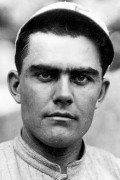


Babe Adams simply did not make mistakes on the mound. Opposing batters might sometimes beat him, but he never beat himself, and because of this he was able to pitch in the Majors until he was 44 years old. The batters never got any smarter, but he did. Adams was one of the greatest control pitchers of all time, issuing only 430 walks in nearly 3,000 innings - a ratio of 1.3 per nine innings, the second lowest in history since four balls constituted a walk (minimum 1,500 innings). Adams also had only two career balks, and only one in his 18 years with the Pirates. Babe Adams started his career with the Cardinals in 1906, pitching one game and taking home the loss. He struggled early in 1907 for the Pirates and was banished to the minor leagues. Adams returned to Pittsburg in 1909 and became one of the game’s top rookies, recording a 1.11 ERA in 130 innings. He beat Ty Cobb’s Tigers in the World Series three times that year, including a six-hitter in Game 7. Adams soon became a big winner, as he won 18 games in 1910 and 22 in 1911. He had an excellent season in 1913 (22-10, 2.15), but came to a crashing halt in 1916 (2-9). Adams was already 34 at the time, so the Pirates figured he was through and sent him back down. Instead, Adams tore up the minor leagues, and earned himself three starts with the big club again in 1918. Adams posted a 1.19 ERA in those three starts, and earned his spot in the rotation again in 1919. He turned in three great seasons in succession, tossing eight shutouts in 1920 and leading the NL in winning percentage in 1921. In 1920, Adams walked only 18 batters in 263 innings, making him the only player of the 20th century (and so far in the 21st) to pitch 250 innings in a season while allowing fewer than 20 walks. Adams posted a 3.57 ERA (115 ERA+) in 1922 and went 13-7 in 1923. Adams was moved to the bullpen in 1924, but took on his new role with success, producing a 1.13 ERA in just under 40 innings. He helped the Pirates to another World Series victory in 1925. In 1926, however, Adams finally ran out of steam, pitching to a 6.14 ERA, which marked the end of his career. Babe Adams was a great pitcher with control, guile, and wonderful longevity. If he’d gotten started a little earlier (he was 27 years old in 1909), then he certainly would have won 200 games, maybe 250. I think he belongs in the Hall of Fame. 


LIFETIME STATISTICS 

Games Pitched career: 482 season high: 43 in 1913 

Starts career: 354 season high: 37 in 1911 and 1913 

Complete Games career: 205 season high: 24 in 1911 and 1913 

Shutouts career: 44 season high: 8 in 1920 led NL: 8 in 1920 

Games Finished career: 90 season high: 14 in 1926 

Wins career: 194 season high: 22 in 1911 

Losses career: 140 season high: 16 in 1914 

Winning Percentage career: .581 season high: .737 in 1921 led NL: .737 in 1921 

ERA career: 2.76 season low: 1.98 in 1919 

WHIP career: 1.092 season low: 0.896 in 1919 led NL: 1.006 in 1911, 1.032 in 1914, 0.896 in 1919, 0.981 in 1920, 1.081 in 1921 

Innings Pitched career: 2,995 ⅓ season high: 313 ⅔ in 1913 

Strikeouts career: 1,036 season high: 144 in 1913 

Strikeouts Per Nine Innings career: 3.1 season high: 4.1 in 1911 and 1913 

Walks career: 430 (0 intentional) season high: 60 in 1910 

Strikeouts Per Walk career: 2.41 season high: 4.67 in 1920 led NL: 4.00 in 1919, 4.67 in 1920, 3.06 in 1921, 2.60 in 1922 

Saves career: 16 season high: 3 in 1925 and 1926 

Fielding Percentage career: .976 season high: 1.000 in 1912, 1914, 1915, 1919, and 1921 led NL P: 1.000 in 1912, 1914, 1915, 1919, and 1921 

Double Plays career: 17 season high: 5 in 1915 

Putouts career: 58 season high: 13 in 1914 

Assists career: 648 season high: 74 in 1913 

Caught Stealing Percentage career: .479 season high: .536 in 1920 (Adams’s CS information prior to 1916 is unavailable) 

Pickoffs career: 10 season high: 3 in 1920 and 1922 (Adams’s pickoff information prior to 1916 is unavailable) 


DID YOU KNOW? 

-finished 22nd in the NL MVP Award voting in 1913 and 27th in 1911 

-allowed the fewest walks per nine innings in the NL four times and the fewest homers per nine once 

-threw 18 complete games and allowed only 18 walks in 1920 

-pitched 21 innings without allowing a walk on July 17, 1914 

-had a career ERA of 1.29 in World Series play 

-was the only member of the 1909 Pirates who would later play for the 1925 team 

-batted .289 in 1913, .286 in 1922, and .273 in 1923 

-homered off of Hall of Famer Rube Marquard in 1914 

-had a career fielding percentage 24 points above the league average
-ranks 21st in career WHIP and 19th in the fewest walks per nine innings 

-served as a foreign correspondent during World War II

Tuesday, April 12, 2022

WHY I THINK FRANK McCORMICK SHOULD BE IN COOPERSTOWN

WHY I THINK FRANK McCORMICK SHOULD BE IN COOPERSTOWN

By- Damien 


Frank McCormick has a rather interesting Hall of Fame case. He was the NL’s best defensive first baseman in the 1940’s and late 1930’s, a three time league leader in hits, and the NL MVP in 1940. He played in 12 games for the Reds in 1934, ten as a pinch hitter, and went 5-for-16. At 23 years old, the future looked bright for young McCormick. Unfortunately, he was demoted to the minors, and although he excelled (including a .381 mark with 49 doubles in 1936), it took him almost three full years to get back to the big club. He played sparingly in 1937, but he batted .325 in 24 games, so the Reds, not wanting to make the same mistake twice, immediately added McCormick to their starting lineup for 1938. This proved to be a good move, as he led the NL in hits and drove in more than 100 runs in each of his first three full seasons. He led the Reds to consecutive pennants in 1939 and 1940, losing out to the Yankees in ‘39 but topping Detroit in ‘40. McCormick slumped to .269 and 97 RBI’s in 1941, but struck out only 13 times, making him the hardest batter in the league to whiff. He soon regained his old batting stroke, topping .300 in both 1943 and 1944. McCormick had a particularly good year in 1944, when he hit .302 with 20 home runs and 102 RBI’s, helping him to his eight consecutive all-star selection and his best season since 1940. McCormick seemed to be finished in 1945, as he cut his home run total in half, so the Reds dealt him over to Philadelphia and the Phillies. He responded with his ninth all-star season in 1946, when he set the MLB record for fielding percentage by a first baseman (.999). McCormick batted .333 in 1947, mostly with the Boston Braves, and finished out his career with the club in 1948. He drove in 34 runs in 180 at bats in the regular season, and helped the team to its first World Series title since 1914. Frank McCormick was a tough out, a good RBI man, and a fine defensive first baseman. If his career was not put on hold for three seasons, I’d imagine that he would be in the Hall of Fame today, and he would not be out of place if he were inducted sometime in the future. 


LIFETIME STATISTICS 

Games career: 1,534 season high: 156 in 1939 

At Bats career: 5,723 season high: 640 in 1938 led NL: 640 in 1938, 618 in 1940 

Hits career: 1,711 season high: 209 in 1938 and 1939 led NL: 209 in 1938 and 1939, 191 in 1940 

Doubles career: 334 season high: 44 in 1940 led NL: 44 in 1940 

Triples career: 26 season high: 5 in 1941 

Home Runs career: 128 season high: 20 in 1944 

Runs career: 722 season high: 99 in 1939 

Runs Batted In career: 954 season high: 128 in 1939 led NL: 128 in 1939 

Stolen Bases career: 27 season high: 7 in 1944 

Walks career: 399 season high: 57 in 1944 

Strikeouts career: 189 season high: 26 in 1940 

Batting Average career: .299 season high: .332 in 1939 

On Base Percentage career: .348 season high: .374 in 1939 

Slugging Percentage career: .434 season high: .495 in 1939 

Total Bases career: 2,481 season high: 312 in 1939 

Sacrifice Hits career: 58 season high: 16 in 1939 

Fielding Percentage career: .995 season high: .999 in 1946 led NL 1B: .996 in 1939, .995 in 1940 and 1941, .999 in 1946 

Double Plays career: 1,221 season high: 153 in 1939 led NL 1B: 153 in 1939, 146 in 1940, 130 in 1941, 132 in 1942 

Putouts career: 13,803 season high: 1,587 in 1940 led NL 1B: 1,518 in 1939, 1,587 in 1940, 1,464 in 1941, 1,403 in 1942, 1,508 in 1944, 1,469 in 1945 

Assists career: 1,003 season high: 135 in 1944 led NL 1B: 135 in 1944, 118 in 1945 


DID YOU KNOW? 

-nicknamed “Buck” and “Wildcat” 

-also finished fourth in the NL MVP Award voting in 1939, fifth in 1938, ninth in 1943, 13th in 1944, 24th in 1945, 27th in 1942, and 34th in 1946 

-led the NL in singles (160) in 1938 and in intentional walks (21) in 1945 

-led NL first basemen in games four times 

-had seven hits in a doubleheader on his first day back in the Majors after his three year wait 

-hit five home runs off of Lon Warneke, three off of Mort Cooper, and one off of Dizzy Dean 

-batted .400 in the 1939 World Series 

-had a career fielding percentage five points above the league average (a significant number for a first baseman) 

-his 153 double plays in 1939 are the 40th most in history among first basemen 

-ranks 23rd in career at bats per strikeout 

-among MLB first basemen, ranks 32nd in career fielding percentage 

-also played four games at second base and one in rightfield

Saturday, April 9, 2022

WHY I THINK BILL WHITE SHOULD BE IN COOPERSTOWN

WHY I THINK BILL WHITE SHOULD BE IN COOPERSTOWN 

By- Damien 


Bill White was a very good player during his career, but I am advocating his Hall of Fame case based mostly on his post-playing career. As a player, he was active from 1956 through 1969, a total of thirteen seasons, and provided good power and wonderful defense for three NL teams. White also called Yankee games with Phil Rizzuto from 1971 through 1988, and the pair became baseball’s most famous broadcasting team. Then, in 1989, White took over as the NL president, a post that he would hold for five years. Bill White started his career with the New York Giants in 1956, clubbing 22 home runs in 138 games, including one in his first at bat. White missed all of 1957 and part of 1958 to military service, and when he returned, future Hall of Famer Orlando Cepeda was breaking in at first base. He was traded to the Cardinals in 1959 and established himself as one of the NL’s elite first sackers. White batted over .300 four times with the Cardinals and averaged about 20 home runs per season. When White was traded to the Phillies after the 1965 season, he responded with a Gold Glove (his seventh in a row) in 1966 and his fourth season with over 100 RBI’s. White had a comparatively poor season in 1967 (.250, eight homers in 308 at bats) and was through as a player following the 1969 season. In 1971, White joined Phil Rizzuto in the Yankees’ broadcasting booth, and they stayed together for 18 years. White left the Yankees in 1989 after he was unanimously voted to replace Bart Giamatti, who had become commissioner of baseball, as the NL president. He stayed in office for five years, presided over expansion in 1993, and retired after giving baseball nearly 40 years of service. 

Bill White was a solid player, a fine broadcaster, and the 15th president of the National League. For all of his contributions to baseball, both on and off the field, Bill White gets my vote for the Hall of Fame. 


LIFETIME STATISTICS 

Games career: 1,673 season high: 162 in 1963 led NL: 162 in 1963 

At Bats career: 5,972 season high: 658 in 1963 

Hits career: 1,706 season high: 200 in 1963 

Doubles career: 278 season high: 37 in 1964 

Triples career: 65 season high: 11 in 1961 

Home Runs career: 202 season high: 27 in 1963 

Runs career: 843 season high: 106 in 1963 

Runs Batted In career: 870 season high: 109 in 1963 

Stolen Bases career: 103 season high: 16 in 1966 

Walks career: 596 season high: 68 in 1966 

Strikeouts career: 927 season high: 109 in 1966 

Batting Average career: .286 season high: .324 in 1962 

On Base Percentage career: .351 season high: .386 in 1962 

Slugging Percentage career: .455 season high: .491 in 1963 

Total Bases career: 2,720 season high: 323 in 1963 

Sacrifice Hits career: 39 season high: 7 in 1963 

Fielding Percentage career: .992 season high: .996 in 1964 led NL 1B: .996 in 1964, .994 in 1966 

Double Plays career: 1,160 season high: 126 in 1963 led NL 1B: 109 in 1960, 125 in 1964 

Putouts career: 13,015 season high: 1,513 in 1964 led NL 1B: 1,256 in 1956 

Assists career: 966 season high: 111 in 1956 led NL 1B: 111 in 1956, 109 in 1966 


DID YOU KNOW? 

-finished third in the NL MVP Award voting in 1964, seventh in 1963, 13th in 1962, and 23rd in 1966 

-batted .286 in eight all-star games 

-led the NL in plate appearances (726) in 1963 

-went 3-for-4 with a home run on his MLB debut 

-had the first base hit ever in Candlestick Park 

-had a record 14 hits in a four game series against the Cubs on July 12-15, 1961 (since broken) 

-led the NL in putouts (1,256) at any position in 1956 

-led NL first basemen in games five times 

-turned over 125 double plays in a season three times 

-also played 100 games in leftfield, 35 in centerfield, 21 in rightfield, 123 as a pinch hitter, and three as a pinch runner 

-was inducted into the Trumbull County Sports Hall of Fame in 2005 and into the St. Louis Cardinals Hall of Fame in 2020

Wednesday, April 6, 2022

WHY I THINK HARRY STOVEY SHOULD BE IN COOPERSTOWN

WHY I THINK HARRY STOVEY SHOULD BE IN COOPERSTOWN

By- Damien 


Harry Stovey was one of the best overall players in the 1880’s, especially when it was his turn to hit. He set the single season home run record with 14 in 1883, was one of three players ever to average better than a run per game (the others were Billy Hamilton and George Gore), and dominated pretty much every offensive leaderboard in the 1880’s. A complete player, Stovey backed up his home runs with a high batting average, patience, and well over 500 career stolen bases. Not only was he the whole package on offense, but he was also a strong fielder both at first base (a defensive position until about 1925) and in the outfield. Harry Stovey began his career in 1880 with the Worcester Ruby Legs and immediately left his mark, leading the Majors in homers as a rookie. He would lead two leagues in home runs a total of five times, his next win being in 1883. In 1885, he became baseball’s career home run leader with 50, and would hold the title until 1887. Stovey regained the crown in 1889 and held it until 1894, when he was passed up by Roger Connor, the man who Babe Ruth eventually beat. Stovey joined the one year Players’ League in 1890, and continued his hitting ways with the Boston Reds, batting .298 with a dozen longballs and a league leading 97 stolen bases. Stovey had one last big season in 1891 (.279 average, MLB best 16 homers), but by 1892, he started to slow down a bit. Stovey was still an above average player when he stepped away from the game in 1893. In retirement, he became a police officer. Harry Stovey was a superb hitter, a proficient run producer, and a solid fielder whose career and reputation suggest that he was one of the very best players who ever lived. 


LIFETIME STATISTICS 

Games career: 1,489 season high: 137 in 1889 led AA: 112 in 1885 

At Bats career: 6,153 season high: 556 in 1889 

Hits career: 1,775 season high: 171 in 1889 

Doubles career: 348 season high: 38 in 1889 led AA: 31 in 1883 

Triples career: 176 season high: 23 in 1884 led NL: 14 in 1880, 20 in 1891 led AA: 23 in 1884, 20 in 1888 

Home Runs career: 122 season high: 19 in 1889 led NL: 6 in 1880, 16 in 1891 led AA: 14 in 1883, 13 in 1885, 19 in 1889 

Runs career: 1,495 season high: 152 in 1889 led AA: 110 in 1883, 124 in 1884, 130 in 1885, 152 in 1889 

Runs Batted In career: 912 season high: 119 in 1889 led AA: 119 in 1889 

Stolen Bases career: 509 season high: 97 in 1890 led AA: 68 in 1886 led PL: 97 in 1890 (Stovey’s stolen base information prior to 1886 is unavailable) 

Walks career: 664 season high: 82 in 1890 

Strikeouts career: 452 season high: 69 in 1888 and 1891 led NL: 69 in 1891 (Stovey’s strikeout information from 1883 through 1886 is unavailable) 

Batting Average career: .288 season high: .326 in 1884 

On Base Percentage career: .361 season high: .403 in 1890 

Slugging Percentage career: .462 season high: .545 in 1884 led AA: .506 in 1883, .525 in 1889 led NL: .498 in 1891 

Total Bases career: 2,841 season high: 292 in 1889 led AA: 213 in 1883, 292 in 1889 led NL: 271 in 1891 

Sacrifice Hits career: N/A 

Fielding Percentage career: .943 season high: .963 in 1883 led AA 1B: .965 in 1883 

Double Plays career: 286 season high: 49 in 1885 

Putouts career: 7,527 season high: 1,061 in 1884 

Assists career: 329 season high: 38 in 1889 led AA 1B: 28 in 1885 


DID YOU KNOW? 

-was the first player in MLB history to (1), hit 100 home runs, (2), wear sliding pads, and (3), slide feet first 

-also led his league in extra-base hits five times, home run percentage four times, and plate appearances once 

-pitched four career games, striking out seven batters in 9 ⅓ innings 

-was also the career leader in triples for a time 

-hit for the cycle on May 15, 1888 

-hit three triples in one game on July 21, 1892 and two in one inning on August 18, 1884 

-hit five home runs each off of Guy Hecker and Silver King, four each off of Hoss Radbourn, Tim Keefe, Mickey Welch, Jim McCormick, and Will White, three off of Tony Mullane, two each off of Pud Galvin, Bob Caruthers, and George Van Haltren, and one each off of Hank O’Day, Mike Smith, and Dave Foutz (sheesh!) 

-ranks 21st in career triples and 35th in stolen bases


fix label outfielder

Sunday, April 3, 2022

WHY I THINK JONATHAN PAPELBON SHOULD BE IN COOPERSTOWN

WHY I THINK JONATHAN PAPELBON SHOULD BE IN COOPERSTOWN 

By- Damien 


Jonathan Papelbon was probably the best closer of all time behind Mariano Rivera, Dennis Eckersley, and Billy Wagner. He pitched for twelve years in the Major Leagues (2005-2016), eleven as a full time finisher, and was of ace level quality in nine of them. Despite not making his MLB debut until he was 24 ½ years old, Papelbon recorded 41 wins and 368 saves. He had an incredibly low ERA of 2.44 (lower than that of any Hall of Fame reliever excepting Rivera), including a 2.33 mark in 396 games with the Boston Red Sox, who play in the most hitter friendly ballpark in the league. Papelbon was also lights out in postseason play, as he went 2-1 with seven saves and an ERA of 1.00 in 27 career postseason innings, winning a World Series ring with Boston in 2007. He appeared on his first Hall of Fame ballot this year, and received only 1.3% of the vote, a number that I can’t quite understand. Jonathan Papelbon started his career with the Red Sox in 2005, posting a 2.65 ERA in 17 games (three starts). He finished second in the AL Rookie of the Year Award voting in 2006 with 35 saves and an 0.92 ERA. He was an all-star in each of his first four seasons as a qualifier out of six overall. Papelbon signed with the Phillies as a free agent after the 2011 season, and rewarded them with an all-star season in 2012, his seventh straight with at least 30 saves. He barely missed out in 2013 when he had 29, but saved 39 games in 2014 to go along with a 2.04 ERA. Papelbon had one last signature season in 2015, but his performance fell off in 2016, when he posted a 4.37 ERA for the Nationals. He was released in August, never again to play another MLB game. In hindsight, I think that the Nats shouldn’t have given up on him so quickly. He had pitched only 35 innings at the time of his release and recorded 19 saves, proving that he could still get them out of a situation if he had to. He was coming off a great 2015 season, and was one of the best relievers in the league. If Papelbon had played with another team in 2017, then he wouldn’t be eligible for the Hall of Fame yet, but I think he would have had a better chance to eventually get in. As it is, he is worthy. 


LIFETIME STATISTICS 

Games Pitched career: 689 season high: 70 in 2012 

Starts career: 3 season high: 3 in 2005 

Complete Games career: 0 

Shutouts career: 0 

Games Finished career: 585 season high: 64 in 2012 led NL: 64 in 2012 

Wins career: 41 season high: 5 in 2008, 2010, 2012, and 2013 

Losses career: 36 season high: 7 in 2010 

Winning Percentage career: .532 season high: .833 in 2013 

ERA career: 2.44 season low: 0.92 in 2006 

WHIP career: 1.043 season low: 0.771 in 2007 

Innings Pitched career: 725 ⅔ season high: 70 in 2012 

Strikeouts career: 808 season high: 92 in 2012 

Strikeouts Per Nine Innings career: 10.0 season high: 13.0 in 2007 

Walks career: 185 (18 intentional) season high: 28 in 2010 

Strikeouts Per Walk career: 4.37 season high: 9.63 in 2008 

Saves career: 368 season high: 41 in 2008 

Fielding Percentage career: .901 season high: 1.000 in 2005, 2007, 2012, 2013, 2014, and 2016 

Double Plays career: 1 season high: 1 in 2015 

Putouts career: 37 season high: 7 in 2015 

Assists career: 45 season high: 9 in 2012 

Caught Stealing Percentage career: .162 season high: .800 in 2005 

Pickoffs career: 2 season high: 1 in 2008 and 2013 


DID YOU KNOW? 

-pitched 5 ⅓ innings on his MLB debut, striking out seven and allowing only two earned runs 

-won both the Deliveryman of the Year Award (for the game’s best relief pitcher) and the AL Babe Ruth Award (for outstanding postseason performance) in 2007 

-had an ERA of 0.00 in all-star play, capturing the win in the 2009 contest 

-was the first rookie ever to record 10+ saves in April, earning him the AL Rookie of the Month award 

-finished off the deciding Game 4 of the 2007 World Series 

-holds the MLB record for the most consecutive scoreless innings to start a postseason career (25) 

-is both the Red Sox’s and Phillies’ leader in career saves 

-ranks tenth in career saves and 20th in games finished