Friday, December 15, 2023

WHY I THINK GEORGE FOSTER SHOULD BE IN COOPERSTOWN

WHY I THINK GEORGE FOSTER SHOULD BE IN COOPERSTOWN 

By- Damien 
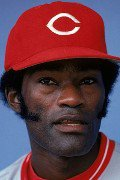


George Foster was one of the most feared sluggers of his era. A late bloomer, establishing himself as a regular at age 26, Foster still managed to hit 348 career home runs, leading the NL two years in a row. Foster was the cleanup hitter for Cincinnati’s famous Big Red Machine in the 1970’s and early 1980’s, leading the club to three pennants and two World Championships. 

    George Arthur Foster was born on December 1, 1948, in Tuscaloosa, Alabama. When he was eight he moved to Hawthorne, California, where he played in the same little league as Dave Kingman. Foster played multiple sports in high school, but broke his leg playing basketball as a senior and had to miss the baseball season. Instead, he focused on gaining muscle, and when he returned to the field in the fall, he impressed the Giants enough to earn their third round draft pick in 1968. Foster earned his first Big League call up in 1969, appearing in nine games. He spent most of 1970 in the minors, hitting .308 at AAA, before earning another cup of coffee late in the season. He spent 1971 in a platoon role, eventually being traded to the Reds in midseason, and established himself as a regular in 1975, batting .300 with 23 homers and 78 RBI’s, helping the Reds to their first World Series Championship since 1940. The next year, the Reds repeated as World Series champions, with Foster leading the club (and the Major Leagues) with 121 RBI’s, finishing second in the MVP voting behind teammate Joe Morgan and setting the stage for the best year of his career. Foster had a season for the ages in 1977, batting .320 with 52 home runs and 149 RBI’s, missing the Triple Crown by eighteen points in batting behind Dave Parker. Foster also led the league in runs scored, slugging, and total bases while playing brilliant defense in both left and centerfield, making him an easy choice for the NL MVP. Foster didn’t stop there, however, as he led the league in homers and RBI’s again in 1978 and belted another 30 homers in 1979. Foster slowed a little in 1980 (.273 average, 25 home runs), but rebounded big in the strike shortened 1981 season, batting .295 with 22 homers and 90 RBI’s in 108 games. Despite having the best record in the Majors (66-42), the Reds missed out on the playoffs, finishing second in each half. After the season, the Big Red Machine started to break up, and Foster was shipped to the Mets on February 10, 1982. After a subpar season, Foster appeared finished at 33. However, he came back with a vengeance in 1983, hitting 28 homers (sixth in the league) and 24 in 1984 (also sixth). Foster had one more 20 homer season in 1985 and played another partial season in 1986, capping his career with a third World Series ring.

    Despite a relatively short career, George Foster has a compelling case for Cooperstown. He was a dominant power hitter in his day, hitting 348 career home runs in just over 7,000 at bats. Foster had ten seasons with over 20 home runs, leading the league twice, and joined the illustrious 50 home run club in 1977. During his peak, he was arguably the best hitter in the game, slashing .297 / .369 / .543 from 1975 through 1981 and averaging 34 home runs per season. While Foster was best known for his awesome power, he was not just a fencebuster like his little league pal, Dave Kingman - he was a legitimate hitter, topping the .300 mark four times and collecting nearly 2,000 hits. On the defensive side, Foster provided value at all three outfield positions, winning five fielding titles. He had above average range (three times leading in range factor) and a strong arm. Additionally, Foster was a key contributor to Cincinnati’s only dynasty. The Reds won two World Series in Foster’s time, and probably wouldn’t have won either without him. In addition to his regular season feats, Foster batted .326 with six RBI’s in those two Series. In Game 6 of the 1975 Series, he threw out the potential winning run at the plate in the bottom of the ninth inning to keep the game going. Although Carlton Fisk eventually won the game with his famous homer, the Reds took Game 7 the next day. As manager Sparky Anderson said, “Having George in leftfield made the difference in our ballclub winning the World Series.” For all of his accomplishments, George Foster would be a good addition to the Hall of Fame. 


LIFETIME STATISTICS 

Games career: 1,977 season high: 158 in 1977 and 1978 

At Bats career: 7,023 season high: 615 in 1977 

Hits career: 1,925 season high: 197 in 1977 

Doubles career: 307 season high: 31 in 1977 

Triples career: 47 season high: 9 in 1976 

Home Runs career: 348 season high: 52 in 1977 led NL: 52 in 1977, 40 in 1978 

Runs Scored career: 986 season high: 124 in 1977 led NL: 124 in 1977 

Runs Batted In career: 1,239 season high: 149 in 1977 led NL: 121 in 1976, 149 in 1977, 120 in 1978 

Stolen Bases career: 51 season high: 17 in 1976 

Walks career: 666 season high: 75 in 1980 

Strikeouts career: 1,419 season high: 138 in 1978 

Batting Average career: .274 season high: .320 in 1977 

On Base Percentage career: .338 season high: .386 in 1979 

Slugging Percentage career: .480 season high: .631 in 1977 led NL: .631 in 1977 

Total Bases career: 3,370 season high: 388 in 1977 led NL: 388 in 1977 

Sacrifice Hits career: 3 season high: 2 in 1974 

Fielding Percentage career: .984 season high: .997 in 1980 led NL OF: .994 in 1976 led NL LF: .995 in 1976, .990 in 1977, .997 in 1980, .991 in 1981, .988 in 1983 

Double Plays career: 28 season high: 4 in 1982 led NL LF: 2 in 1976, 4 in 1982 

Putouts career: 3,809 season high: 352 in 1977 

Assists career: 119 season high: 13 in 1982 


DID YOU KNOW? 

-nicknamed “Yahtzee” 

-also finished third in the NL MVP Award voting in 1981, sixth in 1978, and 12th in 1979 

-slashed .273 / .385 / .727 with a homer and five RBI’s in five all-star games, taking home MVP honors in 1976 

-led the NL in home run percentage in 1977 (8.5) and 1978 (6.6); in extra-base hits in 1977 (85); and in OPS in 1977 (1.013) 

-slashed .289 / .353 / .434 with three homers and 12 RBI’s in 23 career postseason games 

-his 52 home runs and 149 RBI’s in 1977 were the highest totals of the 1970’s 

-hit three home runs in one game on July 14, 1977 

-In Riverfront Park’s 33 year history, only 35 home runs have landed in the upper deck. Foster hit six of them, the most of any player. 

-was inducted into the Cincinnati Reds Hall of Fame in 2003

Tuesday, December 12, 2023

Lucky Hall Of Famer Number 51 - Pie Traynor

Harold Joseph "Pie" Traynor was generally regarded as the dominant third baseman of his day, with some considering him the greatest of all time at the position until Brooks Robinson came into prominence. Traynor, a polite man and a leader on the Pirates back in his day, was a very good player, but quite overrated. In fact, a case can be made that he shouldn't even be in the Hall of Fame. Let us examine his career more closely, and see just how good Traynor was. 
    Traynor was a Pirate for the entirety of his career (1920-1937), and was the most popular Pirate of his generation. While the Waner brothers were also local stars, they were often crass and impatient with fans, often unavailable to do small favors for them, like sign autographs. Traynor, on the other hand, was much more friendly toward the fans, often greeting them with a smile and an x. Generally regarded as the leader of the club, he led the team to two pennants, including a World Championship in 1925. He eventually took over as player-manager in 1934, piloting the club through 1939. As beloved for his nickname as for his play, Traynor often awed fans with clutch hits or acrobatic plays at the hot corner. Traynor was widely regarded as the best fielding third baseman of his generation, and his good reputation helped propel him to Cooperstown in 1948. 
    When taking a closer look at his numbers, however, Pie doesn't seem like one of the greatest players of his era. While he batted .320 for his career and had seven 100-RBI seasons, these numbers are only superficially impressive, largely the product of time and place; for what it's worth, he never finished higher than fifth in batting and only once finished in the top three in RBI's. His best season, statistically, was 1930 (.366 / .423 / .509, 119 RBI's), the year the entire National League batted .303. While Traynor's stats look impressive on paper, they need to be contextualized. 
    As for his defense, there are a lot of mixed reviews on how good a fielder Traynor actually was. Originally a shortstop, he was moved to third base in the minors. While his range was good, and he made many difficult looking plays ("A hitter doubled down the line and Pie Traynor threw him out"), Traynor's fielding percentage was merely average, and he led NL third basemen in errors five times. His arm was particularly wild; as contemporary second baseman Billy Herman once said, "You'd hit a shot at him, a play he could take his time on, and he'd catch it and throw it right quick, so that if his peg was wild, the first baseman had time to get off the bag, take the throw, and get back on again. It was the only way Traynor could throw; if he took his time, he was really wild." The numbers seem to back up Herman's claim; Traynor led the league in throwing errors three times between 1930 and 1933, the first years for which such error-type breakdowns are available. As I wrote in October 2021, throwing errors are more costly than fielding errors, often leading to -1 out and +2 bases for the opposing team instead of -1 out and +1 base. While Traynor had some good defensive tools, his throwing was often a liability, and overall he was not the defender that a lot of his advocates like to say he was. 

My opinion: Pie Traynor is probably not a Hall of Famer. 

Friday, December 8, 2023

Lucky Hall Of Famer Number 50 - Tony Lazzeri

Tony Lazzeri was the second baseman for the dominant Yankees teams of the 1920's. Long a polarizing Hall of Fame candidate, he was eventually inducted into the Hall of Fame by the Veterans Committee in 1991. However, he was likely inducted into Cooperstown more for his fame than his playing ability. Let's examine his case. 
    Lazzeri had a very good career, but was hardly a Hall of Famer. He was a good hitter (.292 / .380 / .467 slash line, 178 homers), but was rarely among the league leaders in offense. In fact, the only offensive category he ever led in was strikeouts, with 96 in 1926. Lazzeri's had seven seasons with over 100 RBI's, which seems impressive, especially for a second baseman, but they too are a product of place and time. Lazzeri usually hit fifth or sixth in the Yankee batting order, with guys like Ruth and Gehrig constantly on base in front of him, so he always had a lot of opportunities to drive them in. In the field, Lazzeri was an indifferent defender, as he led the league in errors three times and had below average range. Finally, his career was short for a Hall of Famer (only twelve years as a regular), leaving his overall counting stats a bit low. 

My opinion: Tony Lazzeri is not a Hall of Famer.  

Tuesday, December 5, 2023

Lucky Hall Of Famer Number 49 - Earle Combs

Earle Combs was the centerfielder and leadoff hitter for the Yankees' famous Murderer's Row lineup in the 1920's. While he was a solid contributor to the most dominant team in history, he was probably overrated. Combs was inducted into the Hall of Fame in 1970 by the Veterans Committee, a selection that is not without its critics. Let's look a bit deeper into his case. 
    On the surface, Combs looks like a pretty good candidate. He batted .325 for his career and scored over 110 runs eight seasons in a row. He helped the Yankees to four World Series (three championships), hitting .350 in World Series play. However, while Combs's .325 average is flashy, he never finished higher than sixth in the AL batting race. Likewise, his other gaudy-looking stats are degraded by the high offense era in which he played, as he was rarely among the league leaders in offense. Sure Combs scored a ton of runs, but they are largely the product of hitting leadoff for the Yankees back then, as the lineup had a ton of guys who could knock him in with one swing. It's not too hard to score when you have Babe Ruth, Lou Gehrig, and company hitting behind you. Finally, Combs's career was too short - only twelve seasons (1,455 games). Anyone with a career that short needs something special to offset his lack of longevity. Combs, with his good but not great offense, is found lacking. 

"I thought the Hall of Fame was for superstars, not just average players like me." - Earle Combs 

My opinion: Earle Combs is not a Hall of Famer. 

Sunday, December 3, 2023

2024 Contemporary Era Hall Of Fame Ballot Results

The results of the 2024 Contemporary Era Hall of Fame ballot are in. 

Jim Leyland - 15 of 16 votes (.938) 

Lou Piniella - 11 votes (.688) 

Bill White - 10 votes (.625) 

Cito Gaston, Davey Johnson, Joe West, Ed Montague, Hank Peters - fewer than 5 votes each 


Aw man... another unworthy Hall of Fame manager. Jim Leyland achieved moderate success as a manager, but the Hall has way too many managers already, and we didn't need another one with a .506 winning percentage. At any rate, I would have really liked to see Bill White get in, and I'd want to see Joe West eventually get in, but that's just the way it goes. 

Saturday, December 2, 2023

WHY I THINK MEL HARDER SHOULD BE IN COOPERSTOWN

WHY I THINK MEL HARDER SHOULD BE IN COOPERSTOWN 

By- Damien 


Mel Harder was born to toe the mound. Already a Big League pitcher at age 18, Harder pitched for twenty seasons in the Majors, all for the Cleveland Indians, winning 223 games and making four all-star teams. After his career, he became one of the most respected pitching coaches in the game, helping many stars come into prominence. All told, he gave 42 years to pitching, 36 with the Indians. 

Melvin Le Roy Harder was born on October 15, 1909 near Beemer, Nebraska. Nearsighted as a youngster, he wore glasses and didn’t play a lot of sports. As he matured he found his way to the mound, where he discovered he had natural sink on his fastball. Never a hard thrower, Harder eventually developed a nasty curve which propelled him to the Big Leagues in 1927. He worked as a reliever in his first two seasons but found his footing as a starter in 1930, going 11-10. Harder established himself as one of the better pitchers in the game in 1932, going 15-13 with a 3.75 ERA, and won the ERA Title the next year with a 2.95 mark. Harder followed up with back to back 20 win seasons in 1934 and 1935, and made four consecutive all-star teams. Harder continued to find success until arm surgery limited him to 15 appearances in 1941. He had a strong return in 1942, posting a 3.44 ERA, and lowered it to 3.06 in 1943. Harder pitched his last full season in 1944, and stayed with the team through 1947 as a part time starter and mentor to Cleveland’s young pitchers. 

Nicknamed “Chief” for his leadership on the staff, Harder was more reliable than flashy. Never a strikeout pitcher, Harder made his living with control and inducing soft contact. He was also extremely hard to run on, with a caught stealing percentage of .592 for his career. Harder achieved fame in his best seasons, but was overshadowed by Bob Feller when he came into prominence in the late 1930’s. His lifetime record was 223-186, which is better appreciated by the fact that he never pitched for a pennant winner. While Harder’s career falls a bit short of the Hall of Fame as a player, his case is strengthened by a remarkably successful career as a pitching coach. 

Back in Harder’s day, there were no modern pitching coaches. Usually a team’s “pitching coach” would be whatever coach volunteered for the job. Harder, one of the smartest pitchers in the game and one who enjoyed his craft, started coaching midway into his playing career. In 1941, a 20 year old third baseman named Bob Lemon made his Major League debut for the Indians. Struggling with the bat, he spent almost all of 1942 in the minors. Noticing Lemon’s strong arm and natural sink, Harder converted him to the mound in 1946. Two years later, Lemon threw ten shutouts, and went on to a Hall of Fame career. Harder also helped the rest of Cleveland’s “Big Four” - Feller, Mike Garcia, and Early Wynn - as well as Sal Maglie, who all praised the help and experience Harder had to offer. In fact, Harder is credited with teaching Early Wynn the curveball and the slider, which allowed him to pitch well into his forties and eventually win 300 games. Later in his career, Harder helped future stars Sam McDowell, Tommy John, and Luis Tiant find their footing. He was fired after the 1963 season, and later went on to coach the Mets, the Cubs, the Reds, and the Royals. 

Mel Harder is my pet candidate for coaches in general. Earlier this week, I explained my desire for fair induction among men who affect the game in all facets. Good coaches, particularly pitching coaches, are extremely important to the success of a good team, perhaps more than most people realize. Mel Harder revolutionized the role of a pitching coach, helping build many Hall of Fame careers. That achievement, not to mention a very good pitching career of his own, warrants at least discussion.  


LIFETIME STATISTICS 

Games Pitched career: 582 season high: 44 in 1934 

Starts career: 433 season high: 35 in 1935 

Complete Games career: 181 season high: 17 in 1932, 1934, and 1935 

Shutouts career: 25 season high: 6 in 1934 led AL: 6 in 1934 

Games Finished career: 94 season high: 12 in 1928 and 1934 

Wins career: 223 season high: 22 in 1935 

Losses career: 186 season high: 17 in 1933 

Winning Percentage career: .545 season high: .667 in 1935 

Earned Run Average career: 3.80 season low: 2.61 in 1934 led AL: 2.95 in 1933 

WHIP career: 1.408 season low: 1.269 in 1933 

Innings Pitched career: 3,426 ⅓ season high: 287 ⅓ in 1935 

Strikeouts career: 1,161 season high: 102 in 1938 

Strikeouts Per Nine Innings career: 3.0 season high: 3.8 in 1938 

Walks career: 1,118 season high: 86 in 1937 

Strikeouts Per Walk career: 1.04 season high: 1.79 in 1935 

Saves career: 24 season high: 5 in 1934 

Fielding Percentage career: .958 season high: .986 in 1938 

Double Plays career: 38 season high: 5 in 1942 

Putouts career: 209 season high: 22 in 1933 led AL P: 18 in 1932 and 1935, 22 in 1933, 21 in 1938 

Assists career: 734 season high: 87 in 1933 led AL P: 65 in 1932, 87 in 1933, 81 in 1935 

Caught Stealing Percentage career: .592 season high: .944 in 1933 

Pickoffs career: 19 season high: 4 in 1932 


DID YOU KNOW? 

-allowed the fewest home runs (0.2) and walks (1.7) per nine innings in the AL in 1935 

-finished 16th in the AL MVP voting in 1934 and 1938 and 22nd in 1935 

-went 1-0 with two saves in all-star play, pitching an AL record 13 career innings without allowing an earned run 

-holds the Cleveland Indians franchise record for career mound appearances

-went 3-0 as the Indians’ interim manager in 1961 and 1962