Thursday, June 3, 2021

WHY I THINK ED REULBACH SHOULD BE IN COOPERSTOWN

WHY I THINK ED REULBACH SHOULD BE IN COOPERSTOWN

By- Damien 


Ed Reulbach was a staff workhorse, a master of control, and a consistent winner. Reulbach set the NL record for leading the league in winning percentage three times, and he did it in three straight seasons. He also had ERAs of 1.42, 1.65, 1.69, 1.78, and 2.03 in five separate seasons, yet never won an ERA title. Compare him with the average Hall of Fame pitcher. He has a 72 point advantage in career ERA, which is by far the most important pitching statistic, and a 43 point advantage in career winning percentage. Big Ed Reulbach started his career with the Cubs in 1905, going 18-14 and completing 28 of his 29 starts. He went 19-4 in 1906 to lead the NL in winning percentage and also did so in 1907 and 1908 with records of 17-4 and 24-7, winning World Series rings in each season. The Cubs wouldn’t win another World Series until 2016. Reulbach went 19-10 in 1909 before falling to 12-8 in 1910. He regrouped himself in 1911 with a 16-9 mark before falling again to 10-6 in 1912. He went a combined 8-9 in 1913 with the Cubs and the Brooklyn Superbas (later the Dodgers). Reulbach went 11-18 despite a 2.64 seasonal ERA in 1914 as the Superbas changed their names to the Robins and was traded to the Federal League Newark Pepper for the 1915 season. He had his last big year with the “Peps” in 1916 with a 21-10 record but was traded to the Boston Braves. Reulbach went 7-7 in two seasons with the Braves before retiring. Ed Reulbach was a great pitcher and a winning ballplayer who was even worthy of Cooperstown. 


LIFETIME STATISTICS 

Games Pitched career: 399 season high: 46 in 1908 

Starts career: 300 season high: 35 in 1908 

Complete Games career: 200 season high: 28 in 1905 

Shutouts career: 40 season high: 7 in 1908 

Games Finished career: 80 season high: 14 in 1912 

Wins career: 182 season high: 24 in 1908 

Losses career: 106 season high: 18 in 1914 

Winning Percentage career: .632 season high: .826 in 1906 led NL: .826 in 1906, .810 in 1907, .774 in 1908 

ERA career: 2.28 season low: 1.42 in 1905 

WHIP career: 1.143 season low: 0.963 in 1905 

Innings Pitched career: 2,632 ⅓ season high: 297 ⅔ in 1908 

Strikeouts career: 1,137 season high: 152 in 1905 

Strikeouts Per Nine Innings career: 3.9 season high: 4.7 in 1905 

Walks career: 892 season high: 106 in 1908 

Strikeouts Per Walk career: 1.27 season high: 2.08 in 1905 

Saves career: 13 season high: 4 in 1912 

Fielding Percentage career: .946 season high: .968 in 1906 

Double Plays career: 37 season high: 7 in 1908 

Putouts career: 137 season high: 18 in 1906 

Assists career: 815 season high: 91 in 1909 (he had 90 in 1915) 


DID YOU KNOW? 

-nicknamed “Big Ed” 

-had the lowest qualifying ERA of any rookie pitcher since the turn of the 20th century

-is the only pitcher in MLB history to throw two shutouts in one day, a feat he accomplished against the Brooklyn Dodgers on September 26, 1908 

-threw 20 innings in a win over Philadelphia on August 24, 1905

-pitched eight innings with five hits and no earned runs allowed on his MLB debut, but still got credited with the loss 

-pitched 6 ⅔ innings while allowing two earned runs during his final MLB game 

-allowed the fewest hits per nine innings in 1905 (6.4) and the MLB 1906 (5.3), the latter being the seventh fewest of all time 

-faced over 1,000 batters in a season five times 

-had a 2-0 career World Series record and had an 0.75 ERA in the 1907 Series 

-had two sacrifice hits in the 1906 World Series

-hit six doubles and two triples in 1908 

-also played one game as a rightfielder and two as a pinch hitter 

-ranks 18th in career ERA, 20th in the fewest hits allowed per nine innings (7.2), and 47th in the fewest home runs allowed per nine innings (0.1) 

-was the last surviving member of the 1908 Cubs, and he passed away on July 17, 1961, which was also the day that Ty Cobb died

Monday, May 31, 2021

WHY I THINK LOU WHITAKER SHOULD BE IN COOPERSTOWN

WHY I THINK LOU WHITAKER SHOULD BE IN COOPERSTOWN 

By- Damien 


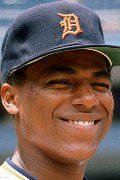
Lou Whitaker was more than your ideal second baseman. In a second baseman, you look for speed, agility, quick thinking, good defense, bunting skills, and base hit consistency at the plate. Whitaker had all those tools, but he also added plenty of home run power as well. Because he had a lot of power, pitchers were careful when pitching to Whitaker, which also gave him the opportunity to draw plenty of walks. Lou Whitaker started his career with the Tigers in 1977, batting .250 in eleven games. Whitaker was the AL Rookie of the Year in 1978 with a .285 mark and 58 RBI’s in 139 games as a 21 year old. Whitaker’s 1979 season was very similar to his first, but he slumped in 1980. In 1981, Whitaker bounced back, raising his batting average 30 points and leading the league in games played. He then hit his peak and stayed near the top of the league until his retirement after the 1995 season. In 1982, Whitaker hit .286, and raised it to .320 in 1983. In 1984, Whitaker, with the help of Hall of Fame shortstop Alan Trammell, led the Tigers to the World Series, when they beat the Padres in five games. In the Series, Whitaker batted .278 with two doubles, four walks, one sacrifice hit, and six runs scored. From 1985 through 1987, Whitaker averaged 19 homers and 102 runs scored per season. In 1988, his age 31 season, he batted .275, and in 1989, he hit 28 home runs. Whitaker remained a very strong power hitter through 1992, but from 1993 on, he went back to being consistent. His batting average over his last three seasons was .295, and his on base percentage during that span was .390. Lou Whitaker was one of the best hitters of his era and a three time Gold Glove award winner. There probably hasn’t been a second baseman as feared at the plate since Charlie Gehringer in the 1940’s. For being so good on both offense and defense, Lou Whitaker is a pretty good candidate for Cooperstown. 


LIFETIME STATISTICS 

Games career: 2,390 season high: 161 in 1983 led AL: 109 in 1981 

At Bats career: 8,570 season high: 643 in 1983 

Hits career: 2,369 season high: 206 in 1983 

Doubles career: 420 season high: 40 in 1983 

Triples career: 65 season high: 8 in 1979, 1982, and 1985 

Home Runs career: 244 season high: 28 in 1989 

Runs career: 1,386 season high: 110 in 1987 

Runs Batted In career: 1,084 season high: 85 in 1989 

Stolen Bases career: 143 season high: 20 in 1979 

Walks career: 1,197 season high: 90 in 1991 

Strikeouts career: 1,099 season high: 108 in 1987 

Batting Average career: .276 season high: .320 in 1983 

On Base Percentage career: .363 season high: .412 in 1993 

Slugging Percentage career: .426 season high: .489 in 1991 

Total Bases career: 3,651 season high: 294 in 1983 

Sacrifice Hits career: 89 season high: 14 in 1979 

Fielding Percentage career: .984 season high: .994 in 1991 led AL 2B: .988 in 1982, .994 in 1991 

Double Plays career: 1,527 season high: 120 in 1982 led AL 2B: 120 in 1982 

Putouts career: 4,771 season high: 340 in 1980 led AL 2B: 327 in 1989 

Assists career: 6,653 season high: 470 in 1982 led AL 2B: 354 in 1981, 470 in 1982 


DID YOU KNOW? 

-nicknamed “Sweet Lou” 

-was a five time all-star and hit a two run home run in the 1986 contest, a 3-2 win for the American League (AL), yet wasn’t named the game's MVP

-won four Silver Slugger awards 

-won both the AL Player of the Month award and a Player of the Week award in June of 1983 

-is one of 19 players who ever hit a homer over the roof at Tiger Stadium 

-went 3-for-5 with an RBI and a stolen base on his MLB debut 

-finished eighth in the AL MVP Award voting in 1983 

-led AL second basemen in games in 1981 (108) and 1983 (161) 

-set the Detroit Tigers’ franchise record for home runs by a second baseman in both 1985 and 1989 

-averaged 13 sacrifice hits per year across his first three seasons 

-homered, stole, drew seven walks, and scored four runs in the 1987 ALCS 

-is the all time Tigers’ franchise leader in career double plays 

-had 18 career walk-off hits, which are tied for the ninth-most of all time

-ranks 21st in career assists at any position 

-among MLB second basemen, ranks fourth in career games and double plays, 11th in putouts, and sixth in assists 

-his .994 fielding percentage at second base in 1991 is the 45th highest of all time 

-also played 32 games as a DH, 171 as a pinch hitter, and ten as a pinch runner

Thursday, May 27, 2021

WHY I THINK PAUL HINES SHOULD BE IN COOPERSTOWN

WHY I THINK PAUL HINES SHOULD BE IN COOPERSTOWN 

By- Damien 


Paul Hines is best remembered as the first Triple Crown winner in MLB history. In 1878, the last non-shortened 60 game season, he batted .358 with four home runs and 50 RBI’s. Hines had many more fine seasons, and his overall batting record is better than dozens of players already in the Hall of Fame. He was also regarded as a top defensive centerfielder who won two fielding titles and had a career fielding percentage 20 points above the league average. Hines also played 194 games at first base, showing that he had versatility as well. Paul Hines started his career with the Washington Nationals of the NA in 1872, at the age of 17, and collected eleven hits and nine runs scored in eleven games. Hines batted .331 in 1873 and .328 in 1875, and in 1876, the season in which the National League made its debut, he batted .331 for the Chicago White Stockings and led the league in doubles. He slumped to .280 in 1877 but captured the league Batting Title in each of the next two seasons, both for the Providence Grays, including his Triple Crown win in 1878. Over the next five seasons, Hines batted .300 three times (and .299 in 1883) and led the NL in doubles twice more. He turned 30 in 1885 and had one of his least productive seasons in the Majors with a .270 mark in 98 games, but came back in 1886 to hit .312. That season, Hines was beaned, which caused permanent damage to his hearing. When he died in 1935, he was blind and deaf. At any rate, Hines batted over .300 two more times but reached the declining phases of his career in 1890, when he batted a combined .239 with two teams. He played in 54 games in 1891 for the American Association’s Washington Statesmen, batting .282, before retiring. Paul Hines was a great hitter, a stellar run producer, a fine fielder, and the first Triple Crown winner ever. He really should have been elected to the Hall of Fame as soon as it was instituted. 


LIFETIME STATISTICS 

Games career: 1,658 season high: 133 in 1888 

At Bats career: 7,062 season high: 513 in 1888 led NL: 409 in 1879 

Hits career: 2,133 season high: 152 in 1886 led NL: 146 in 1879 

Doubles career: 399 season high: 36 in 1884 led NL: 21 in 1876, 27 in 1881, 36 in 1884 

Triples career: 93 season high: 10 in 1879, 1882, and 1884 

Home Runs career: 57 season high: 10 in 1887 led NL: 4 in 1878 

Runs career: 1,217 season high: 94 in 1883 and 1884 

Runs Batted In career: 855 season high: 72 in 1887 and 1889 led NL: 50 in 1878 

Stolen Bases career: 163 season high: 46 in 1887 (Hines’s stolen base numbers from 1876 through 1885 are unavailable) 

Walks career: 372 season high: 49 in 1889 

Strikeouts career: 310 season high: 45 in 1888 

Batting Average career: .302 season high: .358 in 1878 led NL: .358 in 1878, .357 in 1879 

On Base Percentage career: .340 season high: .380 in 1887 

Slugging Percentage career: .409 season high: .486 in 1878 led NL: .486 in 1878 

Total Bases career: 2,889 season high: 225 in 1886 led NL: 125 in 1878, 197 in 1879 

Sacrifice Hits career: N/A 

Fielding Percentage career: .903 season high: .965 in 1889 led NL OF: .923 in 1876, .927 in 1880 

Double Plays career: 189 season high: 66 in 1889 led NL OF: 7 in 1880 

Putouts career: 4,844 season high: 1,121 in 1889 

Assists career: 622 season high: 117 in 1875 


DID YOU KNOW? 

-was the youngest player in the NA in 1873 

-had a .455 OBP, five runs scored, and two stolen bases in the 1884 World Series 

-pitched an inning in 1884 without allowing an earned run 

-went 6-for-6 on August 26, 1879 

-hit three home runs off of Hall of Famer John Clarkson, two each off of Bobby Mathews, Pud Galvin, Mickey Welch, and Tim Keefe, and one each off of Tommy Bond, Jimmy Ryan, and Hank O’Day 

-led the NL twice each in plate appearances and at bats per strikeout and once each in singles, home run percentage, times on base, OPS, and games in the outfield  

-among MLB outfielders, ranks 23rd in career double plays and 28th in assists 

-also played three games at catcher, 74 at second base, 18 at third base, 16 at shortstop, 68 in leftfield, and seven in rightfield


Sunday, May 23, 2021

WHY I THINK LAVE CROSS SHOULD BE IN COOPERSTOWN

WHY I THINK LAVE CROSS SHOULD BE IN COOPERSTOWN 

By- Damien 


Lave Cross was a remarkably inconsistent player who had seasonal averages as high as .387 and as low as .256. His overall average was .292, and he collected 2,651 hits along with more than 300 career stolen bases, making him a pretty good candidate for his offensive contributions alone. He was also a supremely talented defensive third baseman who had an overall career fielding percentage an astounding 30 points above the league average. He set the single season record for fielding at third base in both 1895 and 1899. Lave Cross started his career with the AA Louisville Colonels in 1887, batting .266 across 54 games as the team catcher. Though he was primarily a third baseman, Cross ended up catching 324 games across his 21 big league seasons. He had two poor seasons after that but hit .298 in 1890 for the Philadelphia Athletics. Cross topped the .300 mark for the first time in 1891 and batted .299 two years later. He had his best MLB season in 1894, batting .387 with 132 RBI’s for the Phillies in 122 games. In 1894 and 1895, he drove in a combined 233 runs in 247 games, which averages out to an amazing 153 RBI’s in a modern 162 game season. Cross recorded two sub-.260 averages in the following two seasons, but batted .317 in 1898 at the age of 32. He enjoyed a very late peak, batting a combined .308 from 1898 through 1904, but hit a decline in 1905. He still topped the .260 mark in 1905 and 1906 but was finished by 1907 when, in 41 games for the Washington Senators, he batted .199. He was released by the club that season, never to play in another MLB game. Lave Cross was a very good hitter, a fantastic fielder, and a skilled baseruner. He basically was the Brooks Robinson of his time, and Robinson was rightly regarded as a slam dunk Hall of Famer. Why not Cross? 


LIFETIME STATISTICS 

Games career: 2,277 season high: 155 in 1904 

At Bats career: 9,084 season high: 607 in 1904 

Hits career: 2,651 season high: 210 in 1894 

Doubles career: 411 season high: 39 in 1902 

Triples career: 136 season high: 14 in 1891 

Home Runs career: 47 season high: 7 in 1894 

Runs career: 1,338 season high: 128 in 1894 

Runs Batted In career: 1,378 season high: 132 in 1894 

Stolen Bases career: 303 season high: 25 in 1902 

Walks career: 466 season high: 39 in 1892 

Strikeouts career: 217 season high: 23 in 1891 

Batting Average career: .292 season high: .387 in 1894 

On Base Percentage career: .329 season high: .424 in 1894 

Slugging Percentage career: .383 season high: .526 in 1894 

Total Bases career: 3,475 season high: 285 in 1894 

Sacrifice Hits career: 160 season high: 17 in 1894 (Cross’s sacrifice hit numbers from before 1894 are unavailable) 

Fielding Percentage career: .937 season high: .959 in 1899 led NL 3B: .940 in 1895, .945 in 1898 and 1900, .959 in 1899, .952 in 1906 

Double Plays career: 315 season high: 32 in 1899 led NL 3B: 24 in 1894, 32 in 1899 

Putouts career: 4,262 season high: 297 in 1891 

Assists career: 4,553 season high: 358 in 1898 and 1899 led NL 3B: 308 in 1895, 351 in 1898 


DID YOU KNOW? 

-brother of Amos and Frank Cross 

-often wore a catchers’ mitt in the field, as per the rules at the time 

-went 1-for-4 with two RBI’s in his final MLB game 

-hit for the cycle on April 24, 1894 

-set the MLB record with 15 assists at second base on August 5, 1897 

-his 108 RBI’s without a home run in 1902 set the MLB record 

-had a .364 career caught stealing percentage as a catcher 

-led the NL in at bats per strikeout in 1902 (139.8, the franchise record) and 1904 (67.4), and 1905 (48.9), and his career mark of 41.9 is the sixth highest of all time 

-played in 447 consecutive games from April 23, 1902 through May 8, 1905 

-hit two home runs off of Hall of Famer Cy Young and one each off of Addie Joss, John Clarkson, Bill Dinneen, Jack Taylor, and Matt Kilroy 

-ranks 38th in career singles (2,057) 

-led NL third basemen in games in 1902 (137), 1903 (136), and 1905 (147) 

-captained the Philadelphia Athletics when they won two of the first five AL pennants 

-retired with the highest fielding percentage (.938) among third basemen and with the most games (1,721), putouts (2,306), assists (3,706), and total chances (6,406) at third base 

-among MLB third basemen, ranks 25th in career games, fourth in putouts, and 16th in assists 

-also played seven games at first base, 60 at second base, 65 at shortstop, 13 in leftfield, 34 in centerfield, and 71 in rightfield 

-went 8-30 as the manager of the 1899 Cleveland Spiders, maybe the worst team in MLB history


Thursday, May 20, 2021

The Battle Of A Lifetime (Final Draft)

So, last night I went to a baseball game. It started at 7:00 P.M. and lasted for three hours, and since we live an hour away from the ballpark, I went to bed very late. That meant that it didn't have time to finish my last player article (I have two that are almost done, but none ready for publication). Instead, while I work on my regular posts, I will publish a real assignment that I wrote in high school for my grammar class. 

JMJ AMDG 

Damien 

Grammar 9

Due Date 

Word Count: 1,702  

The Battle Of A Lifetime (Final Draft) 


Madison Posey was born in Alamo, California, on August 9, 1969, with a major disability. His left arm was much thinner than his right, and it had no hand. At the end of young Madison’s left arm was one small finger. His left arm was basically nonfunctional for his whole life. He had to overcome a lot of hindrances to make a statement and find success, but his courage and fortitude carried him up and above the others. Let us see how his story unfolds. 

Madison Posey, as we have already mentioned, was born in Alamo, California, around fifty years ago with a severe disability. His parents tried their hardest to give him a normal life, but the kids in his neighborhood made fun of him, calling him horrible names such as “Stumpy” and “Claw.” These names he minded, but he didn't get into fights or anything. He knew that he was special and that he could live a very successful life. He did well in school, but he wanted more than anything to be a great baseball pitcher. Everybody else played ball, so if he was good, he thought, he might prove them wrong when they said that he wasn’t special. Then he’d never be called names again. There was one small predicament that he had to face, however - how could you field and throw with just one hand? Madison would spend hours bouncing a racquetball against the wall of his parents’ garage, trying to field the ball with his right hand, put his glove in the crook of his left arm, and make the throw with his right hand. He did this for many years, moving closer and closer to the wall as he got faster, until he was as fast as greased lightning. His coach caught sight of Madison and saw a potential star in him. He made his school’s varsity team when he was still a freshman and earned the opening day start against the rival high school. The star on the opposing team, twelfth grader Big Bill Brown, said that he’d homer in every plate appearance against Posey. “He doesn't have any skills,'' he said before the game. Instead, Posey threw a no-hitter and struck out Big Bill Brown all three times he came up to the plate. After the third strikeout, he yelled at Brown, saying, “How about that for a homer? I didn’t even see it leave the park.” At this Brown threw his bat to the ground and his batting helmet against the dugout wall. Since Brown couldn’t keep his mouth shut, he also received a rigging in the locker room. Most thought that Posey’s no-hitter was a fluke and that the competition would pass him up in no time, but Madison, his parents, and the coach didn’t have any doubts about what this young pitching prodigy could do. 

When he reached twelfth grade, Posey was one of the finest high school players in the state. When he was not pitching, he would play in the outfield, and ended the season going 10-1 on the mound and batting .427 at the plate. Not bad for someone with only one hand to hold the bat. He graduated high school in 1986 and spent four years at Christendom College in Virginia, continuing to play baseball. In 1990 he was drafted by the San Francisco Giants right out of college, which brought him great joy. He lived only ten minutes away from Candlestick Park and loved watching the Giants. He was called up to the club in 1992 and became an instant fan favorite in the Big Leagues, winning the National League Rookie of the Year Award that season. This instant publicity made him cocky. For example, when his manager congratulated him for winning the Award, Posey replied, “I knew that I would win it since opening day.” He was one of the best pitchers in America - the best, he thought - so he could do anything and could strike out anyone. One day after the season he was invited to a press conference to discuss his fabulous rookie campaign. Okay, he wasn’t really invited - if one refuses to come to one of these, he gets fined heavily and receives a bad word from the press. At any rate, he went to the press conference. That very night, he experienced the shock of a lifetime - Big Bill Brown, the kid who had hated him the most, walked up to him and asked him rude questions that had to do with his few mistakes. Apparently he was still sore from the high school game, and he wanted to do all in his power to make life miserable for Posey. Well, Brown said some other things to him that were pretty mean and, frankly, unnecessary, which caused Posey to lose his temper. He pushed Big Bill Brown to the ground, calling him a “big smelly ape”, which made Posey look bad in front of the press. Brown tried to attack Posey but the reporters broke up the fight before it got out of hand (funny, the reporters usually don’t want to spoil a good story at any cost, but I guess times were different back then). When they both calmed down, Brown was still pretty upset, and he made a $10,000 bet with Posey that he’d be out of the Majors by the end of the 1993 season. Posey, not about to look like a chicken in front of his hometown San Francisco, accepted the bet with pleasure. For the next few months the San Francisco press was on fire. 

On opening day in 1993, Madison Posey was nervous. He was getting the start against the rival Los Angeles Dodgers. It didn’t help that Big Bill Brown was a big time Dodgers fan. It didn’t help that a reporter reminded him of the bet that he had accepted at the press conference. It didn’t help that, in his nervousness, he spilled grape juice all over his jersey and needed to get it dry cleaned, which made him late and made his manager a little squirrely. Posey struggled through the first couple of innings but pulled it together after that, reminding himself that it was just a game, and ended up winning. This calmed him down. He ended up finishing the season with a 2.55 ERA (earned run average, ER x 9 / IP) to go along with 18 victories. He finished third in the Cy Young Award voting. Posey ran into Brown at Dodger Stadium on the last day of the season, when he beat the Dodgers for the NL West Division Title. Big Bill held his head down when he heard Al Rosen (the Giants’ General Manager) praise Posey and offer him a large contract extension for the 1994 season. Even if he wasn’t getting paid any good money he wouldn’t have asked Big Bill for the $10,000. Posey figured that Brown was living tough enough and decided in his heart to forgive him and to apologize for pushing him if he ever got the opportunity. Fat chance, he thought, like that would ever happen. 

All in all, Posey had a pretty good career as a pitcher, to say the least. He retired at the close of the 2010 season at the age of 41. Posey had gone 251-173 (.592) on the mound with a 2.97 ERA, spending the entirety of his illustrious career with the Giants. In 2016, he was inducted into the National Baseball Hall of Fame on his second ballot. When he was about to make his speech, he noticed Big Bill Brown among the cheering crowd. He wasn’t screaming his name, as hundreds of others were, but simply clapping his hands with a small grin on his face. At this, Posey stammered and stuttered. He couldn’t make his speech. After he finally got something out, “Thanks...”, he immediately came down from the stand and ran up to Brown. He asked, “What are you doing here, Bill? I thought you hated me.” “That was then,” replied Bill, “This is now. I’m a changed man. I feel deep remorse over how I have treated you. You see, I became friends with somebody. He seemed to have deep internal peace. I asked him why he was so happy, and he said that he had the life of Christ in his soul. He told me all about Jesus Christ and I felt a deep hunger for truth. He also told me that Christ wanted us to love our neighbors as ourselves, which got me thinking about how I treated you. I was baptized into Catholicism last year and quickly made a confession. Now, before I forget, here’s your ten thousand bucks.” Posey refused the money, saying that he already had “a couple hundred of those at home” and they shook hands. Posey apologized for pushing him back in 1992, and Bill forgave him. To this day the story of Madison Posey, as much for his courage in the face of scorn as for his Hall of Fame pitching, is cherished in the hearts of men and women everywhere. The best part was that he was never called an unkind name since the press conference. 


What’s True And What Isn’t 

Madison Posey is a fictional character. The real 1992 NL Rookie of the Year was Eric Karros. His name comes from MLB players Madison Bumgarner and Buster Posey, who both debuted in 2010 for the Giants and are on their way to stardom. He is based on Jim Abbott, who was born in 1967 with the same disability except for the fact that he has his left arm intact, not his right. Abbott threw a no-hitter in his first little league start, did field as described, and did make the Major Leagues as a pitcher. Abbott made his Big League debut in 1989 for the Anaheim Angels. While he was inspirational, not to mention good, he is not in the Hall of Fame. He retired from baseball in 1999. Today he is a motivational speaker. Everything else is fiction, just the imagination of the author going to work. 


The End 

Sunday, May 16, 2021

WHY I THINK CESAR CEDENO SHOULD BE IN COOPERSTOWN

WHY I THINK CESAR CEDENO SHOULD BE IN COOPERSTOWN

By- Damien 


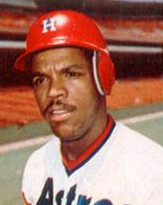
When you look back and remember how Cesar Cedeno played the game of baseball, one word immediately pops into your head: speed. You’ll remember the blazing speed that he used to stretch a single into a double, to make daring, diving catches in centerfield, or to steal one of his 550 career bases. Cedeno was also a fine hitter with a .285 lifetime batting average and 199 homers, and additionally was a five time Gold Glove award winner in centerfield. Cedeno didn’t provide valuable defense in center alone; he also played a good amount of first base as well. Cesar Cedeno started his career with the Astros in 1970 with a .310 average in 90 games, which was good for fourth place in the NL Rookie of the Year Award voting. In 1971, he slumped to .264 but in 1972 he became the second player in MLB history to reach 20 home runs and 50 stolen bases in the same season, a feat that he accomplished every year until 1975 (Hall of Famer Lou Brock first did it in 1967). Cedeno retained good batting averages and stolen base totals over 50 until 1978, when he was limited to only 50 games with a torn knee ligament. He slumped a little in 1979 with hepatitis but batted .309 with 48 steals in 1980 to lead the Astros to the division title. Cedeno slumped to just over .270 in 1981 before being traded to the Reds. He started to decline as a hitter in Cincinnati, providing offense that was above average but not Hall of Fame worthy. Cedeno was dealt over to the Cardinals in August of 1985 and finished out his career with the Dodgers in 1986. Cesar Cedeno was a great hitter, a fine fielder, and an exciting baserunner. He was so skilled at every part of the game that the only way to truly acknowledge him is by honoring him with a spot in the Hall of Fame. 


LIFETIME STATISTICS 

Games career: 2,006 season high: 161 in 1971 

At Bats career: 7,310 season high: 611 in 1971 

Hits career: 2,087 season high: 179 in 1972 

Doubles career: 436 season high: 40 in 1971 led NL: 40 in 1971, 39 in 1972 

Triples career: 60 season high: 8 in 1972, 1977 and 1980 

Home Runs career: 199 season high: 26 in 1974 

Runs career: 1,084 season high: 103 in 1972 

Runs Batted In career: 976 season high: 102 in 1974 

Stolen Bases career: 550 season high: 61 in 1977 

Walks career: 664 season high: 66 in 1980 

Strikeouts career: 938 season high: 103 in 1974 

Batting Average career: .285 season high: .320 in 1972 and 1973 

On Base Percentage career: .347 season high: .385 in 1972 

Slugging Percentage career: .443 season high: .537 in 1972 and 1973 

Total Bases career: 3,240 season high: 300 in 1972 

Sacrifice Hits career: 32 season high: 4 in 1984 

Fielding Percentage career: .985 season high: .997 in 1977 led NL CF: 1.000 in 1971, .997 in 1977 led NL OF: .997 in 1977 

Double Plays career: 179 season high: 79 in 1979 led NL CF: 5 in 1976, 3 in 1980 

Putouts career: 5,984 season high: 948 in 1979 led NL CF: 436 in 1974 led NL OF: 446 in 1974 

Assists career: 195 season high: 35 in 1979 led NL CF: 14 in 1977 


DID YOU KNOW? 

-was a four time all-star 

-hit for the cycle in both 1972 and 1976 

-went 2-for-5 on his MLB debut as a young 19 year old 

-finished sixth in the NL MVP Award voting in 1972, 11th in 1973, 13th in 1980, 16th in 1974, and 25th in 1976 

-led the NL in stolen base percentage in 1978 and in sacrifice flies in 1979 

-won two NL Player of the Month awards and two NL Player of the Week awards 

-finished second in the 1973 NL batting race 

-led NL centerfielders in games in 1974 (157) and 1976 (146) 

-was the youngest player in the NL in 1970 

-ranks 27th in career stolen bases 

-also played 139 games in leftfield, 142 in rightfield, 104 as a pinch hitter, and 11 as a pinch runner