Wednesday, March 17, 2021

WHY I THINK STAN HACK SHOULD BE IN COOPERSTOWN

 WHY I THINK STAN HACK SHOULD BE IN COOPERSTOWN 

By- Damien 
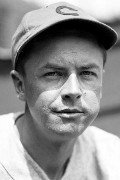


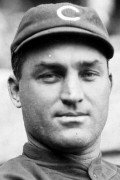
Stan Hack was the best leadoff hitter of his time and the greatest defensive third baseman of the 1930’s and 1940’s. He batted .301 for his career with a .394 on base percentage and had a career fielding percentage ten points above the league average. Most of all, he was known as a good sport and a cheerful man who was nicknamed “Smiling Stan” and was the crowd’s favorite. Career long Chicago Cub Stan Hack started his career in 1932 for 72 games, batting a lowly .236. He batted a resounding .350 in 20 games the following season and was a regular by 1934. Hack enjoyed his first .300 season at .311 in 1935 but stayed a hair under the mark in each of the next two seasons. Not satisfied with this, he batted .320 in 1938 and began an eight year streak in which he captured MVP votes. Hack was both an all-star and the NL leader in stolen bases in 1938 and 1939, and led the NL in hits in the next two years. In 1942 he batted .300 again and finished the season with the highest fielding percentage among all NL third basemen. Hack batted .289 in 1943 and was limited to just 98 games in 1944, coming out of a temporary retirement, but came back in 1945 with the finest season of his career. That year Hack batted .323, won his second fielding title, and scored over 100 runs for the seventh time in his career. He played in 92 games in 1946 and 76 in 1947, hitting well enough to prove that he was still a highly valuable player as he aged, but was released from the club on September 24, 1947. To put Hack’s value into perspective, the Cubs went 98-56 (.636) in 1945, but went 64-90 (.416) in 1948, their first year without him. Stan Hack was a fantastic hitter, a patient batter, a good baserunner, and a fine hitter whose immense talents in so many different phases of the game make him an easy Hall of Famer to me. 


LIFETIME STATISTICS 

Games career: 1,938 season high: 156 in 1939 led NL: 152 in 1938 

At Bats career: 7,278 season high: 641 in 1939 

Hits career: 2,193 season high: 195 in 1938 led NL: 191 in 1940, 186 in 1941 

Doubles career: 363 season high: 38 in 1940 

Triples career: 81 season high: 11 in 1938 

Home Runs career: 57 season high: 8 in 1939 and 1940 

Runs career: 1,239 season high: 112 in 1939 

Runs Batted In career: 642 season high: 67 in 1938 

Stolen Bases career: 165 season high: 21 in 1940 led NL: 16 in 1938, 17 in 1939 

Walks career: 1,092 season high: 99 in 1941 and 1945 

Strikeouts career: 466 season high: 42 in 1934 and 1937 

Batting Average career: .301 season high: .323 in 1945 

On Base Percentage career: .394 season high: .420 in 1945 

Slugging Percentage career: .397 season high: .439 in 1940 

Total Bases career: 2,889 season high: 265 in 1940 

Sacrifice Hits career: 115 season high: 15 in 1939 and 1943 

Fielding Percentage career: .959 season high: .975 in 1945 led NL 3B: .965 in 1942, .975 in 1945 

Double Plays career: 298 season high: 29 in 1945 led NL 3B: 25 in 1937, 26 in 1938, 27 in 1940 

Putouts career: 2,311 season high: 233 in 1945 led NL 3B: 151 in 1937, 178 in 1938, 177 in 1939, 175 in 1940, 195 in 1945 

Assists career: 3,527 season high: 314 in 1945 led NL 3B: 247 in 1937, 302 in 1940 


DID YOU KNOW? 

-batted lefthanded and threw righthanded 

-set a record in 1945 by playing 54 consecutive errorless games at third base 

-was a five time all-star 

-his 1,092 career walks are the Cubs’ all time record and were the record for a third baseman at the time of his retirement 

-led the NL in plate appearances in 1938 (707), 1939 (724), and 1941 (694) 

-finished seventh in the NL MVP Award voting in 1938, eighth in 1940, 11th in 1945, 12th in 1941, 15th in 1939, 19th in 1943, 20th in 1942, and 26th in 1944 

-batted .348/.408/.449 with 24 hits in 18 career World Series games 

-collected three hits and drove in every Cub run in Game 1 of the 1938 World Series 

-in Game 6 of the 1945 World Series, he became the first Cub ever to have four hits in a World Series game (he also drew two walks in the game) 

-his .471 average in the 1938 World Series led all batters that year 

-led the NL twice in singles and three times in times on base 

-led NL third basemen in games in 1937 (150), 1938 (152), 1939 (156), 1940 (148), and 1941 (150) 

-also played 47 games at first base, 58 as a pinch hitter, and nine as a pinch runner 

-among MLB third basemen, ranks 20th in career games, 50th in double plays, 15th in putouts, and 25th in assists 

-went 199-272 (.423) as a manager


Sunday, March 14, 2021

WHY I THINK TOMMY LEACH SHOULD BE IN COOPERSTOWN

 WHY I THINK TOMMY LEACH SHOULD BE IN COOPERSTOWN 

By- Damien 


Tommy Leach was a power hitter, a base thief, and a stellar bunter all rolled into one, elite baseball player. He led the NL in home runs in 1902 and stole over 360 career bases. Leach’s prowess at the bat and on the basepaths led to a lot of runs for the early Pittsburg Pirates (the “h” at the end wasn’t added until July 9, 1911), but he was just as skilled in the field. He played exactly 1,000 games in centerfield and 957 at third base, providing above average leather at two key defensive positions. Tommy Leach started his career with the Louisville Colonels in 1898, but for only three games. He batted .288 with them in 1899 and was traded to the Pirates in the worst trade of all time, one that was essentially Leach, Honus Wagner, Fred Clarke, Rube Waddell, Claude Ritchey, Deacon Phillippe, and Chief Zimmer for Hall of Famer Jack Chesbro and $25,000. It took him a couple of years to gain regular status on the Pirates, but was an expected starter by 1902, when he batted .278 and led the league in both home runs and triples. Leach followed up that marvelous season with a .298 batting mark in 1903. Leach didn’t reach those heights offensively until 1907, when he batted .303 and scored 102 runs, but proved to still be a consistently excellent player for the rest of his career, helping the Pirates to a pennant in 1903 and the World Series Title in 1909. He led the NL in runs scored twice and had a career year in 1913, when he hit .287 with a career best .391 on base percentage for the Chicago Cubs. Leach didn’t age very well, as he batted a disappointing .224 in 107 games in 1915, at the age of 37, and was out of baseball after 1918, when he fell below the .200 mark in 30 games at 40. Tommy Leach was a great hitter, a legendary baserunner, and a fine fielder. He had it all, and should be rewarded accordingly with a spot in the Hall of Fame. 


LIFETIME STATISTICS 

Games career: 2,156 season high: 153 in 1914 

At Bats career: 7,959 season high: 587 in 1909 

Hits career: 2,143 season high: 166 in 1907 

Doubles career: 266 season high: 29 in 1909 

Triples career: 172 season high: 22 in 1902 led NL: 22 in 1902 

Home Runs career: 63 season high: 7 in 1903 and 1914 led NL: 6 in 1902 

Runs career: 1,355 season high: 126 in 1909 led NL: 126 in 1909, 99 in 1913 

Runs Batted In career: 812 season high: 87 in 1903 

Stolen Bases career: 361 season high: 43 in 1907 

Walks career: 820 season high: 79 in 1914 

Strikeouts career: 666 season high: 62 in 1910 

Batting Average career: .269 season high: .303 in 1907 

On Base Percentage career: .340 season high: .391 in 1913 

Slugging Percentage career: .370 season high: .438 in 1903 

Total Bases career: 2,942 season high: 222 in 1903 and 1908 

Sacrifice Hits career: 240 season high: 29 in 1907 

Fielding Percentage career: .934 season high: .980 in 1913 led NL CF: .980 in 1907, .969 in 1909, .990 in 1913*, .968 in 1914 (the league fielding percentage was .931) 

Double Plays career: 168 season high: 18 in 1904 led NL CF: 4 in 1909, 7 in 1912 and 1914 

Putouts career: 4,008 season high: 352 in 1910 led NL 3B: 212 in 1904 led NL CF: 331 in 1909, 352 in 1910, 320 in 1914 

Assists career: 2,460 season high: 371 in 1904 led NL 3B: 316 in 1902, 371 in 1904 

*Leach fielded .727 across two games at third base in 1913, lowering his overall fielding percentage to .980 


DID YOU KNOW? 

-nicknamed “Wee Tommy” because he stood only 5’6” and weighed 150 pounds during his playing days 

-led the NL with 676 plate appearances in 1914 and with a 1.2 home run percentage in 1902 

-was the hardest batter in the NL to strike out in 1906 

-hit more triples than doubles in 1902 (22 and 14), 1903 (17 and 16) and 1905 (14 and 10) 

-led NL third basemen in games in 1904 (146) and NL centerfielders in games in 1910 (131) 

-holds the National League record for inside the park home runs with 49, which are also the third most of all time (behind Hall of Famers Jesse Burkett and Sam Crawford)
-set the world record for the fastest time to run the bases in 1907 (14 ⅕ seconds) 

-had a .310 career batting average in World Series play and hit a record four triples with seven RBI’s in the 1903 Series 

-collected the first ever hit, triple, and run scored in modern World Series history, all coming off of Hall of Famer Cy Young 

-hit nine career home runs off of Hall of Fame pitchers and four more off of Hall of Fame snubs 

-was interviewed by Lawrence Ritter for his book The Glory of Their Times, one of the most famous sports books ever written and a fascinating read 

-also played 14 games at second base, 65 at shortstop, 71 in leftfield, 15 in rightfield, 47 as a pinch hitter and seven as a pinch runner 

-ranks 23rd in career triples and 46th in sacrifice hits 

-ranks 10th in career games and 22nd in assists among MLB centerfielders 

-his 371 assists at third base in 1904 are the 40th most of all time


Update

 This is an update from a previous article, The Top 25 Active Position Players To One Day Make It To Cooperstown - First Ten, published on January 23. Number 16, Nick Markakis, has retired, meaning that he is no longer active. He retired while still a good player, but I said that he needed to grab his 3,000th hit if he wanted to make it to the Hall of Fame. He has 2,388, which is probably not going to do it considering his other statistics, and I probably wouldn't vote for him if I got the chance. Would any of you?  

Wednesday, March 10, 2021

WHY I THINK JACK CLARK SHOULD BE IN COOPERSTOWN

 WHY I THINK JACK CLARK SHOULD BE IN COOPERSTOWN 

By- Damien 


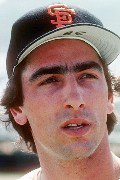
I am advocating for Jack Clark’s Hall of Fame case mostly because he was and is the most outspoken against the use of steroids in baseball. He may have gone a little overboard at times, but he speaks a truth that must be spoken. A man who injects himself with anabolic steroids greatly endangers his body, which is the Temple of The Holy Spirit, and is also a dirty cheater. The various cheating scandals across baseball history have cost the jobs and livelihoods of many innocent men who played fairly. Clark was also quite the hitter during his playing days, with 340 career home runs and a career on base percentage 112 points higher than his batting average. A rightfielder and first baseman, Clark imposed fear in the hearts of opposing pitchers. Jack Clark started his career with the Giants in 1975 at the age of 19 and appeared in eight games. He played in 26 in 1976 and was a regular by 1977 with 13 home runs in 136 games. Clark batted .306 with 25 home runs and 98 RBI’s in 1978 and finished fifth in the NL MVP Award voting. He became a consistent source of great power, hitting 20 or more home runs in four of the next five seasons, missing only in 1981, when he hit 17 in the strike shortened season. He had a career year in 1982 with 27 homers and 103 RBI’s, hit another 20 in 1983, and was sidelined for most of the 1984 season, but still batted .320 with eleven home runs in 57 games. He was traded to the Cardinals after the season and had a great year in 1985, helping the club to the World Series with a fine regular season, a .381 mark and a homer in the NLCS, and a pair of doubles in the World Series. Clark slowed again in 1986 but had the finest season of his career in 1987, hitting 35 longballs with 106 RBI’s and 136 walks in only 131 games, producing an astronomical on base percentage of .459. He signed with the Yankees for the 1988 season and he turned in 27 homers and 113 walks. He spent the next two seasons with the Padres, averaging 25 ½ home runs and leading the NL in walks each season. Clark had one last good offensive season with the Red Sox in 1991 with 28 homers and 87 RBI’s. He played a half season in 1992 for the Red Sox, batting .210, before retiring. Jack Clark was a fine hitter, a feared slugger, a master at drawing the walk, and a hero to all steroid free players. For all of his accomplishments both on and off the field, Clark really is a clear Hall of Famer. 


LIFETIME STATISTICS 

Games career: 1,994 season high: 156 in 1978 

At Bats career: 6,847 season high: 592 in 1978 

Hits career: 1,826 season high: 181 in 1978 

Doubles career: 332 season high: 46 in 1978 

Triples career: 39 season high: 8 in 1978 and 1980 

Home Runs career: 340 season high: 35 in 1987 

Runs career: 1,118 season high: 93 in 1987 

Runs Batted In career: 1,180 season high: 106 in 1987 

Stolen Bases career: 77 season high: 15 in 1978 

Walks career: 1,262 season high: 136 in 1987 led NL: 136 in 1987, 132 in 1989, 104 in 1990 

Strikeouts career: 1,441 season high: 145 in 1989 

Batting Average career: .267 season high: .306 in 1978 

On Base Percentage career: .379 season high: .459 in 1987 led NL: .459 in 1987 

Slugging Percentage career: .476 season high: .597 in 1987 led NL: .597 in 1987 

Total Bases career: 3,256 season high: 318 in 1978 

Sacrifice Hits career: 9 season high: 3 in 1976 and 1978 

Fielding Percentage career: .986 season high: .994 in 1990 

Double Plays career: 500 season high: 116 in 1987 led NL RF: 5 in 1978, 7 in 1979, 4 in 1981, 3 in 1983  

Putouts career: 7,127 season high: 1,158 in 1959 led NL RF: 328 in 1978, 188 in 1981, 283 in 1982 

Assists career: 456 season high: 89 in 1989 led NL RF: 14 in 1981, 18 in 1983 


DID YOU KNOW? 

-was a four time all-star 

-won two Silver Slugger Awards, both at first base (in 1985 and 1987) 

-set San Francisco Giants records for the most doubles in a season (46) and for the most consecutive games with a hit (26) in 1978 

-also finished third in the NL MVP Award voting in 1987, seventh in 1982, tenth in 1985, 12th in 1989, and 18th in 1980 

-led the NL with 79 extra-base hits in 1978 and with an 8.4 home run percentage in 1987 

-led NL rightfielders in games in 1978 (152), 1981 (98), and 1982 (155) 

-was the youngest player in the NL in 1975 

-also played four games at third base, eleven in leftfield, 23 in centerfield, 311 as a DH, 103 as a pinch hitter, and five as a pinch runner


Sunday, March 7, 2021

WHY I THINK BILLY PIERCE SHOULD BE IN COOPERSTOWN

 WHY I THINK BILLY PIERCE SHOULD BE IN COOPERSTOWN 

By- Damien 


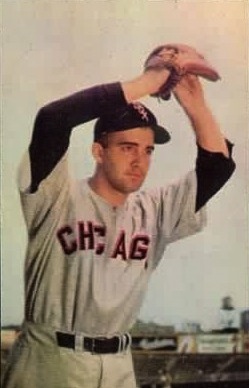
Billy Pierce was one of the most consistently excellent starting pitchers in MLB history. He wasn’t much of a threat to win 30 games in a season or anything but he was craftily winning 10 to 20 games a season from the late 1940’s into the 1960’s, humbling hitters with his blazing fastballs, tricky curves, wicked sliders, and a strong changeup. Billy Pierce started his career with the Tigers in 1945, posting a 1.80 ERA in ten innings as an 18 year old rookie. He spent the next two seasons in the minors but came back in 1948 to go 3-0. Pierce was sent to the White Sox for the 1949 season and in his first two seasons in Chicago he was only a little better than average. He took off in 1951 with 15 wins and a 3.03 ERA, and only got better as time went on. Pierce went 33-24 with a 2.65 ERA in 1952 and 1953, leading the AL in strikeouts in 1953, but slowed to a 9-10 mark in 1954. He responded in 1955 with an MLB leading 1.97 ERA, 66 points lower than the AL runner up, Whitey Ford, and followed that up with two 20 win seasons. Pierce had another fantastic season in 1958, producing a 2.68 ERA and leading the AL in complete games for the third straight season. He had three more quality seasons in Chicago, posting a 0.00 ERA in the 1959 World Series, but was traded to the Giants in 1962. He won 16 games that year, helped the Giants to the NL pennant, and went 1-1 with a 2.40 ERA in the World Series against the Yankees. Pierce slumped in 1963, going 3-11 in 99 innings, and was released at the end of the year. He resigned with the Giants in April 1964 and rewarded the Giants with a 3-0 record and a 2.20 ERA in 49 innings. Pierce was then released again and was out of the Big Leagues for good. Billy Pierce was a brilliant pitcher with much velocity, tenacity, and consistency. He was truly one of the very best pitchers in the MLB during his prime, maybe the best, and was certainly worthy of enshrinement in Cooperstown. 


LIFETIME STATISTICS 

Games Pitched career: 585 season high: 40 in 1953 

Starts career: 433 season high: 34 in 1957 

Complete Games career: 193 season high: 21 in 1956 led AL: 21 in 1956, 16 in 1957, 19 in 1958 

Shutouts career: 38 season high: 7 in 1953 

Games Finished career: 85 season high: 14 in 1964 

Wins career: 211 season high: 20 in 1956 and 1957 led AL: 20 in 1957 

Losses career: 169 season high: 16 in 1950 led AL: 14 in 1951 

Winning Percentage career: .690 in 1956 

ERA career: 3.27 season low: 1.97 in 1955 led AL: 1.97 in 1955 

WHIP career: 1.260 season low: 1.099 in 1955 led AL: 1.099 in 1955 

Innings Pitched career: 3,306 ⅔ season high: 276 ⅓ in 1956 

Strikeouts career: 1,999 season high: 192 in 1956 led AL: 186 in 1953 

Strikeouts Per Nine Innings career: 5.4 season high: 7.1 in 1954 led AL: 6.2 in 1953, 7.1 in 1954 

Walks career: 1,178 season high: 137 in 1950 

Strikeouts Per Walk career: 1.70 season high: 2.45 in 1955 led AL: 2.45 in 1955 

Saves career: 33 season high: 7 in 1963 

Fielding Percentage career: .956 season high: 1.000 in 1955 led AL P: 1.000 in 1955 

Double Plays career: 32 season high: 4 in 1951 and 1959 

Putouts career: 124 season high: 13 in 1952 

Assists career: 487 season high: 45 in 1957 


DID YOU KNOW? 

-nicknamed “Mr. Zero” for pitching many shutouts in high school 

-finished fifth in the AL MVP Award voting in 1956, 10th in 1953, 11th in 1957, 18th in 1955, and 29th in 1952 

-finished third in the NL Cy Young Award voting in 1962 

-was a seven time all-star and the first White Sox pitcher ever to start one 

-was the AL Sporting News Pitcher of the Year in both 1956 and 1957 

-is the all time White Sox club leader in career strikeouts 

-pitched 39 ⅔ consecutive scoreless innings in 1953 and 33 in 1958 

-came within one batter of a perfect game on June 27, 1958 

-was 8-6 lifetime against Whitey Ford

-was second in the AL in ERA in 1953 (2.72) and 1958 

-threw four career one-hitters 

-allowed the fewest hits per nine innings in the AL in 1953 (7.2) 

-went 12-0 at home in 1962, finishing off the season with a three hit shutout and a save during a three game Series against the Dodgers for the NL pennant 

-won his first career start, striking out six and driving in a run with a triple 

-also played one game at first base and 31 as a pinch runner, including once for three time AL stolen base champion Minnie Minoso on June 22, 1956

Wednesday, March 3, 2021

WHY I THINK JIMMY SHECKARD SHOULD BE IN COOPERSTOWN

 WHY I THINK JIMMY SHECKARD SHOULD BE IN COOPERSTOWN 

By- Damien 


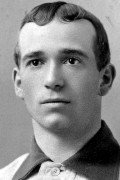
Jimmy Sheckard was an amazingly talented defensive leftfielder with a strong arm and a few strange similarities to Hall of Famer Ty Cobb. Obviously, Cobb outhit Sheckard .366 to .274, but both were good defensive outfielders and lefthanded leadoff hitters who walked a lot, hit homers, sacrificed plentifully, and stole a ton of bases. This is not to say that Sheckard is even close to Ty Cobb’s level, but who is? My point is that Sheckard was a fine player with talents that were recognized as very useful in his day. Jimmy Sheckard started his career with the Brooklyn Bridegrooms in 1897, batting .286 with three homers and 12 runs scored in 13 games, eleven at shortstop. At the age of 19, Sheckard became a regular in 1898, hitting .277. He batted .295 and led the MLB with 77 stolen bases for the Baltimore Orioles in 1899, establishing himself as one of the elite players in the league. Sheckard batted .300 in 85 games in 1900 and enjoyed his finest season in 1901, batting .354 and driving home 104 runs. He slumped in 1902 but batted .332 in 1903 for the Brooklyn Superbas. Sheckard made history that season when he became the first player ever to lead his league in home runs and stolen bases in the same season. The only others ever to do it were Hall of Famers Cobb in 1909 and Chuck Klein in 1932. From 1904 through 1910, what should have been his peak, Sheckard was on and off, batting a combined .258, but during that period he led the NL in sacrifice hits twice, won two World Series rings with the Cubs, led the league in fielding in 1906, and batted as high as .292. Other than that he was a victim of the dead ball era, putting up numbers that barely beat the averages. Sheckard broke out in 1911 with a purpose, leading the NL in walks, on base percentage, and runs scored along with 32 steals. He led the league in walks again in 1912 but was finished by 1913. He retired after that season. Jimmy Sheckard was a fine hitter, a solid defensive leftfielder, and an excellent baserunner whose overall record and skills were clearly worthy of enshrinement in Cooperstown. 


LIFETIME STATISTICS 

Games career: 2,122 season high: 156 in 1911 

At Bats career: 7,605 season high: 554 in 1901 

Hits career: 2,084 season high: 196 in 1901 

Doubles career: 354 season high: 29 in 1901, 1903, and 1909 

Triples career: 136 season high: 19 in 1901 led NL: 19 in 1901 

Home Runs career: 56 season high: 11 in 1901 led NL: 9 in 1903 

Runs career: 1,296 season high: 121 in 1911 led NL: 121 in 1911 

Runs Batted In career: 810 season high: 104 in 1901 

Stolen Bases career: 465 season high: 77 in 1899 led NL: 77 in 1899, 67 in 1903 

Walks career: 1,135 season high: 147 in 1911 led NL: 147 in 1911, 122 in 1912 

Strikeouts career: 849 season high: 81 in 1912 

Batting Average career: .274 season high: .354 in 1901 

On Base Percentage career: .375 season high: .434 in 1911 led NL: .434 in 1911 

Slugging Percentage career: .378 season high: .534 in 1901 led NL: .534 in 1901 

Total Bases career: 2,878 season high: 296 in 1901 

Sacrifice Hits career: 286 season high: 46 in 1909 led NL: 40 in 1906, 46 in 1909 

Fielding Percentage career: .953 season high: .986 in 1906 led NL LF: .986 in 1906 

Double Plays career: 86 season high: 14 in 1899 led NL LF: 11 in 1911 led NL OF: 14 in 1899, 12 in 1911 

Putouts career: 4,242 season high: 332 in 1911 and 1912 led NL LF: 291 in 1904, 332 in 1911 led NL OF: 284 in 1902 

Assists career: 371 season high: 41 in 1897 led NL LF: 24 in 1905, 32 in 1911, 26 in 1912 led NL OF: 36 in 1903, 32 in 1911, 26 in 1912 


DID YOU KNOW? 

-finished 12th in the NL MVP Award voting in 1911 

-in 1901, he became the first and so far only player to stroke inside the park grand slams in consecutive games 

-batted .357/.571/.500 in the 1910 World Series and stole a total of four Series bases 

-hit two home runs each off of Hall of Famers Christy Mathewson and Jack Chesbro and one each off of Cy Young, Vic Willis, and Jack Taylor 

-his 147 walks in 1911 set the MLB record and are still the team record 

-led the NL in times on base in 1911 (299) 

-led NL leftfielders in games in 1904 (139) and 1911 (156) 

-ranks 48th in career stolen bases, 14th in sacrifice hits, 47th in games in the outfield, sixth in double plays turned in the outfield, and eight in outfield assists 

-his 46 sacrifice hits in 1909 are the tenth most in history, and his 40 in 1906 rank 36th 

-among MLB leftfielders, ranks 34th in career games, third in double plays, 32nd in putouts, and fifth in assists 

-his 12 double plays in leftfield in 1911 are the MLB record, his 7 in 1903 rank eighth, his 6 in 1902 rank 17th, and his 5 in 1901, 1904, 1905, and 1909 rank 46th

-holds the first, third, tenth, and 43rd top seasonal totals for assists in leftfield

-also played one game at first base, two at second base, 13 at third base, 22 in centerfield, 215 in rightfield, and 20 as a pinch hitter