Tuesday, March 15, 2022

WHY I THINK DICKEY PEARCE SHOULD BE IN COOPERSTOWN

WHY I THINK DICKEY PEARCE SHOULD BE IN COOPERSTOWN 

By- Damien 


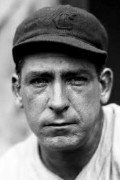
Dickey Pearce was the man who made shortstop the position it is today. Before Pearce came along in 1856, the first baseman manned first base, the second baseman was in charge of second base, and the third baseman held third base. The shortstop was a kind of fourth outfielder whose job was to stop the ball short before it reached the outfield grass. Instead, Pearce moved in a lot closer to the plate and started to rob scores of hits from opposing hitters. Everyone else followed suit, and the old philosophy behind the shortstop was soon abandoned. To keep the man who invented the modern shortstop out of the Hall of Fame is totally unbelievable. People should know about a man who changed baseball so much and helped make it the game it is today. Pearce did much more than that, however, as he was one of baseball’s best players in the game’s pre-professional era. Also a catcher, Pearce was selected to multiple “all-star games” during his time with the Brooklyn Atlantics. He would be a good representative from that era to make the Hall of Fame as a player, too. Pearce was also a master strategist who invented the fair-foul hit (which was outlawed in 1877). When the first established “Major League”, the National Association, was formed in 1871, Pearce was chosen by the New York Mutuals, and played the entire season at shortstop. One of the most famous players in the game, 35 year old Pearce was five years older than anyone else on the club, but proved his worth by hitting .270. Pearce led NA shortstops in fielding in 1872 and again in 1874. He batted a career high .294 in 1874 and two years later became the first 40 year old player in NL history. He played eight more games in 1877 before retiring. Dickey Pearce was a fine player, one of the most famous men in the early days of baseball, and the first true shortstop. He would be a fine addition to the Hall of Fame. 


LIFETIME STATISTICS (MLB TOTALS ONLY) 

Games career: 291 season high: 70 in 1875 led NA: 33 in 1871 

At Bats career: 1,328 season high: 311 in 1875 

Hits career: 333 season high: 77 in 1875 

Doubles career: 21 season high: 6 in 1873 and 1875 

Triples career: 4 season high: 3 in 1875 

Home Runs career: 2 season high: 1 in 1872 and 1873 

Runs career: 217 season high: 51 in 1875 

Runs Batted In career: 134 season high: 29 in 1875 

Stolen Bases career: 13 season high: 8 in 1875 (Pearce’s stolen base information from 1876-77 NL is unavailable) 

Walks career: 33 season high: 8 in 1873 

Strikeouts career: 21 season high: 7 in 1875 

Batting Average career: .251 season high: .294 in 1874 

On Base Percentage career: .269 season high: .310 in 1874 

Slugging Percentage career: .277 season high: .309 in 1873 

Total Bases career: 368 season high: 89 in 1875 

Sacrifice Hits career: N/A 

Fielding Percentage career: .826 season high: .891 in 1876 led NA SS: .844 in 1872, .845 in 1874 

Double Plays career: 66 season high: 17 in 1875 led NA SS: 8 in 1871 

Putouts career: 272 season high: 74 in 1875 

Assists career: 1,079 season high: 263 in 1875 led NA SS: 204 in 1874, 262 in 1875 


DID YOU KNOW? 

-had an ERA of 3.38 in 5 ⅓ career innings across two games 

-led the NA in assists at any position in 1874 and 1875 

-also played one game at first base, three at second base, two at third base, two in leftfield, and one in rightfield

Friday, March 11, 2022

WHY I THINK SAM LEEVER SHOULD BE IN COOPERSTOWN

WHY I THINK SAM LEEVER SHOULD BE IN COOPERSTOWN

By- Damien 


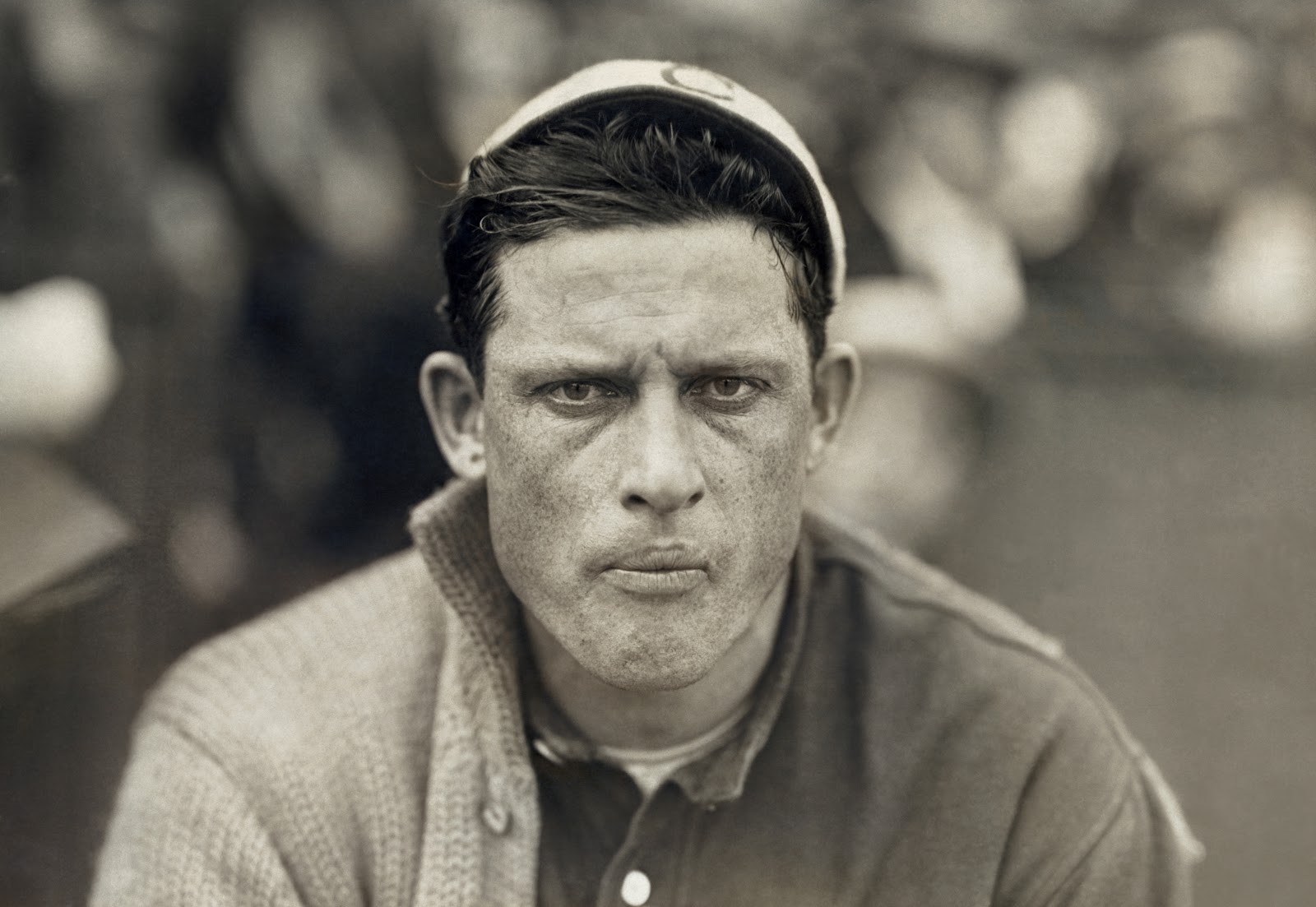
Every time a pitcher takes the mound, he’s thinking only one thing: I’m going to win today. You can’t ask more out of a pitcher than to keep you in the game long enough to win. Sam Leever was one of the most consistent winners in history, with a lifetime record of 194-100 (.660). Despite working primarily with a fastball, Leever hardly ever surrendered a home run, and he scarcely walked anyone. That being said, Leever compiled a career ERA of 2.47, including an ERA Title in 1903. His resume is all the more impressive when it is realized that he didn’t make his MLB debut until he was 26 ½ years old. Career long Pirate Sam Leever started his career in 1898, going 1-0 in three starts. He was a rookie sensation in 1899, winning 21 games and leading the league in four pitching categories. Leever had a career year in 1903, winning 25 games with a 2.06 ERA. He started two games in the inaugural World Series that season, but lost both of them. Leever came back strong in 1904, posting an 18-11 mark. He topped the 20 win pinnacle in each of the following two seasons and posted a 1.66 ERA in 1906. Leever pitched his last full season in 1908, picking up 15 wins, and started to suffer the effects of shoulder problems. He went 8-1 in 1909 and 6-5 in 1910 before calling it quits. Sam Leever was a fine pitcher, a consistent winner, and a key member of four Pirate pennant winners. He really should be in the Hall of Fame today. 


LIFETIME STATISTICS

Games Pitched career: 388 season high: 51 in 1899 led NL: 51 in 1899 

Starts career: 299 season high: 39 in 1899 

Complete Games career: 241 season high: 35 in 1899 

Shutouts career: 39 season high: 7 in 1903 led NL: 7 in 1903 

Games Finished career: 75 season high: 14 in 1908 and 1910 led NL: 11 in 1899 

Wins career: 194 season high: 25 in 1903 

Losses career: 100 season high: 23 in 1899 

Winning Percentage career: .660 season high: .800 in 1905 led NL: .737 in 1901, .781 in 1903, .800 in 1905 

ERA career: 2.47 season low: 1.66 in 1907 led NL: 2.06 in 1903 

WHIP career: 1.141 season low: 1.052 in 1907 (he also had a 1.054 mark in 1902) 

Innings Pitched career: 2,660 ⅔ season high: 379 in 1899 led NL: 379 in 1899 

Strikeouts career: 847 season high: 121 in 1899 

Strikeouts Per Nine Innings career: 2.9 season high: 4.2 in 1901 

Walks career: 587 season high: 122 in 1899 

Strikeouts Per Walk career: 1.44 season high: 2.77 in 1902 

Saves career: 13 season high: 3 in 1899 led NL: 3 in 1899 

Fielding Percentage career: .956 season high: .987 in 1904 

Double Plays career: 11 season high: 3 in 1910 

Putouts career: 84 season high: 12 in 1903 

Assists career: 659 season high: 100 in 1899 


DID YOU KNOW?

-nicknamed “Deacon” or “The Goshen Schoolmaster” for his earlier profession 

-allowed the fewest home runs per nine innings in the NL in 1900 (0.1) 

-pitched one inning in his final MLB game (no earned runs, one strikeout) 

-batted .263 (26-for-99) with two doubles, two triples, one home run, 12 runs scored, and 14 RBI’s in 1904 

-his two career home runs came off of Hall of Famers Kid Nichols and Vic Willis 

-had a career fielding percentage 22 points above the league average 

-played a game in leftfield in 1902 

-ranks 25th in career winning percentage and 39th in ERA

Thursday, March 10, 2022

An Update

    Yesterday I released a post called Fenceball, an attempt to complain about MLB's new ban on bunts. However, it turns out that they are not banning the bunt. I had heard it from two different friends, and read a couple articles speculating about the possibility of doing it in the future. To the relief of my blood pressure, athletic career, and passion for the game, they did not. Like I said, that would kill baseball, and the new game would be radically different. Since everybody aims for the fences nowadays instead of the gaps, I called this new game fenceball. 
    However, MLB has announced a couple of changes that will be put into effect in 2022. First, the National League will use the DH. I am not a fan of this, but a ban on bunting would be far worse. Secondly, the long awaited ban on shifts has been enacted. This I can live with. Shifting has helped make baseball into the simplistic, one dimensional sport that it is today - just a contest to smack a ball over a wall some 350 feet away. When I thought I heard that MLB banned bunts, I was afraid that the strategic game of baseball was all but dead. Luckily, our National Pastime survives today. 
    These kinds of things got me thinking. I have decided to publish a mini-series recounting all major changes in baseball history since 1900 (I will eventually write about 19th century ball, but since the game was so different back then, it will occupy its own mini-series). Since my book will cover players from every era of the game, I think that such a series will help put the candidates in better context. 

Wednesday, March 9, 2022

Fenceball

    I have learned that MLB has just banned bunts, probably to appease the universal DH. I would do an entire post complaining and giving reasons for my frustration, but that would hurt too much. Just as 19th century ball was called base ball, as it really wasn't the same game as modern baseball, I will refer to all MLB games from 2022 on as fenceball. 

Sunday, March 6, 2022

WHY I THINK ADOLFO (DOLF) LUQUE SHOULD BE IN COOPERSTOWN

WHY I THINK ADOLFO (DOLF) LUQUE SHOULD BE IN COOPERSTOWN 

By- Damien 


Dolf Luque has a pretty unique Hall of Fame case. The first Latino pitcher in MLB history, Luque didn’t land a regular starting job until 1920, his age 29 season, but he didn’t relinquish it until 1931. He pitched his final game in 1935, still proving his value as an ageless reliever. Luque’s fastballs and curves led him to a legendary season in 1923, when he won 27 games and posted a 1.93 ERA in the midst of the hardest hitting period in baseball history. However, Luque was also known as a hard luck pitcher, as he had six seasons (count ‘em - six!) in which he had a losing record despite an above average ERA. The worst of these seasons were 1922, when he went 13-23 despite an ERA of 3.31, and 1925, when he won a second NL ERA Title and still managed to drop 18 games. Dolf Luque started his career with the Boston Braves in 1914, but only pitched four games for the club in 1914-15. He pitched in Cuba for the next few years, and got a job in 1918 with the Reds. His 10-3 mark in 1919 helped him to a spot in the rotation in 1920, and he established himself as one of the best pitchers of the decade. During the roaring 1920’s, Luque won two ERA Titles, tossed 21 shutouts, and averaged almost 250 innings per season, not counting his successes in the Cuban Winter League. In 1930, Luque was traded to the Dodgers and went 14-8. He slowly moved out of the rotation and into the bullpen, and by 1933, he was a full time stopper, going 8-2 with a 2.69 ERA in 35 games for the New York Giants. Luque also won his second World Series ring (his first was in 1919, the “Black Sox Series”), and took the win in deciding Game 5, making him the oldest pitcher ever (43 years and 64 days) to win a Fall Classic game. He had two more fine seasons out of the pen before he finally decided to hang up his spikes in 1935. Dolf Luque was an excellent pitcher, a tough competitor, and a big part of two World Series teams. If he hadn’t had such awful luck, he definitely would have won over 200 games, and quite likely 250. I’m pretty sure he belongs in the Hall of Fame. 


LIFETIME STATISTICS 

Games Pitched career: 550 season high: 41 in 1921 and 1923 

Starts career: 367 season high: 37 in 1923 

Complete Games career: 206 season high: 28 in 1923 

Shutouts career: 26 season high: 6 in 1923 led NL: 3 in 1921, 6 in 1923, 4 in 1925 

Games Finished career: 128 season high: 22 in 1932 and 1933 

Wins career: 194 season high: 27 in 1923 led NL: 27 in 1923 

Losses career: 179 season high: 23 in 1922 led NL: 23 in 1922 

Winning Percentage career: .520 season high: .771 in 1923 led NL: .771 in 1923 

ERA career: 3.24 season low: 1.93 in 1923 led NL: 1.93 in 1923, 2.63 in 1925 

WHIP career: 1.288 season low: 1.098 in 1920 led NL: 1.172 in 1925 

Innings Pitched career: 3,220 ⅓ season high: 322 in 1923 

Strikeouts career: 1,130 season high: 151 in 1923 

Strikeouts Per Nine Innings career: 3.2 season high: 4.3 in 1925 

Walks career: 918 (24 intentional) season high: 88 in 1923 

Strikeouts Per Walk career: 1.23 season high: 1.79 in 1925 

Saves career: 29 season high: 7 in 1934 

Fielding Percentage career: .958 season high: 1.000 in 1929 led NL P: 1.000 in 1929 

Double Plays career: 36 season high: 7 in 1930 

Putouts career: 188 season high: 21 in 1921 led NL P: 17 in 1923 

Assists career: 787 season high: 84 in 1925 

Caught Stealing Percentage career: .528 season high: .727 in 1929 

Pickoffs career: 59 season high: 8 in 1930 


DID YOU KNOW? 

-nicknamed “The Pride of Havana” 

-finished 13th in the NL MVP Award voting in 1925 and 25th in 1933 

-allowed the fewest hits per nine innings in the NL in 1920 (7.3), 1923 (7.8), and 1925 (8.1) 

-allowed the fewest home runs per nine innings in the NL in 1923 (0.056) 

-pitched 9 ⅓ innings in World Series play, allowing no runs and striking out 11 batters 

-batted over .300 in three different seasons and .500 (1-for-2) in World Series play 

-homered off of Hall of Famer Burleigh Grimes in 1924 

-was the oldest player in the NL in 1934 and 1935 

-also played one game at third base, one in leftfield, three as a pinch hitter, and five as a pinch runner 

-was inducted into the Cincinnati Reds Hall of Fame in 1967, the Cuban Baseball Hall of Fame in 1957, and the Mexican Baseball Hall of Fame in 1985

Thursday, March 3, 2022

WHY I THINK BOBBY VEACH SHOULD BE IN COOPERSTOWN

WHY I THINK BOBBY VEACH SHOULD BE IN COOPERSTOWN

By- Damien 


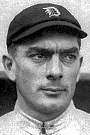
Bobby Veach was the regular Tiger leftfielder from 1913 through 1922. He shared the outfield with three Hall of Famers during that time (Ty Cobb, Sam Crawford, and later Harry Heilmann), and he often played in their long shadows. He was a fantastic hitter and the perhaps best fielder of the four, but he had the misfortune of being remembered as the worst outfielder in Detroit instead of as a member of the greatest outfield of all time. Bobby Veach began his career with the Tigers in 1912, batting .342 in 23 games near the end of the season. He took over as a regular in 1913 and established himself as a star in 1915 when he hit .313 and won his first of three RBI titles. Always a steady hitter, Veach had his best season to date in 1919, when he batted .355 and led the Majors in hits, doubles, and triples. As the dead ball era turned into the live ball era, Veach began to hit for power. His 16 home runs in 1921 was an impressive power number in those days, and it complemented a robust .338 batting average. In 1923, Veach shared playing time with yet another Hall of Famer - Heinie Manush - and seeing as how Veach was 35, he was the natural choice to go. He was sold to the Red Sox in the offseason. Veach still had some life in his bat, as he batted .295 in 1924 and drove in 99 runs. He played one last season in 1925, splitting his services between three teams, and batted a combined .323. He appeared in two World Series games with the Washington Senators, who fell to the Pirates in seven games. Bobby Veach was a marvelous hitter, a consistent run producer, and a solid defensive leftfielder. He would not at all be out of place if he were in the Hall of Fame. 


LIFETIME STATISTICS 

Games career: 1,821 season high: 155 in 1922 led AL: 154 in 1920, 155 in 1922 

At Bats career: 6,656 season high: 618 in 1922 

Hits career: 2,063 season high: 207 in 1921 led AL: 191 in 1919 

Doubles career: 393 season high: 45 in 1919 led AL: 40 in 1915, 45 in 1919 

Triples career: 147 season high: 17 in 1919 led AL: 17 in 1919 

Home Runs career: 64 season high: 16 in 1921 

Runs career: 957 season high: 110 in 1921 

Runs Batted In career: 1,174 season high: 128 in 1921 led AL: 112 in 1915, 110 in 1917, 84 in 1918 

Stolen Bases career: 195 season high: 24 in 1916 

Walks career: 571 season high: 68 in 1915 

Strikeouts career: 370 season high: 44 in 1917 

Batting Average career: .310 season high: .355 in 1919 

On Base Percentage career: .370 season high: .398 in 1919 

Slugging Percentage career: .442 season high: .529 in 1921 

Total Bases career: 2,942 season high: 324 in 1921 

Sacrifice Hits career: 271 season high: 36 in 1922 

Fielding Percentage career: .964 season high: .982 in 1922 led AL LF: .975 in 1915, .973 in 1921, .982 in 1922 

Double Plays career: 42 season high: 6 in 1914 and 1920 led AL LF: 6 in 1914, 4 in 1915, 5 in 1916 

Putouts career: 3,754 season high: 384 in 1921 led AL LF: 297 in 1915, 354 in 1917 and 1920, 277 in 1918, 335 in 1919, 370 in 1921, 366 in 1922 led AL OF: 384 in 1921 

Assists career: 207 season high: 26 in 1920 led AL LF: 19 in 1915, 24 in 1920 led AL OF: 26 in 1920 


DID YOU KNOW? 

-went 1-for-3 in his final regular season game 

-led the AL in hit by pitch (9) in 1917 

-led the AL in plate appearances (705) in 1922 

-finished second to Cobb in the AL Batting race in 1919 

-went 6-for-6 and hit for the cycle on September 17, 1920, the same day that George Burns hit for the cycle 

-pinch hit for Babe Ruth on August 9, 1925 

-hit three home runs each off of Urban Shocker and Stan Coveleski, two off of Waite Hoyt, and one each off of Carl Mays, Herb Pennock, Red Faber, and Jack Quinn 

-originally a pitcher, he pitched one game in 1918 and earned a save 

-seven times led AL leftfielders in games (and three times led all outfielders) 

-ended Babe Ruth’s 25 inning scoreless streak in 1916

Tuesday, March 1, 2022

WHY I THINK MOISES ALOU SHOULD BE IN COOPERSTOWN

WHY I THINK MOISES ALOU SHOULD BE IN COOPERSTOWN 

By- Damien 


Back in the 1960’s, three of the best outfielders in the game were all brothers - Felipe, Matty, and Jesus Alou. In 1963, the trio all played together in the Giants’ outfield. In 1990, one of baseball’s top prospects - Felipe’s son Moises - debuted with the Pirates. He became the fifth of six members in the Alou family tree to play in the MLB. By the time he was through he had established himself as the greatest member of the family dynasty, as he was one of the best hitters of his era. An adequate fielder who played all three outfield positions, Alou was one of the best sluggers of his time, nine times topping 20 homers in a season. He also hit for a high batting average, finishing up with a career mark of .303. Moises Alou started his career in 1990, making 21 plate appearances for two teams. He missed all of 1991 on account of injuries but came back in 1992 as the runner up for NL Rookie of the Year honors. He had a breakout year in 1994, when he batted .339 for the Montreal Expos with 22 homers and 78 RBI’s in the strike torn season. Alou played with the Expos until 1997, when he made his debut with the Florida Marlins. Although he stayed in Florida for only a season, he made the most of it, driving in 115 runs and leading the club to its first ever World Series Title. Alou had a career year for Houston in 1998 (.312, 38 homers) but missed another season to injuries in 1999. He came back with his best season to date in 2000 (.355, 30, 114 in 126 games) and followed up with a .331 season in 2001. Alou then played three seasons with the Cubs, hitting a career high 39 home runs in 2004 at the age of 37. Alou made headlines when he joined the Giants in 2005, as Felipe was the manager of the team (he had previously played several seasons under his father in Montreal). Seeing as how Felipe had been a famous player with the Giants in his day, some people figured that Moises was going to finish out his career in San Francisco. Instead, Alou topped .300 in 2005 and again in 2006, and played two partial seasons with the Mets afterwards. Each time he topped the .340 mark, including a 30 game hitting streak in 2007, and retired after the 2008 season. Moises Alou was a fine hitter, a powerful slugger, and one of the handful of players in the exclusive .300/300 club (.300 batting average and 300 home runs). It feels like there should be an Alou in the Hall of Fame, and Moises is the one who fits the mold. 


LIFETIME STATISTICS 

Games career: 1,942 season high: 159 in 1998 

At Bats career: 7,037 season high: 601 in 2004 

Hits career: 2,134 season high: 182 in 1998 

Doubles career: 421 season high: 36 in 2004 

Triples career: 39 season high: 6 in 1993 

Home Runs career: 332 season high: 39 in 2004 

Runs career: 1,109 season high: 106 in 2004 

Runs Batted In career: 1,287 season high: 124 in 1998 

Stolen Bases career: 106 season high: 17 in 1993 

Walks career: 737 season high: 84 in 1998 

Strikeouts career: 894 season high: 87 in 1998 

Batting Average career: .303 season high: .355 in 2000 

On Base Percentage career: .369 season high: .416 in 2000 

Slugging Percentage career: .516 season high: .623 in 2000 

Total Bases career: 3,629 season high: 340 in 1998 

Sacrifice Hits career: 9 season high: 5 in 1992 

Fielding Percentage career: .980 season high: .991 in 2002 led NL RF: .995 in 1996 led NL LF: .990 in 2002 

Double Plays career: 20 season high: 3 in 2001 and 2005 

Putouts career: 3,114 season high: 261 in 1996 

Assists career: 95 season high: 11 in 1993 and 1998 


DID YOU KNOW? 

-cousin of Jose Sosa and Mel Rojas 

-played under Felipe’s management during his tenure with the Giants 

-finished third in the NL MVP Award voting in both 1994 and 1998, tenth in 1997, 14th in both 2001 and 2004, 20th in 2000, and 24th in 1996 

-won the 1997 NL Babe Ruth Award 

-batted .500 in six all-star games, and had the winning hit for the NL in 1994 

-was a two time Silver Slugger (in 1994 and 1998) 

-won four career NL Player of the Week awards 

-his 30 game hitting streak in 2007 was the longest in the NL, set the Mets’ franchise record, and was the longest by any player age 40 or older 

-went 1-for-2 in his final MLB game 

-homered in his first at bat with the Marlins on Opening Day 1997 

-was the runner up for the NL Batting Title in 2000 

-batted .276 with five home runs and 24 RBI’s in 34 career postseason games, including .321 in his only World Series 

-also played 23 games as a DH, 66 as a pinch hitter, and nine as a pinch runner