Friday, February 12, 2021

The 15 Best Bets Among Active Starting Pitchers To Someday Make It To Cooperstown

 The 15 Best Bets Among Active Starting Pitchers To Someday Make It To Cooperstown 


In a very pitcher-friendly era, I would like to point out the best of the times. I hope that all will agree with my list. 


Number 15: Corey Kluber (98-58, 3.16 ERA, 4.99 K/BB) 


Kluber is going to have a hard time making it to the Hall of Fame. He has earned only 98 wins at 34 ½ and was selected to only three all-star teams. Kluber does have great rate statistics, such as 9.8 K/9 and 7.8 H/9. He does have two Cy Young awards and an ERA Title, but with a poor 2019 season and one inning in 2020, I think it’s safe to say that Kluber will not be a Hall of Famer. 


Number 14: Gerrit Cole (101-55, 3.19 ERA, 4.31 K/BB) 


One of the best pitchers today, Gerrit Cole is a strikeout machine and a consistent winner. He won the 2019 AL ERA Title and led the MLB with 326 strikeouts that year. His momentum is for him, as he had a strong 2020 season, but Father Time is not. He has only 101 wins at age 30, and the lost 2020 season probably cost him at least 15 more wins. His 3.19 ERA is not as low as expected, either, although he has allowed an average of 7.7 hits per nine innings and has struck out 10.1 per nine. We will have to wait and see for his bid at Cooperstown. 


Number 13: Chris Sale (109-73, 3.03 ERA, 5.37 K/BB) 


Here is another starting pitcher with a lack of counting statistics past age 30 that really hurt his Hall of Fame case. Sale is 31 ½ and has only 109 lifetime wins. He does have two league strikeout crowns, 2,007 whiffs in his career, seven all-star selections, and the highest strikeout to walk ratio in baseball history, but he is going down quickly and will need to have a little luck if he wants to make the Hall of Fame. 


Number 12: Jacob deGrom (70-51, 2.61 ERA, 4.79 K/BB) 


Another one of the most dominant pitchers in baseball today, deGrom has rate statistics that rank among the top handful of pitchers in history: 2.61 ERA, 1.047 WHIP, 10.5 K/9, 7.2 H/9. He has two Cy Young Awards, a Rookie of the Year Award, and an ERA Title at his disposal. The problem is, deGrom is 32 ½ years old, and only has 70 career wins in 183 starts. Losing this season hurts, especially for a pitcher who needs counting statistics to guarantee a plaque. If he can pitch productively well into his 40’s, he will probably find himself in Cooperstown. However, the fewest wins in history for a starting pitcher to make the Hall of Fame is 150, accomplished by Dizzy Dean, and he pitched in the heaviest hitting period that the game has ever seen. 


Number 11: Stephen Strasburg (112-59, 3.19 ERA, 4.49 K/BB) 


Stephen Strasburg is still a great pitcher who last had a Hall of Fame worthy season in 2019. He is a fine strikeout pitcher with an amazing winning percentage, a Silver Slugger award, and the 2019 World Series MVP Award. Strasburg is going to have to work around a 3.19 ERA and 112 wins at 32 ½, which is a very tall order for any pitcher seeking Cooperstown. His reputation and solid win percentage may be enough to secure him a plaque with a couple more quality seasons. 


Number 10: Madison Bumgarner (120-96, 3.20 ERA, 4.14 K/BB) 


“Madbum” is a very famous big-game pitcher whose postseason efforts (8-3, 2.11 ERA) are among the best in history. In Game 7 of the 2014 World Series, he pitched five shutout innings to preserve a 3-2 lead and earn the greatest save of all time. His regular season numbers are tricky, however, as he is 31 ½ and has only 120 lifetime wins. He has good rate statistics, three World Series rings with the Giants, and is one of the greatest hitting pitchers of all time, so he may have a shot at Cooperstown once he retires, especially if he produces a few more great seasons. 


Number 9: Adam Wainwright (167-98, 3.38 ERA, 3.10 K/BB) 


Adam Wainwright has been pitching since 2005, pitching well since 2006, and pitching at a Hall of Fame level since 2008. He started out as a reliever, but was converted to a starter in 2007. He has a long and storied career, with a 2006 World Series ring with the Cardinals, two Gold Gloves, a Silver Slugger award, and three all-star selections. He was struggling with his ERAs from 2016 through 2019, but had another great season in 2020. For the first decade of his career, “Waino” was one of the best pitchers in baseball. He is currently 39, but if he can pitch as well as he did this season for a few more full seasons, he will probably find himself in Cooperstown. If he can’t, however, his fewer than 170 wins and 3.38 ERA are not going to cut it. 


Number 8: David Price (150-80, 3.31 ERA, 3.76 K/BB) 


David Price is going downhill and does not have the counting statistics that are typically looked upon as Hall of Fame worthy. He has one Cy Young Award and two second place finishes, plus two ERA Titles, strong rate statistics, and a fine season in 2018 at the age of 33, but he is 35 now and is losing opportunities to construct a very good Hall of Fame case. His 2018 season was his first really good season since 2015, when he captured his second ERA crown. His awards and achievements make him a legitimate candidate with a few more quality seasons, but so far, his overall numbers fall short as of now. 


Number 7: Cole Hamels (163-122, 3.43 ERA, 3.34 K/BB) 


Cole Hamels will be best remembered for his postseason efforts with the Phillies. He won a ring in 2008, and won both the NLCS and World Series MVP awards. He is a four time all-star with an outside shot at 3,000 strikeouts (he currently has 2,560, in itself an impressive total), but his win total and career ERA are not Hall of Fame worthy, and he appears to be going down at the age of 37. 


Number 6: Felix Hernandez (169-136, 3.41 ERA, 3.14 K/BB) 


King Felix has been a dominant pitcher on some terrible Mariners teams throughout his career. The six time all-star has a 2012 Cy Young Award, a second place finish in 2014, two ERA Titles, and a perfect game to his credit. Hernandez is not a quality pitcher anymore at 34 ½ and will need to get better if he wants to get the 476 strikeouts that he needs to automatically earn a plaque. If he can’t, he can kiss Cooperstown goodbye. 


Number 5: Jon Lester (193-111, 3.60 ERA, 2.86 K/BB) 


Jon Lester is 37 years old, and he is looking down the road to retirement. The five time all-star will almost assuredly reach 200 wins, and still has a decent shot to reach 3,000 strikeouts, and he went 19-5 with a 2.44 ERA for the World Series winning Cubs of 2016, their first title since 1908, ending the longest championship drought in American sports history. He was the 2016 NLCS MVP and has two more rings with the Red Sox. Other than his monumental 2016 season, he really makes a small mark on baseball’s 150+ year history, and he would not be a Hall of Famer without it, but the 2016 Cubs were such a big deal that Lester will probably see himself in Cooperstown someday. 


Number 4: Zack Greinke (208-126, 3.37 ERA, 3.98 K/BB) 


Zack Greinke is 37 years old and still a top pitcher. He had an off season in 2020 (who didn’t), but had an amazing season in 2019. The six time all-star has over 200 wins and nearly 3,000 strikeouts, two ERA Titles (including a 1.66 mark in 2015), a 2009 Cy Young Award, and a second place finish in 2015. He also has two Silver Sluggers and six Gold Gloves to his credit. His career statistics and awards make Greinke look like a lock for Cooperstown. The Hall of Fame will be calling Greinke before too long after he retires. 


Number 3: Max Scherzer (175-93, 3.21 ERA, 4.34 K/BB) 


At 36 ½, Scherzer is still one of the best pitchers in baseball. His strikeout numbers are insane. He has also allowed only 7.5 hits per nine innings across his career. “Mad Max” is a consistent winner, a seven time all-star, and a three time Cy Young Award winner. Scherzer’s case is simple, strong, and obvious. He’s a future Hall of Famer. 


Number 2: Justin Verlander (226-129, 3.33 ERA, 3.54 K/BB) 


Verlander is about to turn 38 years old, but he is still the best pitcher in the American League. He is the only player in history other than Don Newcombe to win the Rookie of the Year Award, a Cy Young Award (he has two), and a league MVP Award. He is an eight time all-star with a Triple Crown win in 2011, over 3,000 lifetime strikeouts, and a career 7.6 hits per nine innings ratio. Needless to say, Verlander is Hall of Fame worthy. 


Number 1: Clayton Kershaw (175-76, 2.43 ERA, 4.32 K/BB) 


Clayton Kershaw is 32 ½, but he has the best rate statistics out of anyone on this list by far. He has better counting statistics than most on this list as well. Three Cy Young Awards, a MVP Award, five ERA Titles (the most in NL history), a Triple Crown, and eight all-star selections certainly state Kershaw’s Hall of Fame case loud and clear. He posted a 2.16 ERA this season and is showing no signs of slowing down anytime soon. Even from a die-hard Giants fan, Kershaw is the top pitcher in baseball today and will probably be a first ballot Hall of Famer.

Wednesday, February 10, 2021

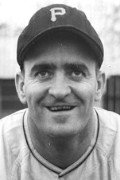
WHY I THINK DANNY MURTAUGH SHOULD BE IN COOPERSTOWN

 WHY I THINK DANNY MURTAUGH SHOULD BE IN COOPERSTOWN 

By- Damien 


Danny Murtaugh was first a scrappy second baseman and then a scrappy manager. From 1941 through 1951 he did okay as a second baseman, but I am mostly advocating for him for his immense skills as a manager. His .540 lifetime winning percentage is better than that of 12 of the 22 managers already enshrined in Cooperstown. Danny Murtaugh started his playing career with the Philadelphia Phillies in 1941, leading the NL in stolen bases as a rookie despite only playing in 85 games. He had a poor 1942 season but batted .273 in 1943. Murtaugh then spent the next two seasons in Military Service with the 97th infantry. He returned in 1946 but batted .211 in six games, and hit .125 in three for the Boston Braves the next year. With the Pirates in 1948, Murtaugh batted .290 and drove in 71 runs, finishing ninth in the NL MVP Award voting. He slumped in 1949, batting .203 in 75 games, but rebounded in 1950 to hit .294. He played another half season in 1951 before quitting as a player. In 1957 he got a job as the manager of the Pirates and won 26 of 51 games. He was one of the best managers in baseball for the entirety of his career, and in 1960 he won 95 games and the World Series. He took a liking to a young outfielder by the name of Roberto Clemente, and the two became good friends and superstars. After the 1964 season he didn’t manage a big league game until 1967, trying to protect his health, and after that he didn’t manage again until 1970. He won big that year and won the World Series again in 1971. He stayed out of the managing business again in 1972, and after he learned of Clemente’s shocking death that year, he was crushed. Just think about it - for somebody to lose a friend to a plane crash at 38, your whole world would spiral out of control. And for a manager, not only did he lose his star player, but his focus must have been shattered, which can be disastrous considering how much the managing game relies on sharp wits. Murtaugh won 88 games in 1974 and finished out his career in 1976 after putting up two consecutive 92 win seasons. He died that year on December 2 of a stroke when he was only 59. Danny Murtaugh was a good second baseman, one of the greatest managers in history, and a man who gave his whole life to baseball. A man like that always belongs in the Hall of Fame. 


LIFETIME STATISTICS 

Games career: 767 season high: 146 in 1948 

At Bats career: 2,599 season high: 514 in 1948 

Hits career: 661 season high: 149 in 1948 

Doubles career: 97 season high: 21 in 1948 

Triples career: 21 season high: 5 in 1948 and 1950 

Home Runs career: 8 season high: 2 in 1949 and 1950 

Runs career: 263 season high: 65 in 1943 

Runs Batted In career: 219 season high: 71 in 1948 

Stolen Bases career: 49 season high: 18 in 1941 led NL: 18 in 1941 

Walks career: 287 season high: 60 in 1948 

Strikeouts career: 215 season high: 42 in 1950 

Batting Average career: .254 season high: .294 in 1950 

On Base Percentage career: .331 season high: .376 in 1950 

Slugging Percentage career: .317 season high: .392 in 1950 

Total Bases career: 824 season high: 183 in 1948 

Sacrifice Hits career: 42 season high: 21 in 1942 

Fielding Percentage career: .969 season high: .979 in 1948 

Double Plays career: 459 season high: 95 in 1948 led NL 2B: 95 in 1948 

Putouts career: 1,837 season high: 375 in 1948 led NL 2B: 375 in 1948 

Assists career: 1,988 season high: 412 in 1948 led NL 2B: 412 in 1948 

Games Managed career: 2,068 season high: 162 in 1963, 1964, 1970, 1971, 1974, and 1976 

Wins career: 1,115 season high: 97 in 1971 

Losses career: 950 season high: 88 in 1963 

Ties career: 3 season high: 1 in 1959, 1960, and 1967 

Winning Percentage career: .540 season high: .617 in 1960 

Ejections career: 20 season high: 4 in 1958 and 1959 

Pennants 1960 NL, 1971 NL 

World Series 1960, 1971 


DID YOU KNOW? 

-led NL second basemen in games (146) in 1948 

-hit one of his home runs off of Hall of Famer Robin Roberts and another off of Sal Maglie 

-also played 58 games at third base, 61 at shortstop, 30 as a pinch hitter, and two as a pinch runner 

-was the 1960 Sport Magazine Man of the Year 

-twice won the Sporting News Manager of the Year Award 

-won four career division titles (in 1970, 1971, 1974, and 1975) 

-has the highest career winning percentage as a manager in Pirates history other then Hall of Famer Fred Clarke 

-on September 1, 1971, he became the first manager ever to have his starting lineup consist of nine black players, and he won that game by scoring ten runs 

-his number 40 is retired by the Pirates


Sunday, February 7, 2021

WHY I THINK DICK GROAT SHOULD BE IN COOPERSTOWN

 WHY I THINK DICK GROAT SHOULD BE IN COOPERSTOWN 

By- Damien 


Dick Groat was one of the finest all around shortstops ever to play the grand old game of baseball. For four National League clubs, he led the league’s shortstops in double plays a record five times - not even Ozzie Smith could do that (edit: this statement is incorrect; he shares the record with Smith). He was also a two time World Series champion and the MVP and Batting Champion in 1960. Dick Groat started his career with the Pittsburgh Pirates in 1952 with a .284 average in 95 games, finishing third in the Rookie of the Year Award voting. That season he also played basketball in the NBA for the Fort Wayne Pistons, averaging a fine 11.9 points per game. He then spent the next two seasons in Military Service. Groat returned in 1955 to bat .267, and by 1957 he had made himself into a .315 hitter. He batted .300 again in 1958 but slumped a bit in 1959. Groat rebounded in 1960 with arguably the best season of his career, when he was voted the NL MVP with his league leading .325 batting average. He helped the Pirates to win the World Series that year, the one made famous by Hall of Famer Bill Mazeroski’s walk-off home run in Game 7. Although he didn’t have excessive power and didn’t walk too much, Groat provided a lot of value to his team with his defensive positioning, place hitting, and skills at the hit and run, which may well have been the best in history. In 1961, he slumped to .275 but actually drove in five more runs than he did the year before. Groat batted .294 in 1962 but was traded to the Cardinals after the season, and he made the Pirates pay by enjoying a career season. That year he hit .319 and led the MLB with 43 doubles en route to a second place finish in the NL MVP Award voting. Any two time MVP should be a slam dunk Hall of Famer so long as he was clean of any cheating, and Groat played the game cleanly and had a reputation as a stand up gentleman. At any rate, Groat had one last fine season in 1964, batting .292 to help the Cardinals win the World Series, and was still a productive player through 1966. He played in 44 games between the Phillies and the Giants in 1967, losing his skills rapidly at the age of 36, and retired at the end of the year. Dick Groat was a fine hitter, a solid fielder, and a master at hit and run whose skills on both offense and defense merit enshrinement in the Hall of Fame. 


LIFETIME STATISTICS 

Games career: 1,929 season high: 161 in 1962 and 1964 

At Bats career: 7,484 season high: 678 in 1962 

Hits career: 2,138 season high: 201 in 1963 

Doubles career: 352 season high: 43 in 1963 led NL: 43 in 1963 

Triples career: 67 season high: 11 in 1963 

Home Runs career: 39 season high: 7 in 1957 

Runs career: 829 season high: 85 in 1960 and 1963 

Runs Batted In career: 707 season high: 73 in 1963 

Stolen Bases career: 14 season high: 3 in 1963 

Walks career: 490 season high: 56 in 1963 and 1965 

Strikeouts career: 512 season high: 61 in 1962 

Batting Average career: .286 season high: .325 in 1960 led NL: .325 in 1960 

On Base Percentage career: .330 season high: .377 in 1963 

Slugging Percentage career: .366 season high: .450 in 1963 

Total Bases career: 2,741 season high: 284 in 1963 

Sacrifice Hits career: 122 season high: 17 in 1956 

Fielding Percentage career: .961 season high: .97465* in 1966 

Double Plays career: 1,241 season high: 127 in 1958 led NL SS: 127 in 1958, 97 in 1959, 117 in 1961, 126 in 1962, 91 in 1964 

Putouts career: 3,526 season high: 330 in 1955 led NL SS: 330 in 1955, 307 in 1958, 301 in 1959, 314 in 1962 

Assists career: 5,864 season high: 521 in 1962 led NL SS: 521 in 1962, 499 in 1964 

*Groat fielded .97461 in 1958, which also rounds to .975 


DID YOU KNOW? 

-was an eight time all-star 

-also finished 15th in the NL MVP Award voting in 1957 and 16th in 1962 

-scored three runs and had two extra-base hits in each World Series 

-won the 1960 Lou Gehrig Memorial Award 

-led the NL with 154 singles in 1960 

-led NL shortstops in games in 1963 (158) 

-went 6-for-6 with three doubles on May 13, 1960 

-hit two home runs off of Hall of Famer Robin Roberts and one each off of Sandy Koufax, Don Drysdale, and Bob Gibson 

-went 201-for-631 in 1963, the exact same numbers as Hank Aaron had that season 

-on September 29, 1957, he threw out a runner at the plate to end the Giants’ final home game at the Polo Grounds (Boo!) 

-hit an RBI double in Game 1 of the 1960 World Series and ended the game with a double play 

-tagged out Mickey Mantle on a pickoff play in Game 4 of the 1964 World Series 

-his 678 at bats in 1962 are the 48th most of all time

-also played one game each at first base and second base, 28 at third base, 37 as a pinch hitter, and one as a pinch runner 

-was inducted into the Missouri Sports Hall of Fame in 2007 and into the College Baseball Hall of Fame in 2011 


Groat as a basketball player in college


Saturday, February 6, 2021

The Top 25 Active Position Players To One Day Make It To Cooperstown - Final Five

 The Top 25 Active Position Players To One Day Make It To Cooperstown - Final Five 


Number 5: Buster Posey (catcher, .302/.370/.456, 140 home runs, 673 RBI, .995 F%)  


Posey was arguably the best hitting catcher in baseball from 2010 through 2018, and he has proved that he ranks among the best all around catchers of all time. He was the NL Rookie of the Year in 2010, the NL MVP and batting champion in 2012, and a World Series champion in 2010, 2012, and 2014. Posey also has an impressive career caught stealing percentage of .331. The six time all-star has won four Silver Sluggers and one Gold Glove award, so it’s clear that he’s been the best catcher in baseball over the last decade and a definite future Hall of Famer. 


Number 4: Joey Votto (first baseman, .304/.419/.517, 295 home runs, 966 RBI, .993 F%) 


Joey Votto is one of the handful of players ever to have a career slash line better than .300 batting average/.400 on base percentage/.500 slugging percentage. He is right up against 300 career home runs, 2,000 hits, and 1,000 RBI’s, three major milestones that can pretty much guarantee Votto a plaque once he hits them. The six time all-star was the NL MVP in 2010 (when he threatened to be the first to win the Triple Crown since Hall of Famer Carl Yastrzemski in 1967), finished second in 2017, and was third in 2015. He also tacked on a Gold Glove award in 2011. Votto is easily one of the top first basemen of all time, and will be a Hall of Famer shortly after he retires. 


Number 3: Mike Trout (outfielder, .304/.418/.582, 302 home runs, 798 RBI, .993 F%)   


What else do I have to say other than his name? Another .300/.400/.500 hitter, Mike Trout is the best and most popular player in baseball and has been so since 2013. He was the AL Rookie of the Year in 2012, and has since won three MVP Awards, tying the league record. He is currently an eight time all-star with eight Silver Sluggers and the finest defense in centerfield in the entire league. He will almost certainly be a first ballot Hall of Famer, even if he never again so much as sniffs a baseball field for the rest of his life. 


Number 2: Miguel Cabrera (first baseman, third baseman, outfielder, .313/.391/.540, 487 home runs, 1,729 RBI, .987 F%) 


The last Triple Crown winner in history (2012), Miguel Cabrera is a two time MVP, a four time batting champion, a seven time Silver Slugger, and an eleven time all-star among other things. He is about to reach both 500 home runs and 3,000 hits, and considering the era in which he is conquering, he may very well be regarded as one of the top handful of hitters ever. His achievements are matched by nobody in the past 60 years, except… 


Number 1: Albert Pujols (first baseman, third baseman, leftfielder, DH, .299/.377/.546, 662 home runs, 2,100 RBI, .992 F%) 


Pujols is the only player in history to start his career with  ten straight seasons with a .300 batting average or better, at least 30 home runs, and at least 100 RBI’s. He already has well surpassed the 3,000 hit marker, and has hit 19 postseason homers. A ten time all-star, a three time NL MVP, a six time Silver Slugger, and the 2001 NL Rookie of the Year, Pujols is the best. 


Top Seven Honorable Mentions 


Number 7: JD Martinez (outfielder, DH, .290/.354/.530, 238 home runs, 738 RBI, .983 F%) 


Number 6: Jose Abreu (first baseman, .294/.350/.520, 198 home runs, 671 RBI, .992 F%) 


Number 5: Brandon Phillips (second baseman, .275/.320/.420, 211 home runs, 951 RBI, .987 F%) 


Number 4: Edwin Encarnacion (DH, third baseman, first baseman, .260/.350/.496, 424 home runs, 1,261 RBI, .976 F%) 


Number 3: Ryan Zimmerman  (third baseman, first baseman, .279/.343/.475, 270 home runs, 1,015 RBI, .976 F%) 


Number 2: Hanley Ramirez (shortstop, DH, first baseman, .289/.360/.486, 271 home runs, 917 RBI, .973 F%) 


Number 1: Manny Machado (third baseman, shortstop, .280/.337/.488, 223 home runs, 645 RBI, .970 F%)

Wednesday, February 3, 2021

WHY I THINK WALLY BERGER SHOULD BE IN COOPERSTOWN

 WHY I THINK WALLY BERGER SHOULD BE IN COOPERSTOWN 

By- Damien 


Wally Berger was one of the best hitters of his time, far better than many Hall of Famers. Berger had four seasons over .300, drove in over 100 runs in a season four times, and hit over 30 home runs three times and over 20 six times. Berger could also play left and center very well, recording a career fielding mark above the league average. Wally Berger started his career with the Boston Braves in 1930 with a bang, batting .310 and establishing the MLB record for home runs by a rookie with 38. He came back in 1931 to hit .323 with 19 home runs. After a .307 season Berger started a streak of three straight seasons with 100 plus RBI’s. He batted as high as .313 during that span and led the NL in homers and RBI’s in 1935. Berger batted .288 with 25 home runs in 1936 before being limited to 89 games and 17 home runs in 1937, having been traded midseason to the New York Giants. After batting only .188 across 16 games with the Giants in 1938 he was traded to the Reds, where he settled down and hit .307 for the rest of the season. Berger fell to .258 in 97 games in 1939 and was traded in the middle of the 1940 season to the Phillies. He hit .317 in 20 games for the Phils in 1940 before calling it quits. Wally Berger was a great, .300 hitting slugger who could field, throw, and figure out pitchers as well as any of his contemporaries. He belongs in the Hall of Fame. 


LIFETIME STATISTICS

Games career: 1,350 season high: 156 in 1931 led NL: 156 in 1931 

At Bats career: 5,163 season high: 617 in 1931 

Hits career: 1,550 season high: 199 in 1931 

Doubles career: 299 season high: 44 in 1931 

Triples career: 59 season high: 14 in 1930 

Home Runs career: 242 season high: 38 in 1930 led NL: 34 in 1935 

Runs career: 809 season high: 98 in 1930 

Runs Batted In career: 898 season high: 130 in 1935 led NL: 130 in 1935 

Stolen Bases career: 36 season high: 13 in 1931 

Walks career: 435 season high: 55 in 1931 

Strikeouts career: 693 season high: 84 in 1936 led NL: 77 in 1933 

Batting Average career: .300 season high: .323 in 1931 

On Base Percentage career: .359 season high: .380 in 1931 

Slugging Percentage career: .522 season high: .614 in 1930 

Total Bases career: 2,693 season high: 341 in 1930 

Sacrifice Hits career: 27 season high: 12 in 1930 

Fielding Percentage career: .975 season high: .994 in 1932 led NL CF: .992 in 1932 

Double Plays career: 28 season high: 10 in 1932 led NL LF: 4 in 1930 led NL CF: 5 in 1931, 4 in 1933 

Putouts career: 3,430 season high: 498 in 1932 led NL LF: 308 in 1930 led NL CF: 411 in 1935, 361 in 1936 

Assists career: 91 season high: 16 in 1931 


DID YOU KNOW? 

-was a four time all-star 

-was the starting centerfielder in the first ever all-star game in 1933 

-finished third in the NL MVP Award voting in 1933, sixth in 1935, 12th in 1934, 13th in 1932, and 16th in 1936 

-led the NL in home run percentage in both 1933 (4.6) and 1935 (5.8) 

-led NL leftfielders in games in 1930 (145) and led NL centerfielders in 1931 (156), 1932 (134), and 1934 (150) 

-also hit 39 doubles in 1935, 37 in 1933, 35 in 1934, and 34 in 1932 

-set the NL rookie record with his 119 RBI’s in 1930 

-was only the seventh player in NL history to reach 200 career home runs 

-hit three home runs each off of Hall of Famers Jesse Haines, Waite Hoyt, and Dazzy Vance, and one off of Burleigh Grimes, plus five off of Lon Warneke and one off of Bucky Walters 

-his 38 homers in 1930 set the Braves franchise record and stood until 1953, and the entire team hit only 68 home runs that year 

-still holds the MLB record for the fewest games in a season to reach 20 home runs (51) 

-also played 13 games at first base, 11 in rightfield, 49 as a pinch hitter, and one as a pinch runner


Sunday, January 31, 2021

WHY I THINK CHARLIE KELLER SHOULD BE IN COOPERSTOWN

 WHY I THINK CHARLIE KELLER SHOULD BE IN COOPERSTOWN

By- Damien 


Charlie Keller was a great beyond the word hitter, an expert defensive leftfielder, and among the best performers in postseason history. He hit over .300 twice and won two fielding titles in leftfield. The primary purpose of each season is to win the World Series, and Keller helped the Yankees do that three times. On a great Yankees team that included Hall of Famers Joe DiMaggio, Red Ruffing, Phil Rizzuto, Bill Dickey, and Joe Gordon, plus fireballing righthander Allie Reynolds, Charlie Keller proved his mettle. Keller started his career in 1939 by batting .334 with 11 home runs and 83 RBI’s in 111 games while leading the Yankees to the World Series title. In 1940 he hit .286 with 21 home runs, 93 RBI’s, and the most walks in the AL. He raised his batting average to .298 and his home run production to 33 in 1941 to help the Yankees win the World Series again. After batting .292 in 1942 with 26 homers and his second straight 100-RBI season to help the Yankees to the pennant, Keller hit .271 with 31 homers and led the AL in walks and OPS (.922) in 1943. After serving for the Merchant Marines in 1944 he came back with a purpose, hitting .301 and smacking ten homers in only 44 games in 1945. Keller hit .275 with 30 homers and 101 RBI’s in 1946 and drew 113 walks. He hit just .238 with 13 longballs in 45 games in 1947 but hit .267 in 83 games in 1948. Keller was traded to Detroit in 1950 after hitting “just” .250 in 60 games but didn’t disappoint, hitting .314 in 50 games. After hitting .258 in 54 games Keller went back to New York but only had one at bat before retiring. Charlie Keller was a complete, five tool player for most of his career. He is certainly deserving of a spot in the Hall of Fame. 


LIFETIME STATISTICS

Games career: 1,170 season high: 152 in 1942

At Bats career: 3,790 season high: 544 in 1942

Hits career: 1,085 season high: 159 in 1942

Doubles career: 166 season high: 29 in 1946

Triples career: 72 season high: 15 in 1940

Home Runs career: 189 season high: 33 in 1941

Runs career: 725 season high: 106 in 1942

Runs Batted In career: 760 season high: 122 in 1941

Stolen Bases career: 45 season high: 14 in 1942

Walks career: 784 season high: 114 in 1942 led AL: 106 in 1940 and 1943

Strikeouts career: 499 season high: 101 in 1946 led AL: 101 in 1946

Batting Average career: .286 season high: .334 in 1939

On Base Percentage career: .410 season high: .447 in 1939

Slugging Percentage career: .518 season high: .580 in 1941

Total Bases career: 1,962 season high: 294 in 1941

Sacrifice Hits career: 20 season high: 11 in 1939

Fielding Percentage career: .980 season high: .994 in 1943 led AL LF: .985 in 1942, .993 in 1943

Double Plays career: 6 season high: 2 in 1940 and 1941 led AL LF: 2 in 1941

Putouts career: 2,235 season high: 338 in 1943 led AL LF: 325 in 1941, 310 in 1942, 286 in 1943, 290 in 1946

Assists career: 46 season high: 10 in 1942


DID YOU KNOW?

-brother of Hal Keller

-nicknamed “King Kong”

-was a five time all-star

-batted .306/.367/.611 with 18 runs scored, 22 hits, three doubles, two triples, five home runs, 18 RBI's, one stolen base, and seven walks in 19 career World Series games

-hit three home runs in one game on July 28, 1940

-hit three home runs each off of Hall of Famers Bob Feller and Ted Lyons, two each off of Hal Newhouser, Early Wynn, and Allie Reynolds, and one each off of Lefty Grove and Bob Lemon

-hit ten or more triples in a season four times and nine once

-owns a better career OPS (.928) than Hall of Fame teammates Bill Dickey (.868), Phil Rizzuto (.706), and Joe Gordon (.822)

-finished fifth in the 1941 AL MVP polls, 13th in 1943, 14th in 1942, 15th in 1946, and 22nd in 1939

-made over 300 putouts five times

-led the AL in homer percentage in 1943 (6.1)

-drove in over 100 runs in a season three times and over 80 six times

-scored over 100 runs three times, 98 once, 97 once, and over 80 six times

-led AL leftfielders in games in 1941, (137) 1942 (152), and 1943 (140)

-also played 144 games in rightfield and 164 as a pinch hitter

-ranks 34th in career on base percentage and 42nd in OPS